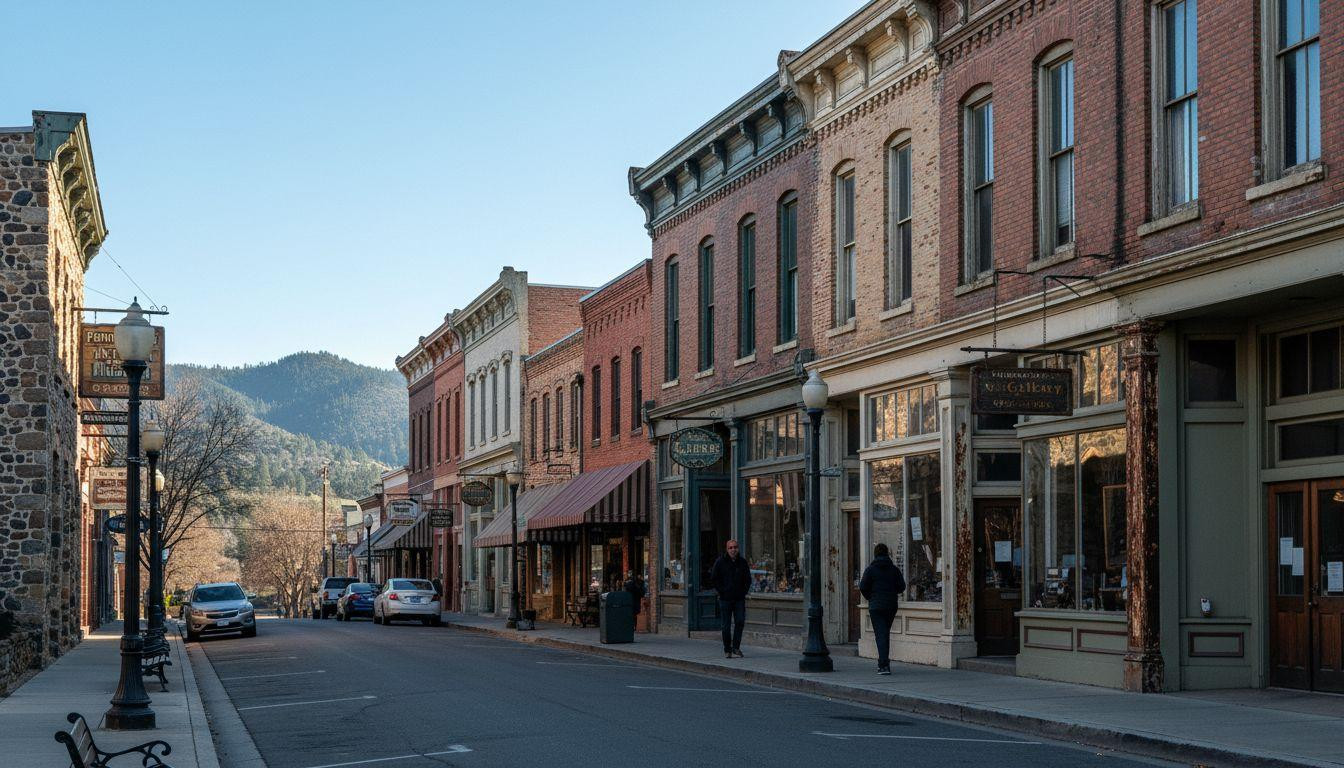
Morning light catches the weathered brick facades along Main Street as you park near the Fountain & Tallman Museum. Placerville’s 1852 storefronts stand unchanged since Gold Rush days, wooden signs creaking softly in the December breeze. This California mining town keeps Victorian architecture and 1849 infrastructure alive where 10,000 residents maintain authentic Western heritage just 45 minutes from Sacramento.
Where California’s gold rush still breathes
Placerville sits at 1,900 feet elevation in the Sierra Nevada foothills, where Highway 50 climbs toward Lake Tahoe. The settlement began as “Hangtown” in 1848 when John Marshall’s discovery triggered California’s defining migration. Victorian commercial buildings from the 1850s line Main Street today, their brick and stone construction surviving 175 Sierra winters.
The Fountain & Tallman Museum occupies the oldest building on Main Street. This rock-rubble structure dates to 1852, anchoring a historic district listed as California Historical Landmark No. 475. Unlike Nevada City’s arts-focused preservation, Placerville emphasizes mining-era transportation history and authentic hard-rock mine experiences.
What hangtown heritage reveals today
Victorian architecture in working order
Main Street’s commercial buildings function as active businesses rather than museum pieces. Local cafes, antique shops, and galleries occupy hand-painted storefronts with original ironwork details. Winter light reveals architectural elements summer foliage obscures. Corbelled brickwork, wooden window frames, and stone lintels create visual continuity with 1870s photographs.
Gold bug mine’s tangible history
One mile north of downtown, Gold Bug Park offers self-guided audio tours 352 feet into a real hard-rock mine. Timber shoring and tool marks in rock provide tactile connection to 1850s extraction labor. The mine maintains a constant 55°F temperature year-round, creating sharp contrast with December’s mild 45-55°F foothill days.
Experiencing placerville’s unhurried rhythm
Main street before the crowds arrive
Sunday mornings reveal Placerville’s authentic pace. Empty sidewalks stretch between slowly opening cafes where locals read newspapers in window seats. The Bell Tower’s chime marks hours unchanged since frontier days. Walking the five-block commercial core takes 15 minutes, but historical plaques and benches invite slower observation.
Buttercup Pantry at 222 Main Street serves the famous Hangtown Fry. This oyster-bacon-egg omelet originated in 1849 when a wealthy prospector ordered the most expensive ingredients available. Grass Valley’s Empire Mine offers larger mining operations, but Placerville’s culinary heritage remains uniquely intact.
Apple hill orchard connection
Ten miles east, Apple Hill farm stands show Placerville’s agricultural evolution beyond mining. December brings bare orchard rows and quiet farm shops, contrasting September-October’s harvest crowds. This transition from gold to apples illustrates Sierra foothill adaptation while Victorian Main Street anchors regional identity.
How placerville feels authentically different
No parking meters regulate Main Street browsing. No tour groups block sidewalks during weekday visits. Antique shop owners unlock doors at varying morning hours, maintaining small-town rhythms. County Historical Society volunteers staff museums without costumed theatrics. This functional preservation creates atmosphere distinct from theme-park recreation.
Local tourism boards confirm that authentic heritage towns draw visitors seeking genuine Western history. Placerville’s identity remains tied to Highway 50 transportation corridors and mining infrastructure rather than artificial tourism transformation.
Your questions about Placerville answered
How much does visiting Placerville cost?
Gold Bug Mine charges modest entry fees for self-guided tours. Museums accept small donations of $3-5. Main Street browsing costs nothing. Midrange lodging runs $140-230 per night in December. Casual dining averages $12-22 per person, with wine tasting at nearby El Dorado County wineries costing $15-35.
What makes this different from other gold country towns?
Placerville emphasizes mining and transportation history over arts festivals. The town feels more working-class than Nevada City’s bohemian atmosphere. Main Street architecture follows a linear commercial pattern versus hillside residential charm. Access proves easier at 40 miles from Sacramento compared to Nevada City’s 60-plus mile distance.
When should visitors plan their trip?
December through February brings quiet streets, holiday events, and lower lodging rates. May-June offers wildflowers and comfortable weather. September-October attracts Apple Hill crowds requiring weekend reservations. Heritage destinations reward off-season visits with authentic local experiences.
Late afternoon sun warms the rock-rubble walls of the Fountain & Tallman Museum as you prepare to leave. Main Street empties except for locals finishing coffee at sidewalk tables. Placerville’s Gold Rush heritage lives quietly here, preserved in working buildings rather than tourist displays.