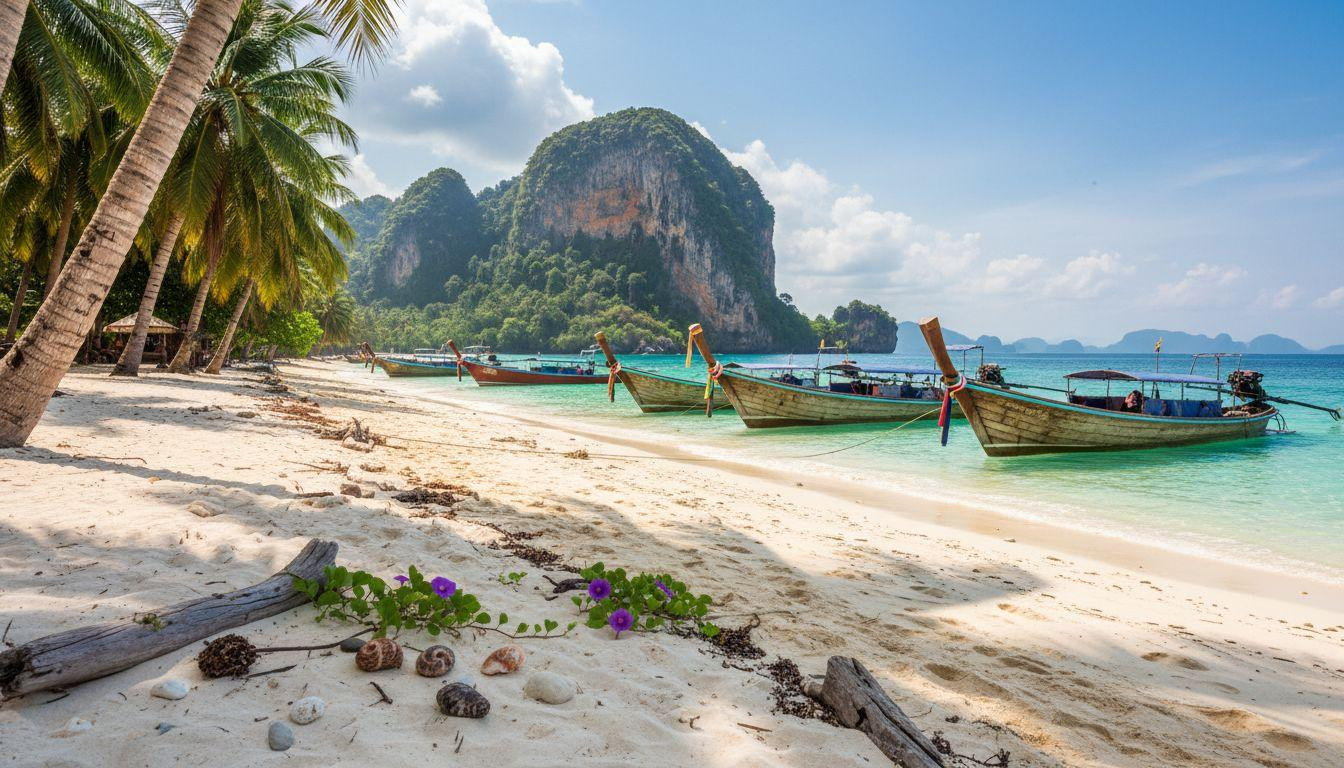
December’s cold drives dreams of warm sand between your toes and crystalline water stretching to the horizon. While most travelers endure winter’s grip, these 10 tiny islands deliver turquoise perfection and peaceful beaches where each destination stays under 6 miles wide. From Thailand’s protected marine parks to Tonga’s untouched atolls, these warm-water gems keep authentic island life alive while offering the crystal-clear waters and serene beaches that make winter escapes memorable.
Ko Lipe, Thailand: Andaman Sea’s protected paradise
Ko Lipe floats in the Andaman Sea like a 2.7-square-mile jewel within Tarutao National Marine Park. The Urak Lawoi sea nomads have called this island home for generations. Their traditional longtail boats dot the neon blue waters at sunrise.
Three pristine beaches ring the island: Sunrise Beach faces east with coral reefs 50 feet from shore, Sunset Beach offers golden hour magic, and Pattaya Beach buzzes with Walking Street’s night market. Water temperatures hover at 84°F year-round. Horseshoe reefs nearby shelter sea turtles in waist-deep turquoise shallows.
Crystal waters and powder sand
Visibility reaches 100 feet underwater during December-April’s calm season. The Coral Garden snorkel site sits 10 minutes by longtail from Pattaya Beach. Local boat operators charge $15 for half-day reef tours. Fresh grilled fish costs $8 at beachside restaurants run by fishing families.
Thai-Muslim island culture
The Urak Lawoi speak their own dialect and practice sustainable fishing methods passed down for centuries. Roti flatbread and curry appear on every menu. According to local tourism data from 2025, visitor numbers stay 60% lower than nearby Phi Phi Islands.
Fulidhoo, Maldives: Local island authenticity
Fulidhoo measures just 1.2 square miles in the Baa Atoll UNESCO Biosphere Reserve. This local island houses 500 residents who fish, farm, and welcome guesthouse visitors. No luxury resorts crowd the lagoon. Traditional dhoni boats anchor where shallow turquoise water meets white coral sand.
The bikini beach stretches 300 yards on the island’s western tip, separated from the village to respect local customs. Water temperature stays at 82°F through winter months. Speedboats from Dharavandhoo airport reach the island in 45 minutes for $150.
Maldivian traditions and tuna curry
Village women prepare traditional tuna curry using bonito flakes and coconut milk. Men fish using age-old techniques, returning at 6am with the daily catch. Dhivehi language echoes through narrow coral stone streets. Recent visitor surveys conducted in 2025 reveal 95% guest satisfaction with authentic cultural experiences.
Shallow lagoons and reef protection
The lagoon’s maximum depth reaches 12 feet, perfect for swimming and snorkeling without strong currents. Baa Atoll’s UNESCO status protects manta ray feeding areas nearby. Guesthouse rates average $80 per night, including traditional Maldivian breakfast.
Isla Mujeres, Mexico: Yucatán’s turquoise gem
This 3-mile-long island sits 20 minutes by ferry from Cancún’s crowds. Playa Norte’s electric aqua water and powdery white sand rank among the Caribbean’s finest beaches. Mayan temple ruins dot Punta Sur cliff, where pilgrims once honored Ixchel, goddess of fertility.
Golf carts replace cars on streets lined with colorful Caribbean houses. Water visibility reaches 80 feet around the underwater museum’s submerged sculptures. Island coves stay empty while Cancún’s beaches overflow with resort guests.
Underwater art and Mayan heritage
The MUSA underwater museum displays 500 life-sized sculptures submerged in 30 feet of crystal-clear water. Snorkel tours cost $25, including equipment and boat transport. The Tortugranja turtle sanctuary rehabilitates sea turtles injured by boats or fishing nets. Free admission supports conservation efforts.
Fresh ceviche and island rhythms
Fishing boats return at dawn with mahi-mahi, red snapper, and lobster. Beachside palapas serve lime-cured ceviche for $12. According to the regional visitor center, December-May offers optimal weather with daily highs of 82°F and minimal rainfall.
Little Corn Island, Nicaragua: Car-free Caribbean bliss
Little Corn Island spans 1 square mile of pure tranquility in the Caribbean Sea. No roads exist, only sandy paths connecting 1,200 residents and scattered eco-lodges. Solar power arrived in 2025, providing 24-hour electricity for the first time. UNESCO Seaflower Biosphere Reserve protects surrounding coral reefs.
The island’s crystal Caribbean waters stay at 84°F year-round. Local fishermen share their knowledge of secret snorkel spots where lobsters hide in coral formations. Golden beaches stretch empty except for hermit crabs and pelican footprints.
Miskito drumming and lobster diving
Indigenous Miskito traditions include evening drumming sessions and traditional lobster diving techniques. Fishermen free-dive to 40 feet using only mask and fins. Lobster season runs May-February, with fresh catch served at beachside restaurants for $18. The island hosts fewer than 5,000 annual visitors.
Your questions about tiny islands with crystal-clear water answered
What’s the best time to visit these tropical islands?
December through April offers optimal weather across most destinations. Southeast Asian islands (Ko Lipe) enjoy calm seas and 82°F water temperatures. Caribbean islands experience dry season with minimal rainfall. Princess Margaret Beach on Bequia stays perfect year-round with trade wind cooling.
How much should I budget for a week on these islands?
Budget travelers spend $400-600 weekly including guesthouses ($30-60/night), local meals ($5-15), and activities ($20-40). Mid-range visitors budget $800-1,200 for bungalows and organized tours. Luxury eco-resorts start at $200 nightly. Transportation varies: Ko Lipe costs $80 from Bangkok, while La Digue requires $1,200+ flights from North America.
Which islands offer the clearest water for snorkeling?
Ko Lipe’s Tarutao Marine Park delivers 100-foot visibility in protected waters. Fulidhoo’s shallow lagoons reach 80-foot clarity with minimal boat traffic. Biševo’s Blue Cave in Croatia creates electric blue illumination when sunlight enters between 10am-noon daily. All three destinations protect their reefs through national park or UNESCO status.
Pine-scented breezes carry salt air across Dugi Otok’s white pebble lagoon as fishing boats dot the turquoise horizon. These tiny islands preserve what larger destinations lost: authentic rhythms where local life continues unchanged, crystal waters where every grain of sand stays visible, and peaceful beaches where footprints wash away with each gentle wave.