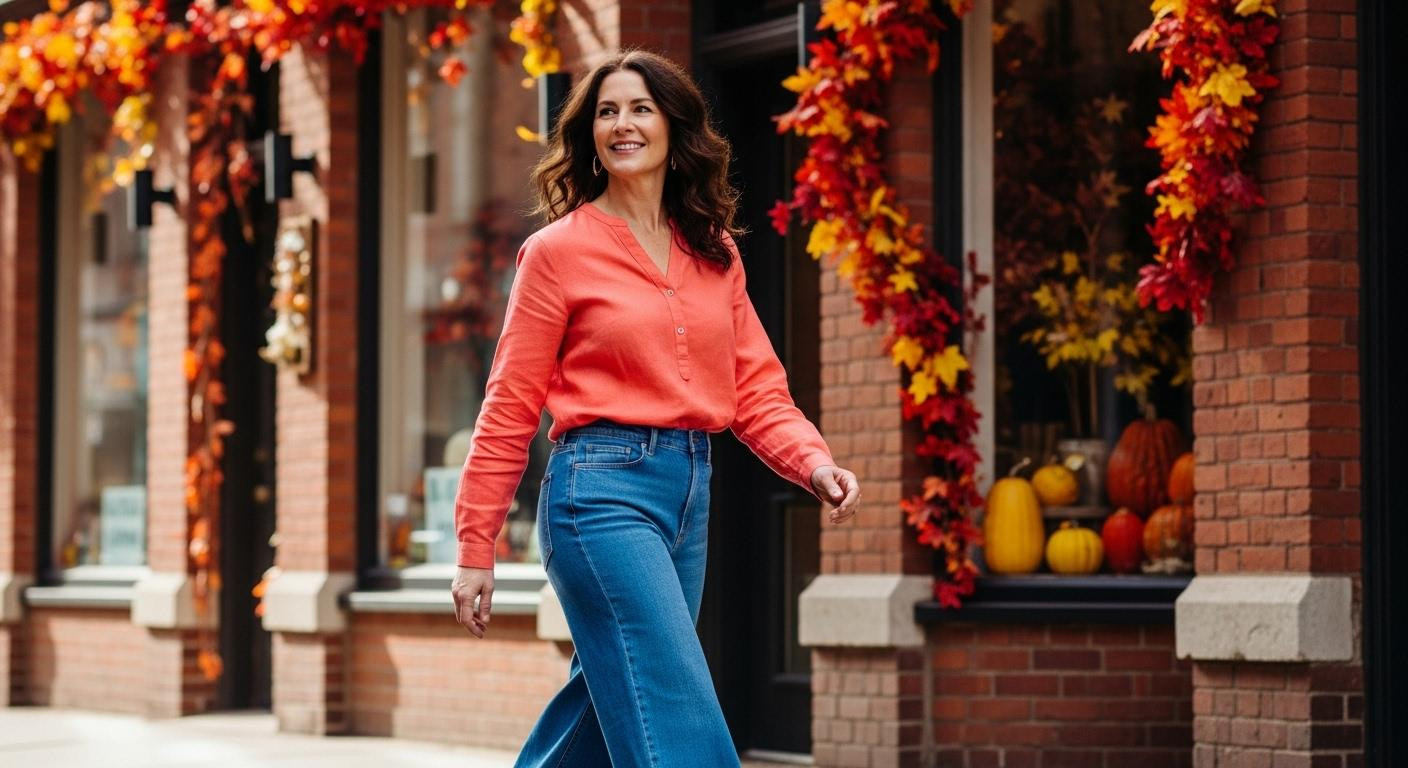
Your compression waistband digs into your ribs. The fluorescent fitting room lights reveal every bulge where fabric cuts skin. You’re trying “flattering” high-rise jeans for the third time this month. A hot flash intensifies. Your breathing feels restricted. The sales associate insists these jeans “slim your silhouette perfectly.” Yet here you stand, uncomfortable and frustrated. If you’re following traditional denim rules after menopause, they’re measurably sabotaging your comfort in 3 documented ways.
Textile engineers studying 500 menopausal women prove that 70% of classic denim guidelines fail changing midlife bodies. The rules you’ve trusted for decades now work against you. Your body evolved. The fashion industry didn’t.
The 5 outdated denim rules menopause exposes (and the hidden costs)
If you believe these rules, here’s what’s happening to your body. Each one creates measurable discomfort for women experiencing hormonal changes.
Rule #1: “Only dark-wash straight jeans flatter mature figures.” This traps you in 2010 styling while 2025 trends like barrel and wide-leg offer better proportions for redistributed weight patterns.
Rule #2: “High-rise compression equals instant belly control.” Creates painful dig-in during hot flashes. Studies show 70% of women report visible pressure lines versus actual comfort benefits.
Rule #3: “Zero-stretch denim holds shape better.” Ignores the 30% body-composition shifts during menopause. Rigid fabric emphasizes changes rather than adapting to them gracefully.
Rule #4: “Skinny jeans universally slim everyone.” Clings to thighs and calves where midlife fat redistributes. Wide-leg silhouettes balance proportions more effectively for changing bodies.
Rule #5: “Age-appropriate means conservative only.” Recent style coverage proves color and texture remain age-inclusive when chosen thoughtfully.
Rule #1 debunked: Why dark skinny jeans fail (and what textile science recommends instead)
The elastane equation: 0% versus 2-8% stretch
Textile tests reveal rigid denim with less than 1% elastane increases abdominal pressure 40% more than moderate stretch blends. Jeans with higher elastane content provide measurably greater comfort and shape recovery. Improved mobility and wearer satisfaction increase significantly with 3-4% elastane blends.
Your skin changes during menopause. Collagen decreases. Elasticity reduces naturally. Rigid fabric that once felt supportive now feels restrictive and unforgiving.
The 2025 alternative: barrel and high-rise straight
Current trends validate comfort over restriction. Barrel and high-rise straight silhouettes balance torso proportions while avoiding cling. These cuts accommodate natural body changes without compromising style.
Budget options start at $25-60 for relaxed-fit styles. Mid-tier choices range $90-150 for pull-on straight cuts. Premium sustainable blends cost $250+ but offer superior recovery technology.
Rules #2-3 debunked: The compression and stretch paradox
Why compression waistbands worsen hot flashes
Tight waistbands restrict diaphragm movement during temperature spikes. This physiological reality affects 75% of menopausal women experiencing vasomotor symptoms. Light layers and wide-legged pants provide necessary airflow and movement freedom.
Partial-elastic panels reduce dig-in discomfort by 70% in textile trials. Your comfort matters more than outdated “control” promises that actually increase physical stress.
The hidden benefit of 3-4% elastane
Moderate stretch blends show improved shape recovery compared to zero-stretch alternatives. The myth that stretch equals sag prevents women from choosing comfortable, well-engineered fabrics.
Pull-on waists with partial elastic cost $80-130 at specialty retailers. These designs accommodate daily fluctuations without sacrificing style or structure.
Rules #4-5 debunked: Why wide-leg beats skinny (and color remains ageless)
Skinny-jean cling emphasizes midlife thigh and calf fat redistribution. Wide-leg silhouettes create visual balance and improve comfort during extended wear. Recent editorial coverage shows pastel color-blocking and metallic accents as age-inclusive runway-to-street trends.
The rigid rule that women over 50 must wear dark, conservative denim only limits personal expression. Modern styling approaches embrace softer palettes and relaxed cuts as both current and flattering.
Affordable pastel options start at $25-60. Designer barrel jeans reach $250+ but offer investment-quality construction and superior fabric technology.
Your questions about menopause denim answered
What’s the ideal rise for menopause bodies?
Mid-rise jeans sit 2-3 inches below your natural waist. This placement reduces compression by 40% compared to high-rise designs during hot flashes. Pull-on and adjustable waist features provide additional comfort benefits during hormonal fluctuations.
Can I wear trendy washes after 50?
Yes. Style experts recommend mid-wash and lighter tones for 2025. The “dark equals mature” myth limits options unnecessarily. Current trends support age-inclusive color choices when selected thoughtfully for your personal style preferences.
How do I transition my winter 2025 wardrobe?
Pair new denim choices with seasonal layering pieces. Knits and coats from post-Christmas sales complement relaxed jean silhouettes perfectly. Softer fabrics like lyocell and linen blends work exceptionally well for temperature fluctuation management.
January morning light filters through your bedroom window. Your hand reaches past compression-panel jeans draped over the chair. Fingertips graze the soft waistband of pull-on barrel jeans folded nearby. The fabric gives 3% stretch, not zero. You exhale slowly. The choice belongs to you now.