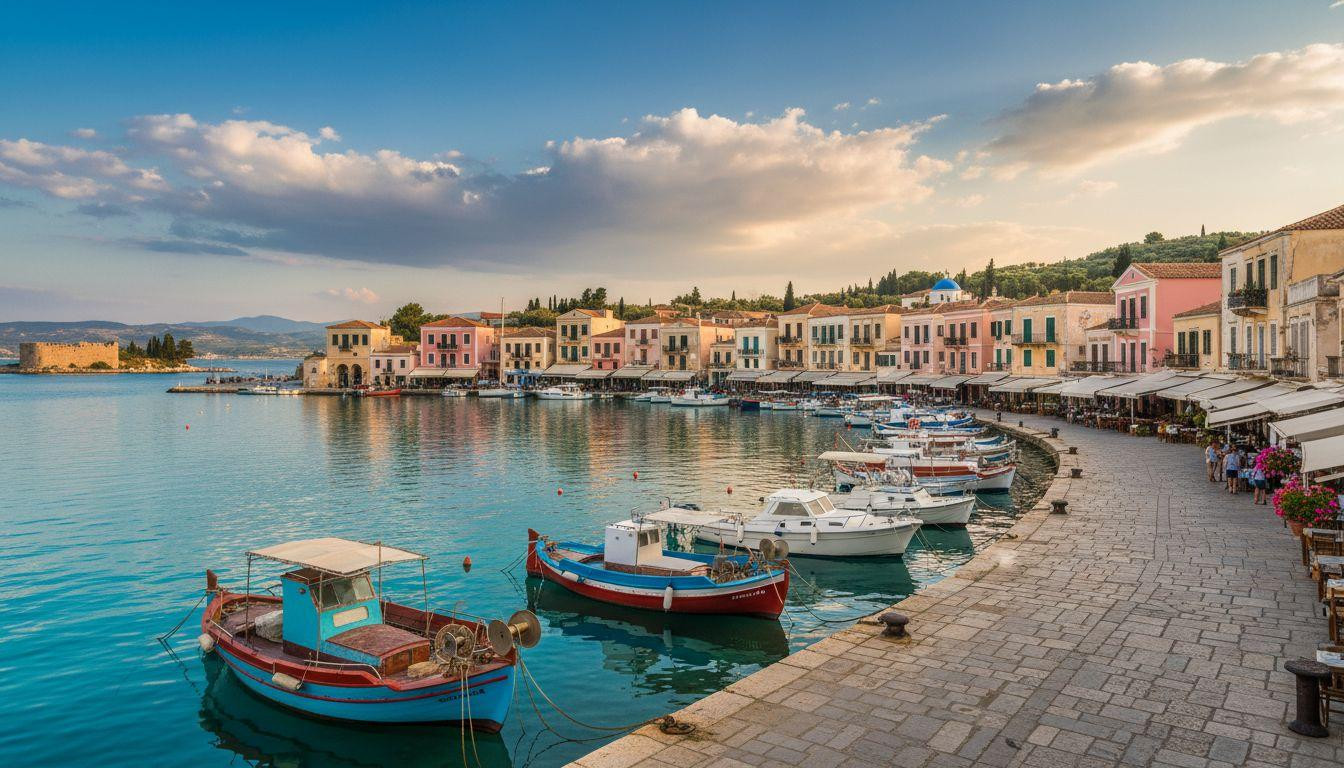
The morning ferry from Corfu rounds a gentle bend, and suddenly passengers lean forward against the rail. Below spreads a crescent harbor lined with pastel buildings that seem lifted from a Venetian postcard. This is Gaios, where 500 residents maintain fishing rhythms unchanged since the 1700s. While Corfu’s beaches swarm with crowds just 90 minutes away, this Ionian village preserves the Greece that existed before mass tourism arrived.
The Venetian harbor time forgot
Gaios harbor curves like a protective embrace around moored fishing boats and weathered stone quays. Pink and ochre facades reflect in still water at golden hour. Venetian-era architecture frames waterfront cafés where morning espresso costs just $3.
Two small islands guard the harbor entrance: Agios Nikolaos and Panagia. Church bells from the 18th-century chapel mark time as they have for centuries. Local fishermen depart at dawn and return by 4pm with fresh catches that appear on taverna tables by sunset.
The crescent layout dates to Venetian rule in the 14th-18th centuries. Unlike the castello tower that watches fishing boats anchor in medieval silence, Gaios evolved as a working harbor rather than a fortress. Stone balconies overhang narrow alleys that open onto the waterfront without warning.
Where blue caves meet olive groves
The Ionian turquoise secret
Paxos’ Blue Caves lie just 15-25 minutes by boat from Gaios harbor. Morning light penetrates limestone caverns, creating electric aquamarine water that rivals the clarity found in Milos or the Small Cyclades. Shared boat tours cost $27-66, departing at 9am when sunlight angles perfectly into the caves.
The west coast drops into dramatic cliffs punctuated by sea caves. Water temperatures reach 75°F by July, perfect for swimming through underwater passages. Unlike Corfu’s crowded beaches, these caves see perhaps 20-30 visitors per day during peak season.
Ancient olive oil tradition
Olive groves carpet Paxos from coast to coast, their silver-green canopy broken only by small villages. The island produces exceptional olive oil from trees planted centuries ago. Several small producers offer tastings for $15-20, explaining cold-press techniques passed down through generations.
Morning walks through groves reveal the scent of warm stone and olive leaves. Medieval Croatia keeps fishing village calm 20 minutes from Zadar, but Paxos achieved this balance naturally through geography rather than preservation efforts.
The rhythm of island life
Morning silence on the waterfront
Dawn in Gaios belongs to locals. Harbor water lies mirror-flat, broken only by gentle slapping against stone quays. Café owners arrange chairs under Venetian archways while fishing boats prepare for daily excursions. Church bells echo across empty squares at 7am sharp.
Unlike mainland Greek ports, Gaios maintains unhurried rhythms. Conversations happen in whispers. Footsteps echo on stone alleys. The loudest sound might be waves lapping against boat hulls or distant laughter from a waterfront taverna.
Sunset taverna culture
Evening meals in Gaios follow ancient patterns. Fresh fish grilled over charcoal costs $18-25 per plate. Local wine from Antipaxos vineyards accompanies simple mezze plates of olives, cheese, and tomatoes. Dinner begins at sunset and stretches past midnight.
Family-run tavernas operate seasonally, closing November through March. Like the lobster village that keeps turquoise lagoons empty 3.5 hours from Cancun, Gaios preserves authentic fishing culture rather than adapting entirely to tourism demands.
Planning your escape
Ferry connections run 1-4 times daily from Corfu Town, taking 60-90 minutes and costing $11-27 per person. High-speed hydrofoils reduce travel time to 45 minutes but operate less frequently. May through September offers optimal weather with water temperatures of 68-75°F.
Small guesthouses near the harbor charge $99-198 per night during peak season. Book early for waterfront rooms with harbor views. Fiji caves that glow blue through underwater passages require similar advance booking for boat access, especially during summer months.
Scooter rentals cost $22-38 daily, though Gaios itself requires only walking. The entire island measures just 8 by 4 miles, making day trips to Lakka (6 miles north) or Loggos (4 miles east) easily manageable.
Your questions about Gaios answered
How does Gaios stay so quiet compared to other Greek islands?
Paxos has no airport, creating a natural filter that discourages casual visitors. The island accommodates maximum 2,500 daily visitors during peak season, compared to 15,000+ on popular Cyclades islands. Limited ferry connections and lack of large resort development maintain village-scale tourism.
What makes the Blue Caves special compared to similar destinations?
Paxos’ Blue Caves feature exceptionally clear water due to limestone geology and minimal sediment runoff. The caves remain accessible by small boats only, preventing overcrowding. Morning sunlight creates optimal turquoise illumination between 9-11am, when most tours depart.
Is Gaios better than staying in Corfu for island hopping?
Corfu offers more nightlife, shopping, and direct flights, making it convenient for shorter stays. Gaios provides authentic village life and direct boat access to Blue Caves without driving. Choose Corfu for variety and amenities, Gaios for calm authenticity and natural beauty.
Evening light fades across Gaios harbor as fishing boats return with tomorrow’s catch. Taverna candles flicker under Venetian archways. The last ferry to Corfu departs, taking day visitors back to crowds and schedules. Here, time moves with tides and sunset, as it has for 500 years.