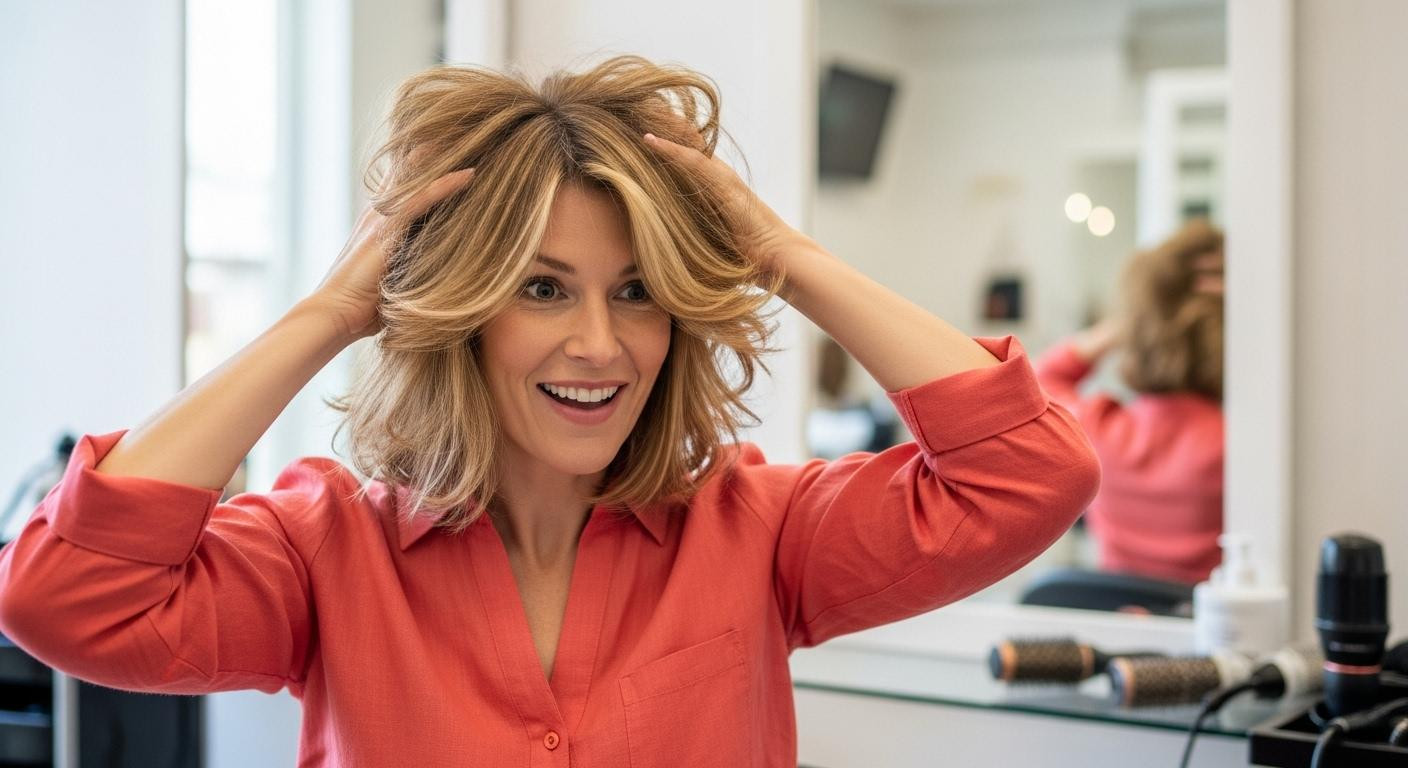
Run your fingers through a blunt bob and they slide straight down, catching on that thick shelf of ends. Now try the same motion after a feathered cut. Your fingertips catch on wispy layers that spring back independently, each strand moving like it has its own breath. The texture shocks you. This isn’t styling magic. It’s graduated layering science that creates genuine softness through precise angles and spacing.
In 2025, the feathered bob exploded across Instagram with over 500,000 posts showcasing that airy bounce. Emma Stone debuted her auburn version, proving this isn’t your grandmother’s 1970s shag. Hairstylists specializing in fine-hair techniques confirm the cut uses point cutting and graduated angles to push hair outward, creating volume without weight.
The tactile difference: why feathered ends feel weightless
Blunt bobs create a wall of uniform hair. Your fingers slide through but meet resistance at those thick, even ends. Feathered bobs change the physics entirely. Professional stylists with decades of layering experience explain how graduated cuts push hair outward through angled precision.
Point cutting creates spacing between individual strands, allowing air circulation and independent movement. Unlike heavy layers that feel choppy, or thinning shears that remove bulk unevenly, point cutting lifts without removing essential density. This textured approach explains why your round brush glides through so easily.
The styling time drops to 2-5 minutes because layers already have directional movement built in. Hairstylists specializing in effortless textures note how feathered ends flow seamlessly, creating that cool girl vibe without effort. The softness isn’t accidental. It’s engineered through precise angle graduation.
The 1970s science that 2025 perfected
How graduated angles create the feathered effect
Feathering layers hair at specific angles, not horizontal blunt lines. 15-degree angles create subtle movement for conservative styles. 45-degree graduation produces Emma Stone’s signature outward push. 75-degree cuts maximize volume for fine hair that falls flat.
Point cutting differs from thinning shears entirely. Stylists trained in precision techniques hold sections vertically, positioning shears perpendicular to create peaks and valleys in the hair. This removes minimal bulk while creating maximum texture. Advanced layering methods use these same principles for lasting lift.
Why modern feathering beats 1970s shags
Farrah Fawcett’s era required heavy teasing and high maintenance. Modern feathering preserves density while creating movement through internal layering techniques. Instead of uniform feathering everywhere, 2025 stylists use face-framing precision.
Celebrity hairstylists adapting these cuts focus on weightless finishes without sacrificing fullness. The result feels airy but looks substantial. Razors got replaced by precision shears for cleaner lines that last longer between cuts.
Your hair type determines feathering success
Fine to medium hair: the ideal canvas
Cosmetologists specializing in volume creation confirm that fine to medium hair responds best to feathered techniques. Fine hair lacks natural body, so feathering creates dimension and lift by building layers that don’t weigh each other down. Medium hair gains movement without losing essential fullness.
Straight and wavy textures show feathering most dramatically because you can actually see the texture variation. The technique requires minimum 100-150 strands per square inch for structural hold. Volume-enhancing cuts use similar density requirements for lasting results.
Thick hair adaptations (and when to avoid)
Professional stylists warn that excessive layering on thick hair creates puffiness rather than soft flow. The solution involves internal layering that removes 20-30% of bulk without disrupting the surface appearance. Coarse hair needs careful density adjustments.
Very fine or thin hair may lack the structure feathering demands. Oval and heart-shaped faces benefit most from the cheekbone-lifting, jawline-softening effects. Face-framing techniques complement feathered bobs perfectly for these shapes.
The $200 salon request that changes everything
Walk into your salon with specific language: “Graduated feathered layers with point cutting, not thinning shears.” Chain salons charge $100-150 for basic versions. Mid-range stylists with advanced training run $150-300. Celebrity-tier cuts reach $400+ but use identical techniques.
Styling becomes effortless with the right tools. A 1.5-inch round brush and 350-degree heat for two minutes creates Emma Stone texture. Bumble and bumble Texturizing Spray ($35) adds airy lift. Ouai Sea Salt Spray ($28) builds volume without heaviness. Compare this to blunt bobs requiring 4-6 minutes daily and heavier products.
Your questions about I tried the feathery bob and the softness is real answered
Does feathering work on curly hair, or only straight and wavy textures?
Curly hair can accept feathering but visibility decreases significantly. Loose waves (2B-3A patterns) show feathered texture clearly. Tight curls (3B and beyond) hide layer graduation, making the technique less effective. Stylists experienced with textured hair recommend dry-cutting curly feathers to see true results.
How does the feathered bob compare to shag or wolf cuts for volume?
Feathered bobs offer professional polish that shags and wolf cuts lack. Shags create all-over edgy layers. Wolf cuts combine mullet proportions with crown volume. Feathered bobs focus on face-framing sophistication with neck-to-shoulder lengths that work in corporate settings.
What’s the maintenance schedule for feathered layers?
Feathering grows out softer than blunt cuts, requiring trims every 8-10 weeks versus 6-8 weeks for precision bobs. Point-cut touch-ups every 4-6 weeks ($50-80) refresh wispy ends. The gradual loss of movement feels more natural than the shelf appearance blunt cuts develop.
December salon mirror reflects your transformation. You reach up instinctively, fingertips grazing layers that bounce back independently, catching light at different angles. The wispy ends feel nothing like the blunt shelf you walked in with. This softness isn’t temporary styling. It’s permanent architecture. And it’s absolutely real.