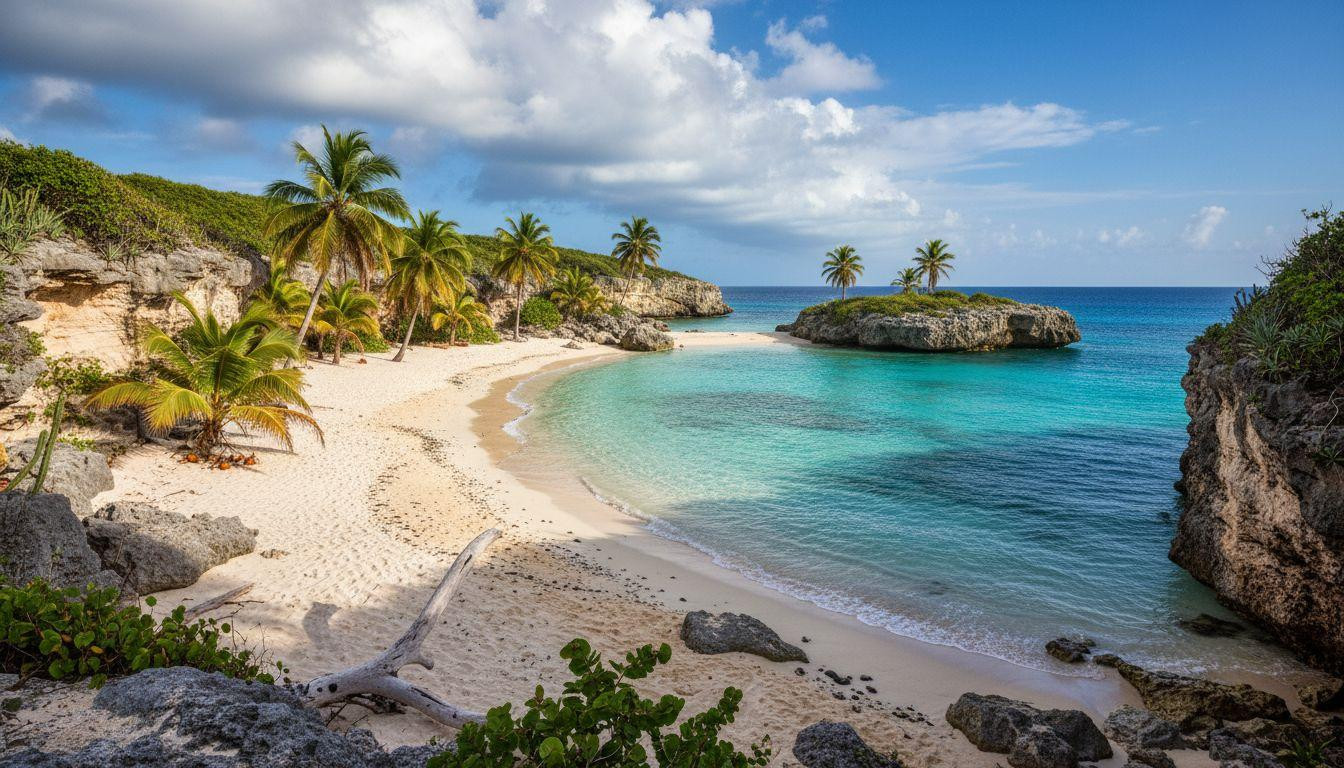
Winter sunlight catches turquoise water in protected coves where limestone cliffs hide swimming paradises from view. These 10 tiny warm islands shelter crystal-clear lagoons behind dramatic rock walls, creating intimate amphitheaters perfect for December escapes. Each destination offers that breathless discovery moment when you round a cliff face and see pristine water appearing where it shouldn’t exist.
Caribbean gems where cliffs frame turquoise perfection
The Caribbean’s warm waters average 80°F in December, making these cliff-protected coves ideal winter retreats. Trade winds create perfect conditions while vertical rock formations shelter swimming areas from ocean swells.
Providenciales in Turks and Caicos leads with Long Bay’s 3-mile stretch of powder-fine sand. Low limestone formations create multiple crescent coves where shallow turquoise waters extend far offshore. Water depths remain standable for hundreds of yards, perfect for paddleboarding in glass-calm conditions.
Direct Miami flights cost $400-700 roundtrip, with beachfront villas renting for $5,000-15,000 weekly. Arrive before 9am to avoid kiteboarder crowds and enjoy the morning stillness when sea turtles often surface in nearby waters.
Hidden lagoons where boat access reveals secret swimming
Some of the world’s most stunning coves require boat transportation, adding adventure to the discovery experience. El Nido in the Philippines showcases this perfectly with Big Lagoon’s kayak-only access through towering karst cliffs.
Limestone cathedrals frame emerald water
Big Lagoon sits within 80-meter limestone walls forming a natural cathedral around 200×100-meter swimming area. Water shifts from emerald to turquoise based on depth and cliff shadows. Tour boats cost $25 for full-day lagoon circuits, with December offering the lowest crowds of the year.
Ancient formations create modern paradise
These limestone karsts formed millions of years ago, creating today’s protected swimming sanctuaries. Manila flights to El Nido cost $100-200 via budget airlines, making this Southeast Asian gem surprisingly accessible. Local accommodations range from $500-2,000 weekly in town.
Volcanic cliffs shelter black sand coves
Martinique’s Anse Couleuvre demonstrates how volcanic landscapes create equally stunning cliff-hidden coves. The 30-meter volcanic cliffs back this isolated black sand beach, creating a Robinson Crusoe atmosphere just 90 minutes from the capital.
Dramatic contrast of dark sand and turquoise water
The black volcanic sand feels hot underfoot by midday, contrasting beautifully with the cool turquoise water protected by surrounding cliffs. This 0.3-mile wide cove stays isolated due to winding forest roads requiring rental cars. Similar volcanic formations shelter colorful marine life throughout the Caribbean.
French-Caribbean culture meets geological wonder
Martinique blends French sophistication with Caribbean warmth, offering Creole cuisine and wine culture. Anse Couleuvre provides excellent turtle snorkeling, with nearby Anse Dufour offering calmer conditions for beginners. US flights via Miami cost $500-900, with northern coast accommodations ranging $2,000-5,000 weekly.
National parks preserve cliff-cove combinations
St. John in the US Virgin Islands protects 60% of its land as national park, including Trunk Bay’s famous cliff-framed cove. The 20-meter headland cliffs shelter a 0.5-mile beach featuring the Caribbean’s first underwater snorkel trail with 18 bronze plaques marking marine life.
Ferry access from St. Thomas takes 20 minutes for $8-15, with mainland US flights costing $250-500. The $30 vehicle park fee helps maintain the pristine conditions that draw 2,000 daily visitors during peak season.
Zakynthos, Greece offers Europe’s most dramatic cliff-cove combination at Navagio Beach. Sheer 200-meter limestone cliffs completely enclose this boat-only beach where the MV Panagiotis tobacco smuggling ship wrecked in 1980. These boat-accessed destinations share similar turquoise color shifts based on water depth.
Budget-friendly alternatives to expensive paradises
Roatán, Honduras provides Central America’s best value for cliff-protected coves. Camp Bay on the East End offers desert-island solitude with low volcanic rocks providing wind protection. Direct US flights cost just $300-450, while East End accommodations run 30% cheaper than comparable Cozumel options at $1,500-4,000 weekly.
The 45-minute rough drive from the airport requires 4×4 rental but rewards visitors with empty beaches where unique geological formations create Instagram-worthy contrasts. Local Garifuna culture adds authentic Caribbean flavor with traditional coconut fish dishes and drumming.
Your questions about tiny warm islands with cliff-hidden coves answered
What’s the best time to visit these destinations?
December through April offers the driest weather and calmest seas for cove access. Water temperatures range 75-82°F, while air temperatures stay between 75-85°F. December provides post-holiday lower crowds, especially after Christmas week.
How do these islands compare to famous alternatives?
Providenciales offers 50% savings versus Bora Bora with similar turquoise shallows. Roatán costs 30% less than Cozumel while providing better isolation. St. John delivers half the flight time to Maui from the East Coast with superior reef health.
What should I budget for a week-long trip?
Budget tier destinations like Roatán total $2,000-3,000 including flights and accommodations. Mid-range spots like Providenciales cost $4,000-6,000. Luxury options like Aitutaki reach $8,000-12,000 but offer unmatched South Pacific isolation and crystal clarity.
Morning light filters through trade winds, carrying salt mist and frangipani scents across cliff-protected coves. Each destination offers that perfect moment when turquoise water appears between limestone walls, creating swimming sanctuaries geography keeps quietly beautiful.