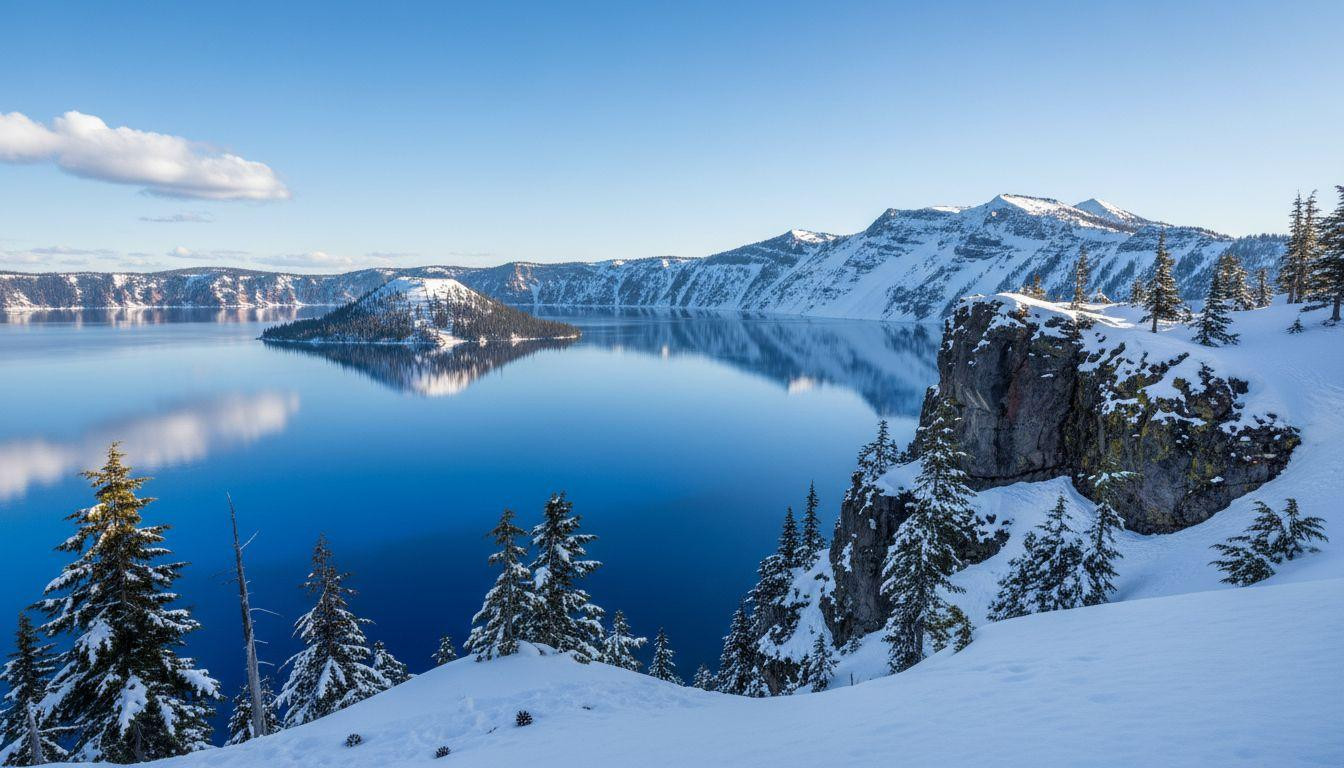
Snow crunches underfoot as you approach the rim of America’s deepest lake. Llao Rock’s ancient lava ledges emerge through winter mist, creating precarious overlooks above impossibly blue water. This massive volcanic formation offers six distinct zones where snowshoers discover Oregon’s most serene winter secret.
Crater Lake transforms completely in winter. Summer crowds vanish, leaving behind 40 feet of annual snowfall and profound silence. Only the south entrance operates December through April, filtering visitors to those willing to earn their views.
6 snowshoe zones around Llao Rock’s winter overlooks
Each zone offers unique perspectives on the 1,943-foot-deep lake. Ancient lava flows create dramatic viewing platforms 1,000 feet above turquoise water. Similar alpine experiences exist throughout the American West, but none combine volcanic drama with winter accessibility.
Zone 1: West Rim Overlook
Flat terrain stretches one mile from Rim Village along unplowed West Rim Drive. Beginner-friendly snowshoeing leads to constant lake vistas without elevation gain. Wizard Island rises dramatically 2 miles across the caldera, its cinder cone silhouette enhanced by winter clarity.
Free ranger tours operate weekends through Steel Information Center reservations. Groups explore snow-covered meadows while discussing Mount Mazama’s 7,700-year-old eruption. The 10am-noon schedule accommodates families seeking gentle winter adventure.
Zone 2: Llao Rock Lava Ledges
Gray-black andesite ledges jut precariously above deep blue water. Snow-covered cornices extend 10+ feet beyond solid ground, creating deadly beauty. Experienced snowshoers stay back from edges while photographing sunrise alpenglow on volcanic glass.
The ancient lava flow predates caldera formation. Klamath tribal legends describe Llao, the underworld giant whose battle with sky god Skell created this sacred lake. Winter storytelling programs occasionally share these creation myths around Steel Visitor Center fires.
Zone 3: Discovery Point Trail
This 2.4-mile round-trip follows historic routes to overlooks of the blue abyss. Captain John C. Fremont and Kit Carson first sighted the lake from this point during their 1853 winter expedition. They named it “Deep Blue Lake” before continuing south.
The 625-foot elevation gain rewards snowshoers with jaw-dropping rim arrival. Mountain rim trails throughout Oregon provide similar experiences, but none feature such dramatic color contrast between deep blue water and pure white snow.
Zone 4: Vidae Falls Snowshoe
Frozen cascades tumble 100 feet into snow meadows near Llao Rock. Off-trail navigation through 5-acre alpine basins adds challenge for intermediate adventurers. GPS coordinates 42.9°N, 122.1°W mark the secluded waterfall location.
Under 10 visitors daily reach this isolated zone during winter months. Ice formations peak mid-winter with consistent temperatures below 20°F. The meadow setting frames blue water views while providing shelter from rim winds.
Zone 5: Raven Trail Forest Ascent
Steep grades up to 15% lead through old-growth hemlock forest. Trees aged 300-500 years tower overhead with diameters reaching 6 feet. Snow depths increase isolation while muffling sound except for dripping melt from massive branches.
The 2-mile round-trip requires 4-6 hours with trekking poles essential for steep sections. Eastern mountain experiences cost significantly more while lacking this volcanic uniqueness. First lake views appear after the challenging climb rewards patience.
Zone 6: Rim Drive Full Loop
Expert-level 31-mile circumnavigation traces ancient lava ledges high above blue depths. This 3-5 day expedition tests endurance across unplowed November-April terrain. Only dedicated snowshoers attempt the complete caldera circuit.
Free winter camping permits allow backcountry access through Steel Visitor Center registration. Pacific Northwest alternatives offer similar solitude without volcanic drama. Storm exposure requires experienced winter camping skills.
Planning your Llao Rock winter journey
South entrance access operates year-round via Annie Spring Entrance Station off Highway 62. The 3.8-mile Munson Valley Road leads to Steel Information Center, requiring 4WD or chains during heavy snow periods. Parking fills early on weekends, arriving by 9am ensures spaces.
Park entrance costs $30 per vehicle for seven-day access. Snowshoe rentals through Rim Cafe run $20-30 daily when operating, though hours vary seasonally. REI locations in Medford (60 miles) or Eugene (180 miles) provide reliable equipment at similar prices.
Chiloquin and Klamath Falls offer budget lodging 30-60 miles away for $80-120 nightly. Winter temperatures range 20-35°F during daylight with overnight lows reaching 0-15°F. Layered clothing and emergency gear remain essential for rim exposure.
Winter silence transforms volcanic drama
Daily snowshoer numbers drop below 20 at Llao Rock area during winter months. Summer’s 500,000 annual visitors shrink to fewer than 50,000 through December-March. This seasonal transformation creates authentic solitude impossible during peak tourism.
The contrast between deep blue water and brilliant white snow creates Instagram-worthy photography. Dawn and dusk shift lake colors from cobalt to turquoise while rim shadows stretch across meadows. Wind-exposed conditions intensify the remote mountain experience.
Your questions about Llao Rock winter snowshoeing answered
What snowshoe experience level do I need for Llao Rock?
West Rim offers beginner-friendly flat terrain perfect for families and first-time snowshoers. Intermediate zones like Discovery Point and Vidae Falls require moderate fitness for elevation gains and off-trail navigation. Expert zones demand winter camping skills and storm exposure experience.
How does Crater Lake’s winter blue color compare to other mountain lakes?
The 1,943-foot depth creates intense cobalt coloring unmatched by shallower alpine lakes. Light scattering through pure snowmelt produces clarity exceeding 100 feet visibility. Winter enhances color contrast against white snow, making Crater Lake’s blue more vivid than Tahoe or Peyto Lake.
What makes Llao Rock different from other Pacific Northwest winter destinations?
Crater Lake costs 30% less than comparable winter destinations like Yosemite or Rocky Mountain National Park. The volcanic setting provides unique geology absent from typical Cascade peaks. Limited winter access filters crowds while maintaining ranger services and equipment rentals.
Sunrise touches volcanic glass above America’s deepest waters. Ancient lava ledges frame impossible blue against winter white silence. This is Oregon’s overlooked season.