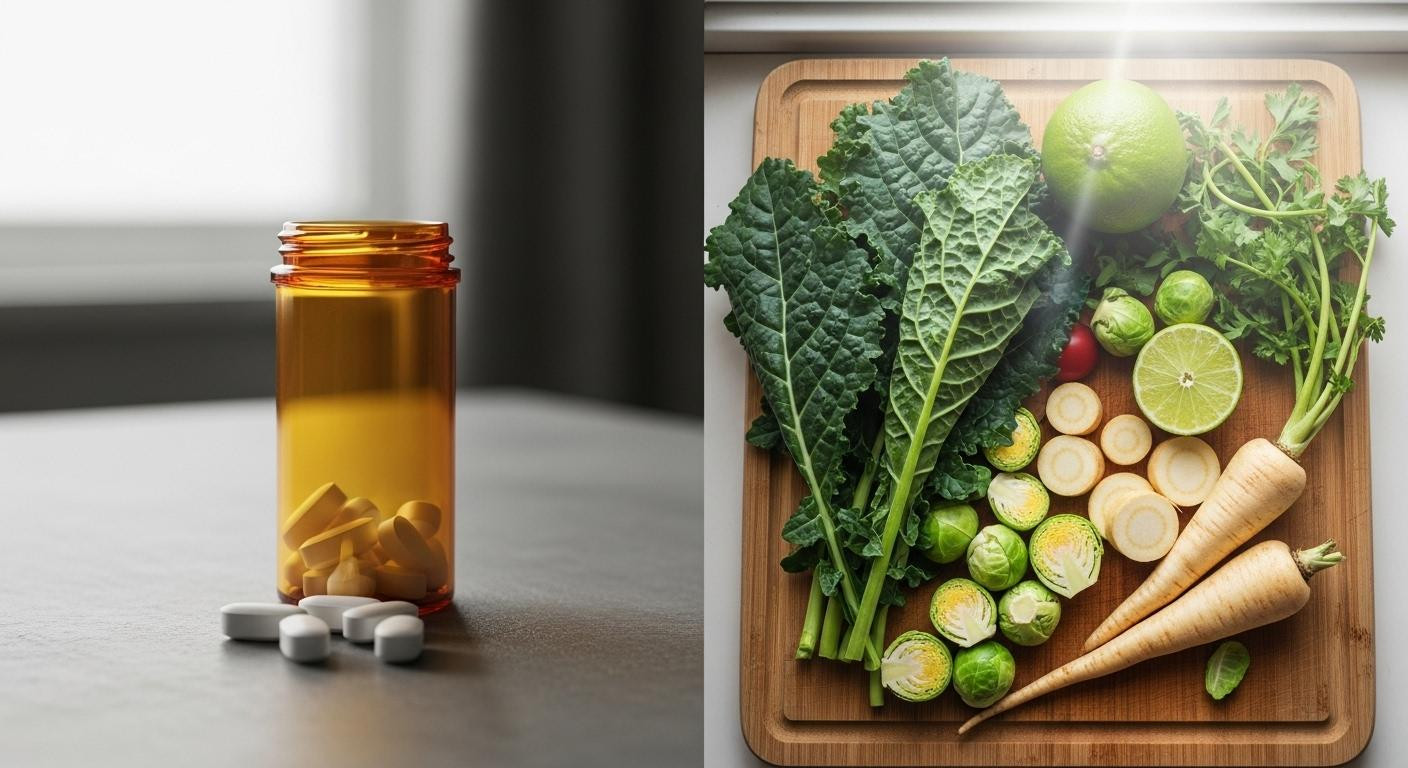
December 26, 2025 evening. You unfold your latest lab results across the kitchen table. LDL: 142 mg/dL. Your doctor’s prescription pad already has “atorvastatin 20mg” written in blue ink. You’ve read the warnings: muscle pain, liver enzyme elevation, potential memory fog. Eight winter vegetables sitting in grocery aisles right now contain soluble fiber compounds that bind bile acids with proven efficiency. The same mechanism statins exploit, minus the side effects. Clinical studies tracking participants reveal fiber dropped LDL significantly in 29 days. Here’s the natural pathway science confirms but pharmaceutical companies rarely mention.
The bile acid binding mechanism statins and vegetables share
Atorvastatin blocks HMG-CoA reductase to prevent cholesterol synthesis. Soluble fiber takes a different route with identical outcomes. It binds intestinal bile acids, cholesterol-rich compounds your liver produces for digestion.
When fiber captures these acids and escorts them out through stool, your liver must pull cholesterol from your bloodstream. This forces replacement bile production. According to recent research published in clinical nutrition journals, fiber prevents cholesterol absorption in the first place.
A 2019 study demonstrated dark leafy greens bind bile acids with measurable efficiency. The 2011 research showed lutein compounds in kale lower oxidized LDL by preventing arterial binding. Your body doesn’t distinguish between pharmaceutical and fiber-based bile acid removal mechanisms.
8 winter vegetables that activate cholesterol reduction pathways
Kale and Brussels sprouts: The lutein-fiber combination
Kale delivers omega-3 ALA plus lutein carotenoids per cup. Nutrition specialists with clinical experience note these carotenoids link to lower heart disease risk. Brussels sprouts add vitamin K and C while providing high fiber content that lowers cholesterol through bile binding.
Both cruciferous vegetables contain glucosinolates. These sulfur compounds enhance Phase II liver detoxification, optimizing cholesterol metabolism. Science proves cruciferous veggies support thyroid health, addressing common concerns about these powerful vegetables.
Parsnips and butternut squash: Soluble fiber champions
Parsnips contain soluble fiber that binds bile acids, decreases inflammation, and balances blood sugar simultaneously. At $1.99-2.99 per pound, they cost less than a single statin copay. Butternut squash provides carotenoids, vitamins A and C, plus omega-3s.
All protect the heart through anti-inflammatory pathways. One cup kabocha squash delivers 40 calories and beta-carotene. Eat with skin for maximum fiber concentration and bile acid binding surface area.
The 29-day timeline backed by clinical research
What the legume study reveals about vegetable fiber
Registered dietitians documented research where participants consuming 1 cup beans daily showed significantly lower LDL after 29 days. Vegetables share identical soluble fiber mechanisms. Pectin, beta-glucan, and psyllium-like compounds bind bile acids effectively.
Green peas provide this fiber 60% cheaper than fresh alternatives at $1-2 per 16oz frozen bag. Winter vegetables flatten blood sugar spikes by 30%, demonstrating fiber’s multiple metabolic benefits through the same pathways.
Potatoes and leeks: The demonized heroes
Nutrition experts debunk potato myths: “When eaten with their skin on, potatoes are rich in fibre to lower cholesterol.” At $0.89 per pound, skin-on potatoes deliver resistant starch. This prebiotic fiber feeds beneficial gut bacteria producing short-chain fatty acids.
These fatty acids further suppress cholesterol synthesis naturally. Leeks, related to garlic, protect blood vessels while decreasing inflammation through allicin-like compounds. Cheap winter vegetables detox your liver naturally, supporting the organ that regulates cholesterol production.
Cost comparison: $12 weekly vegetables vs. $180 annual statins
Generic atorvastatin costs $15-30 monthly with insurance, $60-120 without. That’s $180-1,440 annually. Eight winter vegetables total $12-15 weekly, providing cholesterol management plus vitamins, antioxidants, and fiber’s secondary benefits.
Heart health nutrition advisors structure cholesterol-lowering meal plans around “fruit and vegetables, whole grains, plant-based protein sources like beans.” No pharmaceutical line items appear. Frozen peas maintain fiber potency at $1 per pound. Grandmother stretched vegetables into 12 meals for $12 in December 2025, proving affordability matches effectiveness.
Your questions about winter vegetables and cholesterol answered
Can vegetables really replace statins for high cholesterol?
For mild-to-moderate elevation (LDL 130-160 mg/dL), fiber-based bile acid binding offers clinically significant reduction. The research showed measurable LDL drops in 29 days. However, genetic familial hypercholesterolemia or LDL above 190 mg/dL typically requires pharmaceutical intervention. Consult your doctor before discontinuing prescribed statins.
How much daily fiber targets cholesterol effectively?
Studies use 10-25g soluble fiber daily. One cup cooked Brussels sprouts provides 4g fiber. Kale offers 2.6g per cup. Three servings daily mixing kale, parsnips, and peas delivers 8-12g soluble fiber. Combine with oats and beans for 20g+ daily bile acid binding capacity.
Do cooking methods affect cholesterol-lowering properties?
Steaming preserves fiber structure better than boiling, which leaches water-soluble compounds. Roasting cruciferous vegetables at 400°F maintains glucosinolates. Eat squash and potato skins where insoluble fiber concentrates. This maximizes bile acid binding surface area for optimal cholesterol reduction.
December farmer’s market mist rises over kale bunches, parsnip roots, and Brussels sprouts still cold from morning harvest. Your lab results slip into the kitchen drawer beside prescriptions you haven’t filled. The vegetables wait in your crisper, their soluble fiber already binding to bile acids in studies you’ve never heard of until now.