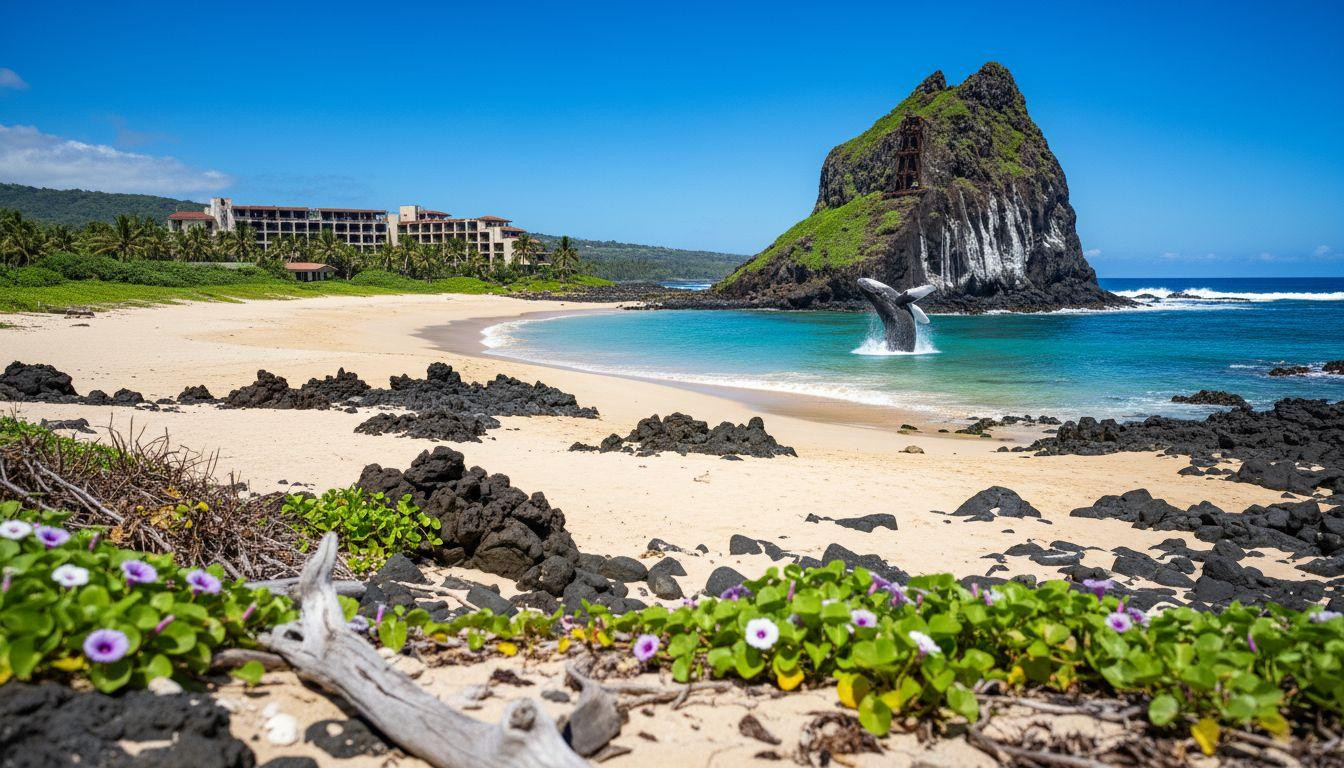
This Molokai beach rises from abandoned resort ruins where 110-foot Kaiaka Rock pierces azure water like Hawaii’s forgotten monument. Winter whales breach in the channel between Molokai and Oahu while you watch from golden sand that stretches empty for miles. The 1970s Kaluakoi resort complex stands vacant behind you, creating an eerie time capsule where nature reclaimed what tourism once promised.
Kepuhi Beach exists in the shadow of Hawaii’s development dreams. The surrounding ghost town of empty condominiums and abandoned hotel buildings tells the story of Molokai’s resistance to mass tourism. Only 70,000 visitors explore this entire island each year, compared to Oahu’s millions.
Where development stopped in 1979
The drive to Kepuhi Beach ends at 1171 Kalua Koi Road, where stone steps lead down to sand that feels untouched by time. Maunaloa town, home to just 300-400 residents, sits 2.4 miles inland from this coastal emptiness. The Kaluakoi resort development began in the 1970s with grand plans for luxury tourism.
Economic shifts in 2008 left the entire complex abandoned. Today, 148 resort units across 21 buildings stand vacant, their windows dark against the Pacific horizon. This abandonment created an accidental preservation zone where volcanic island formations remain undisturbed by commercial development.
The emptiness amplifies every natural sound. Wave crashes echo against lava rock formations without the buffer of crowds or commercial noise. Most visitors see fewer than 5 other people during their entire beach visit.
What Kaiaka Rock reveals about ancient Hawaii
Kaiaka Rock dominates the southern end of Kepuhi Beach like a natural cathedral spire. This 110-foot black lava promontory formed from ancient volcanic flows that shaped Molokai’s west end thousands of years ago. The rock features remains of a historic pulley system once used to lower cattle to barges offshore.
Black lava garden formations
The rock’s surface creates what visitors describe as an oriental rock garden effect. Bright green plants sprout from black lava crevices, creating dramatic color contrasts. Seabird nests dot the cliff faces, visible from the beach below. The fantastically shaped lava formations shift appearance as sunlight moves across their surfaces throughout the day.
Crystal water clarity and azure coloring
Kepuhi’s water achieves an unusual azure clarity that distinguishes it from neighboring beaches. The long, wide stretch of soft white sand extends for approximately one mile, interspersed with large lava rock formations. Winter months bring the clearest water visibility, with temperatures averaging 72-75°F. The contrast between black lava, golden sand, and blue water creates distinct coastal scenery that feels both familiar and otherworldly.
Winter’s perfect timing for whale theater
December through March transforms Kepuhi Beach into a free whale watching amphitheater. Humpback whales use the Molokai-Oahu strait as prime breeding grounds, with breaches visible from shore without boat tours. The winter timing aligns perfectly with mild 72-80°F temperatures that feel comfortable for extended beach viewing.
Surf drama against ancient lava
Winter swells create 8-10 foot waves that crash dramatically against Kaiaka Rock’s base. Local surfers navigate these breaks with skill that transforms dangerous surf into visual performance art. Sunset viewing from the northern end of the beach provides safe distance for watching this natural theater. The surf sounds carry across the empty beach without interference from crowds or development.
Free whale watching from abandoned luxury
Recent visitor surveys from 2025 confirm consistent whale sightings during winter months. The abandoned resort buildings provide elevated viewing platforms where visitors can watch for breaches across the channel. No boat tour costs or advance reservations required, just patience and timing similar to hidden coastal discoveries on other Hawaiian islands.
The quiet authenticity tourism couldn’t commercialize
Kepuhi Beach exists in a tourism vacuum that preserves authentic Hawaiian coastal rhythms. Molokai’s west beaches attract less than 10% of the island’s already minimal 70,000 annual visitors. The abandoned resort infrastructure means no beach services, no parking fees, no commercial pressure to rush your experience.
The nearest population center, Maunaloa, maintains traditional Hawaiian pace without tourist-oriented businesses. A Touch of Molokai store near the old Ohia Lodge provides basic supplies, but visitors should arrive prepared for complete self-sufficiency. This isolation creates opportunities for unhurried Pacific island experiences increasingly rare in modern Hawaii.
Your questions about Kepuhi Beach answered
How do you actually reach Kepuhi Beach?
Fly into Molokai Airport (MKK) 11 miles away, requiring 45-60 minute drives through Maunaloa. Rental cars are essential, averaging $80-120 per day in 2025. Kalua Koi Road leads directly to paved parking at Kepuhi Place’s end. Stone steps provide easy beach access near Kaiaka Rock. No public transportation serves this area.
Where should visitors stay near Kepuhi Beach?
Kepuhi Beach Resort units remain technically bookable through Airbnb or VRBO despite abandoned resort status. Rates range $150-250 per night, but amenities may be non-functional. Maunaloa town offers limited alternatives. Many visitors prefer accommodations in Kaunakakai on eastern Molokai with day trips to Kepuhi.
How does Kepuhi compare to nearby Papohaku Beach?
Papohaku Beach stretches 3 miles long and 100 yards wide, making it Hawaii’s largest white sand beach. Located 2.6 miles north of Kepuhi, Papohaku offers restrooms, showers, and camping facilities. Kepuhi provides more dramatic scenery with Kaiaka Rock formations but lacks services. Both beaches maintain very low visitor numbers year-round.
Morning light reveals Kaiaka Rock’s true scale against endless blue water. The abandoned resort buildings cast long shadows across sand that remembers Hawaii before it became a destination. Winter whales breach in the distance, performing for an audience of maybe three people.