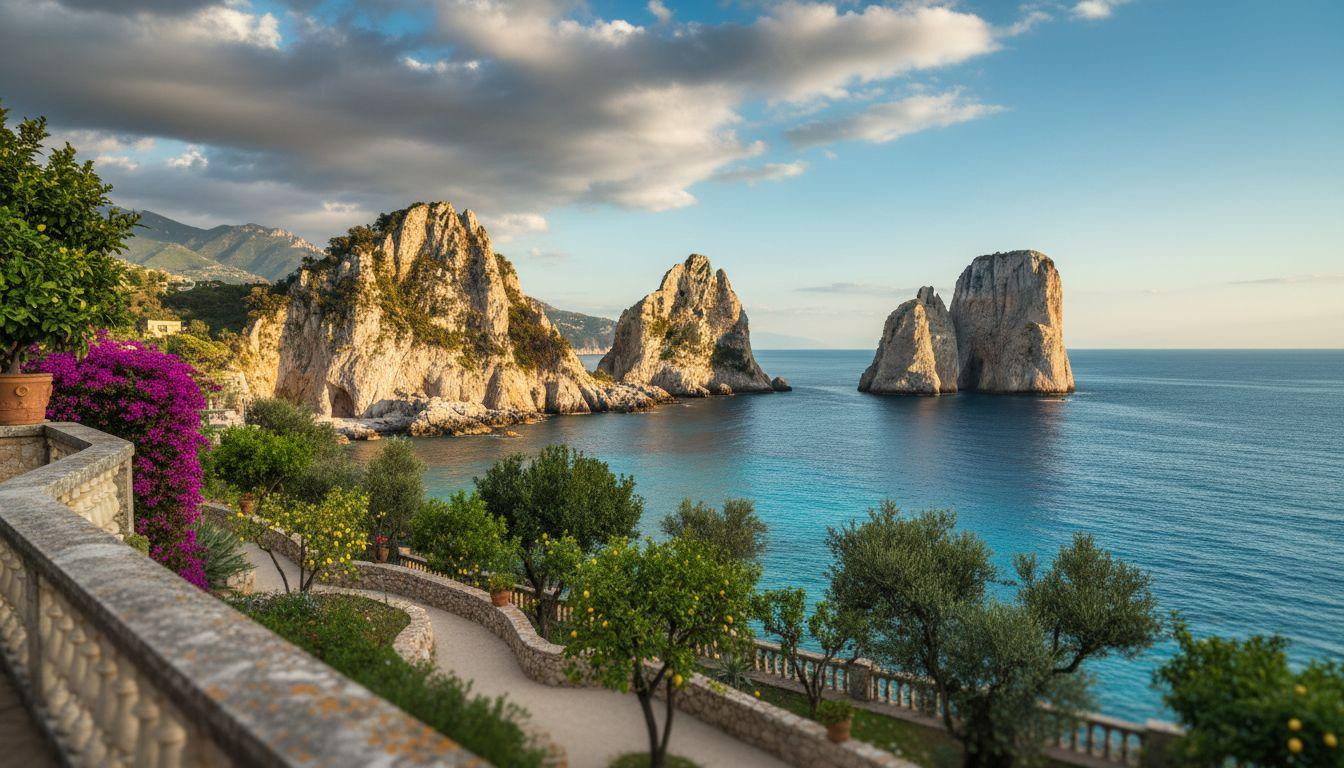
Three towering limestone pillars rise from turquoise Mediterranean waters like ancient sentinels guarding Capri’s southern coast. The Faraglioni sea stacks stretch 365 feet skyward, their pale stone catching golden light that transforms throughout the day. Most visitors see these otherworldly formations from a single vantage point. Six distinct zones across this tiny island reveal completely different perspectives of the same geological masterpiece.
Six viewpoints that transform Capri’s famous rocks
December’s shoulder season brings calm seas and crystalline air to this 4-square-mile island. Ferry crowds thin to manageable numbers. Local fishermen return to Marina Grande at dawn while tourists sleep in heated hotel rooms.
Each Faraglioni viewpoint offers unique light conditions and emotional resonance. The limestone stacks formed over millennia through wind and wave erosion. Their names reveal local character: Stella (attached to Capri by a narrow bridge), Mezzo (featuring the famous boat arch), and Scopolo (home to rare blue lizards found nowhere else on Earth).
Zone 1: Punta Tragara terrace at golden hour
The classic panoramic view unfolds from Punta Tragara’s elevated terraces. All three stacks align perfectly against the open Mediterranean. Villa gardens cascade down cliffsides in terraced steps.
The 20-minute walk from Capri town
Narrow stone pathways wind through lemon groves and bougainvillea. December temperatures hover around 57°F with occasional Mediterranean breezes. Procida’s volcanic beaches lie 25 miles northeast across the Bay of Naples.
Timing your arrival for perfect light
Sunset occurs around 4:30 PM during late December. Photographers arrive 90 minutes early to capture the light transition. Golden hour transforms white limestone into warm amber tones.
Zone 2: Marina Piccola sunrise reflections
Dawn at Marina Piccola reveals the Faraglioni mirrored in still bay waters. Fishing boats rest on pebbled beaches. Steam rises from waterfront cafés serving espresso to early risers.
The secret 7:15 AM show
Sunrise light strikes the eastern faces of all three stacks simultaneously. Water temperatures remain around 59°F through winter months. Local beach clubs charge $35 for sun lounger rentals during peak season.
Avoiding the 400 steps down
Water taxis operate from Marina Grande for $12 per person. The 10-minute boat ride eliminates steep coastal paths. Pioppi’s quiet beaches offer similar Mediterranean charm 45 miles southeast along the Cilento Coast.
Zone 3: Boat passage through Faraglione di Mezzo
Threading the natural arch by boat creates an intimate encounter with limestone geology. The opening measures 26 feet wide at water level. Small craft pass through when seas remain calm.
Group tours versus private charters
Shared boat excursions cost $30-70 per person for 2-hour circuits. Private charters start at $200 for half-day trips including Blue Grotto access. Morning departures encounter the calmest sea conditions.
The blue lizard sanctuary
Scopolo stack hosts the endemic Podarcis sicula coerulea. These blue-tinted lizards evolved in isolation over thousands of years. Their coloration provides camouflage against limestone and sea reflections.
Zone 4: Via Krupp serpentine path perspective
The historic zigzag road clings to cliff faces 200 feet above sea level. Currently closed for safety renovations, it remains viewable from elevated positions. German industrialist Friedrich Alfred Krupp commissioned the path in 1902.
Via Pizzolungo alternative trail
This 2-mile coastal path provides close-up Faraglioni views without Via Krupp access. Mediterranean scrub vegetation includes wild rosemary and myrtle. The trail requires 90 minutes of moderate hiking.
Zone 5: Monte Solaro chairlift aerial view
Anacapri’s chairlift climbs to 1,932 feet above sea level. The 12-minute ride costs $15 and operates 9:30 AM to 4:00 PM during winter months. Summit views encompass the entire southern coastline.
Bird’s-eye perspective of all formations
The aerial angle reveals the Faraglioni’s triangular arrangement in relation to Capri’s limestone cliffs. Amorgos monastery provides similar dramatic cliff-top Mediterranean views 280 miles southeast in Greece.
Zone 6: Arco Naturale clifftop frame
This natural rock arch measures 59 feet high and 39 feet wide. The formation frames distant Faraglioni views through its limestone opening. A 1-hour trail from Capri town leads through Roman villa ruins.
The quietest zone year-round
Even during peak summer months, Arco Naturale attracts fewer than 50 visitors daily. Wild fennel and Mediterranean herbs scent the coastal air. Stromboli’s volcanic drama offers contrasting island geology 150 miles south in the Aeolian archipelago.
Planning your six-view circuit
Two days allow unhurried exploration of all viewpoints. Ferry services from Naples operate hourly during winter for $25 round-trip. Hotel rates drop 40% compared to summer peaks.
Morning light favors Marina Piccola and boat passages. Afternoon sun enhances Punta Tragara and mountain perspectives. Winter’s clear air provides exceptional visibility across the Tyrrhenian Sea toward mainland Italy’s mountains.
Your questions about Capri’s otherworldly rock formations answered
What’s the best time to visit for fewer crowds?
December through February offers the quietest experience with 70% fewer visitors than peak summer months. Many restaurants reduce hours, but major viewpoints remain accessible. Hotel rates average $120 per night versus $300 in July.
How do the Faraglioni compare to other Mediterranean sea stacks?
Capri’s formations rank among the Mediterranean’s most dramatic coastal features alongside Malta’s Azure Window ruins and Cyprus’s Petra tou Romiou. The Faraglioni’s accessibility by boat and multiple land viewpoints distinguishes them from more remote formations.
Which viewpoint provides the most Instagram-worthy shots?
Punta Tragara delivers the classic postcard angle with all three stacks visible against open sea. Marina Piccola offers unique reflection opportunities at sunrise. Boat passages through the arch create intimate close-up perspectives unavailable from land.
Late afternoon light transforms the Faraglioni into golden limestone sculptures against deepening blue waters. Each viewpoint reveals new details of these ancient sentinels. The same rocks that welcomed Roman emperors now frame smartphone screens with timeless Mediterranean beauty.