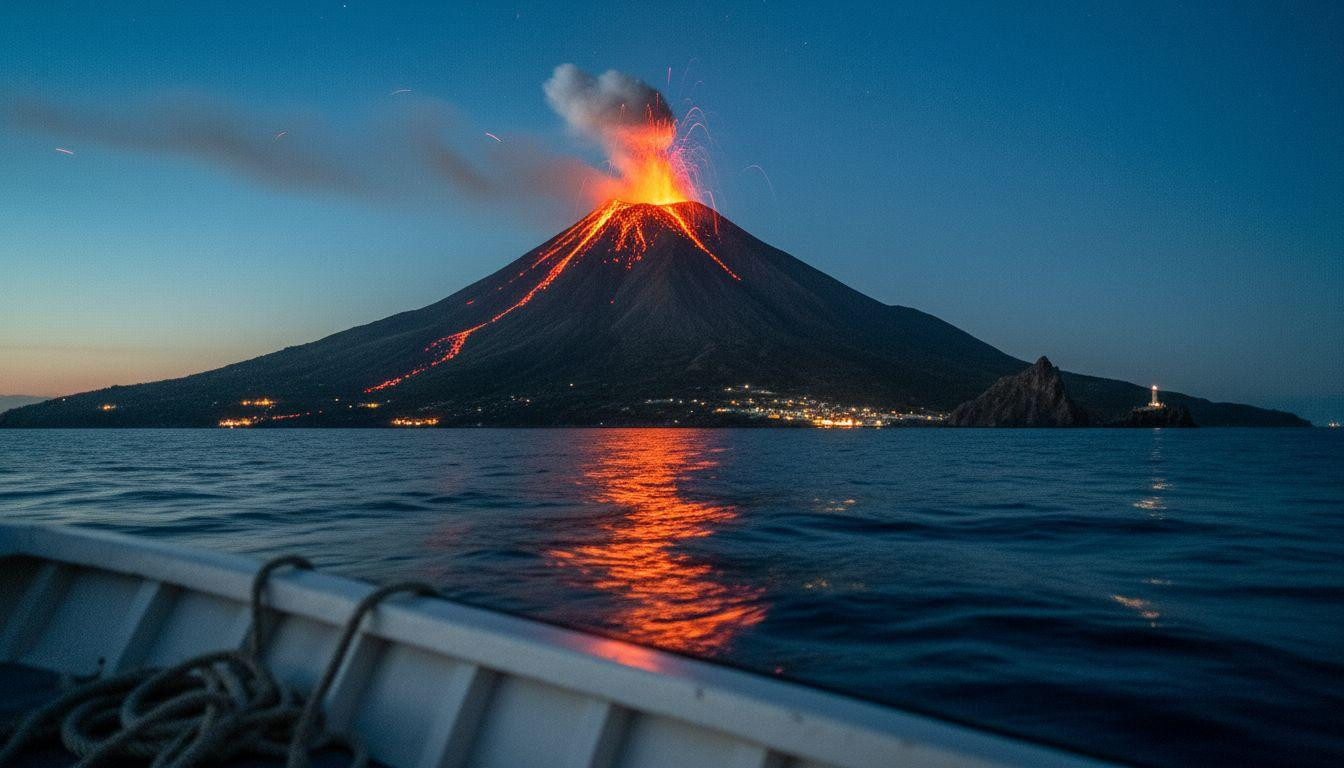
Santorini’s caldera views now require timed entries and $45 sunset fees while 2.5 million visitors overwhelm 15,000 residents each year. Hotels average $350 nightly in peak season as cruise ships dump 5,000 daily into Fira’s narrow streets. Meanwhile, Stromboli’s active volcano performs nightly explosions for a few hundred spectators from boats costing $35-90. The lava actually moves here, and authentic fishing villages remain intact at 40% lower costs.
Why Santorini lost its volcanic soul
Santorini’s Instagram fame created its downfall. The iconic blue domes require 2-hour waits for photos during sunset. Oia’s narrow paths pack shoulder-to-shoulder with selfie sticks each evening.
Hotels command $250-400 nightly in summer while restaurants charge $80 for mediocre seafood. The caldera offers passive observation of ancient volcanic remnants. No active geological drama exists, just sanitized luxury overlooking dead craters.
Cruise ships arrive daily carrying thousands who overwhelm the island’s infrastructure. Local culture vanished beneath souvenir shops and overpriced boutiques. This Greek island offers a quieter alternative with authentic coastal culture preserved.
Meet Stromboli where fire still reigns
The volcano that never sleeps
Mount Stromboli erupts every 15-20 minutes with incandescent bursts visible nightly. The 3,000-foot summit offers guided sunset treks for $30-55 per person. Sciara del Fuoco creates a permanent scar where lava flows directly into the Mediterranean.
According to regional tourism data, the volcano maintains continuous activity for over 2,000 years. Guides lead 5-hour hiking tours to observation points at 1,300 feet elevation. Thunder-like pops accompany orange explosions against star-filled skies.
Real prices, authentic villages
Guesthouses charge $100-200 nightly versus Santorini’s $350 averages. Ginostra village houses 30 year-round residents accessible only by sea. No roads exist in this amphitheater settlement where donkeys historically provided transport.
Family-run restaurants serve fresh swordfish for $18-25 compared to Santorini’s $45-60 tourist menus. Local fishermen arrive at 5am with daily catches while tourists sleep in simple accommodations overlooking black volcanic beaches.
The Stromboli experience Santorini cannot match
Night boat to Sciara del Fuoco
Shared eruption cruises cost $35-90 for 3-hour evening trips. Boats maintain safe distances while passengers witness incandescent bursts rippling down volcanic slopes. The spectacle occurs naturally without scheduled performances or entrance fees.
Hydrofoil operators include Liberty Lines with fares ranging $17-45 depending on departure points. Naples offers summer connections while Milazzo provides year-round service to the Aeolian archipelago. This Italian island nearby showcases similar authentic Mediterranean character.
Guided summit adventures
Volcanic treks depart 2 hours before sunset lasting approximately 5 hours total. Professional guides ensure safety while leading groups to observation zones. Equipment rental includes hiking boots and headlamps for nighttime descents.
Recent visitor surveys from 2025 indicate 95% satisfaction rates for guided volcano experiences. The rumbling underfoot creates slight unease mixed with elemental wonder. Milky Way visibility exceeds urban areas due to minimal light pollution.
Black beach tranquility
Ficogrande and Scari beaches feature coarse black pebbles warmed by Mediterranean sun. Water temperatures reach 75°F in summer without crowded beach clubs. Simple tavernas serve granita and local pastries steps from volcanic shores.
This volcanic island experience differs from Stromboli’s nightly displays but offers similar geological adventures. The UNESCO World Heritage designation protects the entire Aeolian archipelago’s outstanding volcanic features.
Practical reality versus Instagram perfection
Stromboli requires effort that filters casual tourists. Ferry-only access from Milazzo takes 2-3 hours versus Santorini’s airport convenience. Limited services operate October through April when weather restricts boat schedules.
Accommodations book quickly for summer volcano viewing seasons. Two-night minimum stays allow proper volcanic experiences including both hiking and boat perspectives. Better than Dubrovnik expensive crowds, authentic Mediterranean destinations reward travelers seeking genuine cultural encounters.
Current volcanic activity levels require checking safety bulletins before arrival. Licensed operators provide updated guidance while authorities restrict access during heightened activity periods. December visitors find solitude but limited services.
Your questions about this tiny island feels like the end of the world answered
How do I reach Stromboli safely?
Fly to Catania or Palermo then travel overland to Milazzo port. Hydrofoils operate year-round with summer frequency increasing for tourist season. Liberty Lines and Siremar provide reliable service with advance booking recommended for peak months.
When do volcanic eruptions occur?
Strombolian eruptions happen continuously every 15-20 minutes during normal activity phases. Night viewing proves most spectacular when incandescent material shows clearly against dark skies. Boat tours and guided hikes time departures for optimal sunset and eruption visibility.
How does Stromboli compare to other volcanic destinations?
Unlike Etna’s accessible roads and ski infrastructure, Stromboli maintains intimate island isolation. Iceland’s volcanic attractions require extensive travel while Stromboli offers Mediterranean climate and coastal setting. The nightly explosive displays provide consistent spectacle versus sporadic volcanic events elsewhere.
Dawn breaks over Ginostra’s silent harbor where fishing boats rock gently against volcanic pebbles. Steam rises from coffee cups in empty piazzas while Stromboli’s summit glows orange against purple skies. This is volcanic tourism without velvet ropes or timed entries.