Dubrovnik’s marble streets echo with the footsteps of 2.3 million annual visitors, cruise ship crowds filling the UNESCO-protected walls at $40 entry fees. Timed entries control the flow through narrow medieval alleys where Game of Thrones fame transformed a living city into a managed attraction. Yet 100 miles north along Croatia’s Dalmatian coast, Zadar offers the same limestone beauty, Roman heritage, and spectacular sunsets at half the price with a fraction of the crowds.
Why Dubrovnik lost its coastal soul
Peak season brings 8,000 cruise passengers daily to Dubrovnik’s Old Town. The city walls charge $40 for timed entry slots that book weeks in advance. Mid-range hotels average $275 per night in summer, while restaurants along the Stradun command $35 for simple pasta dishes.
Game of Thrones tourism increased visitors by 300% since 2013. The medieval Republic of Ragusa, once home to merchants and artisans, now houses souvenir shops and tourist-focused eateries. Split’s Diocletian’s Palace faces similar pressures as cruise itineraries reshape Croatia’s coast.
The numbers behind the crowds
Dubrovnik accommodates 40,000 residents but receives 1.4 million overnight stays annually. The Old Town caps daily visitors at 4,000, requiring advance bookings during peak months. Hotel prices increased 180% between 2015 and 2025.
When fame becomes a burden
Local families moved from the Old Town as properties converted to tourist rentals. Traditional konobas gave way to international restaurant chains. The morning fish market relocated outside the walls to make room for tour groups.
Meet Zadar’s living Dalmatian coast
Zadar’s Roman Forum spreads across downtown squares where 75,000 residents live and work. Ancient stones from Emperor Augustus’s era support modern cafés serving locals and travelers alike. Ferries connect the working harbor to Kornati National Park, maintaining maritime traditions dating back 3,000 years.
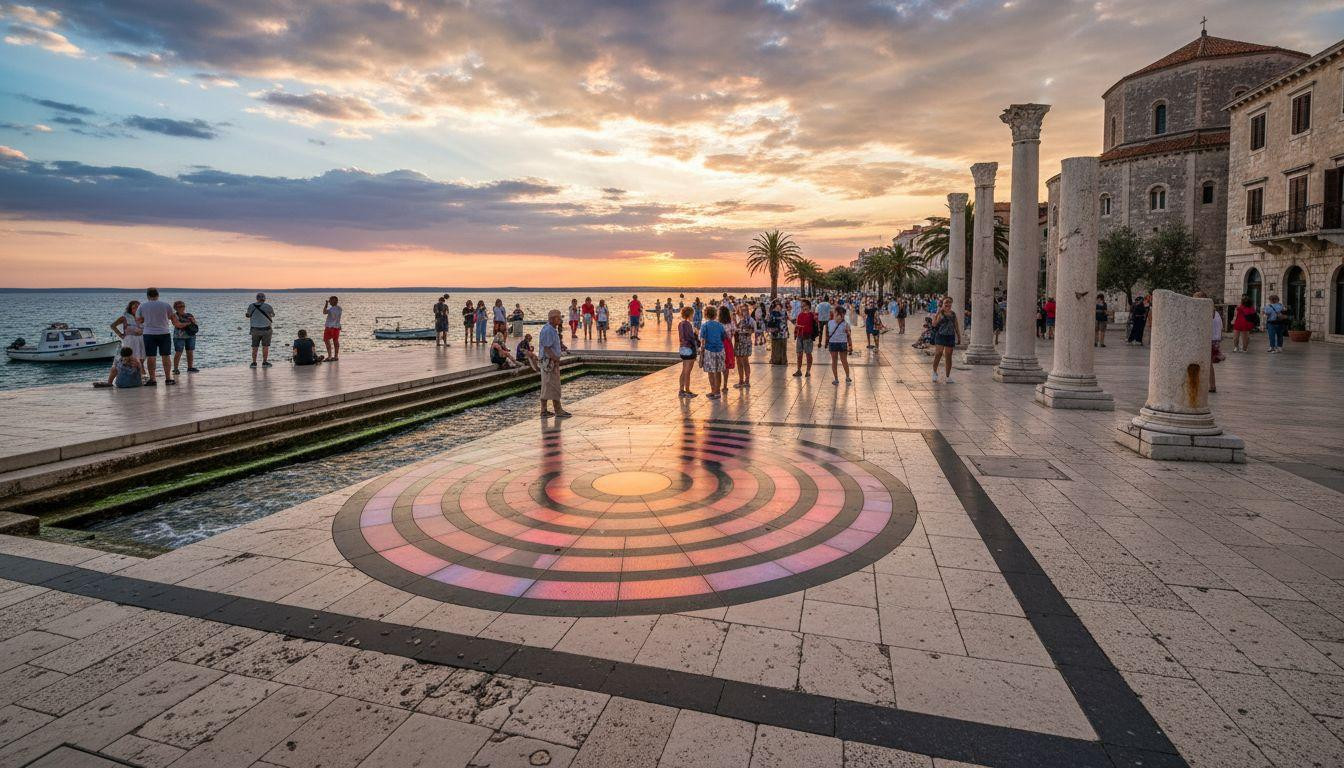
The 9th-century St. Donatus Church overlooks limestone promenades leading to the Sea Organ. This unique installation transforms wave energy into haunting musical tones through 35 underwater pipes. Mediterranean coastal architecture creates similar dramatic settings across the region.
Roman stones meet modern innovation
Visitors walk freely across the Roman Forum’s original stones, dating to the 1st century BC. The circular St. Donatus Church represents rare pre-Romanesque architecture. Archaeological layers reveal continuous settlement from Roman times through Venetian and Austrian periods.
Where sunset becomes community ritual
Alfred Hitchcock called Zadar’s sunset “the most beautiful in the world.” Each evening, locals and travelers gather along the Sea Organ steps. The 22-meter Sun Salutation installation activates at dusk, storing solar energy all day to create synchronized light shows. Families share benches while whale-like organ tones resonate through limestone.
The experience advantage Zadar delivers
Zadar maintains authentic coastal rhythms absent from tourist-saturated Dubrovnik. Morning fish markets operate in the Old Town center. Local cafés serve espresso to regulars reading newspapers in Croatian. Day trips to Kornati National Park cost $55 compared to $85 from Dubrovnik.
No entry fees restrict access to historic sites. Island alternatives throughout the Mediterranean offer similar relief from overtourism pressures.
Authentic coastal life without barriers
Ferry schedules accommodate commuters traveling to nearby islands for work. The morning market sells produce from Pag Island and local farms. Restaurants serve families celebrating birthdays alongside travelers discovering local wines.
Cultural access in shoulder seasons
May through June and September offer 75°F water temperatures with manageable visitor numbers. Hotel availability remains high while Dubrovnik books solid. Recent tourism data shows Zadar’s November 2025 growth as travelers seek authentic experiences year-round.
Practical value that transforms travel budgets
Three-night stays average $110 per night in Zadar versus $275 in Dubrovnik during peak season. Local restaurants charge $12-18 for fresh fish dishes compared to $25-35 in Dubrovnik’s Old Town. Bus connections from Split take 90 minutes to Zadar versus 4 hours to Dubrovnik.
Similar overtourism alternatives across Mediterranean cities offer comparable savings for Roman heritage experiences.
Your questions about Croatia’s coastal alternatives answered
How much money does Zadar save compared to Dubrovnik?
Budget travelers save $75 daily on accommodation and meals. Mid-range visitors save $120 daily during peak season. The Sea Organ and Sun Salutation offer free sunset experiences worth Dubrovnik’s $40 wall entry fee.
Does Zadar offer the same historical experience as Dubrovnik?
Zadar provides 2,000 years of continuous history from Roman foundations through medieval churches. While Dubrovnik showcases medieval walls, Zadar offers walkable Roman Forum stones and early Christian architecture. Both represent distinct periods of Dalmatian heritage.
When should travelers visit Zadar for optimal conditions?
May through June and September deliver warm seas with fewer crowds. July and August match Dubrovnik’s peak season but maintain lower prices. November through March offer mild weather with reduced services but growing cultural programming.
Evening light transforms Zadar’s limestone waterfront to honey gold. Wave-generated organ music fills the air as the Sun Salutation circle begins its LED dance. Locals and travelers share this daily ritual that costs nothing but offers everything Dubrovnik once provided.