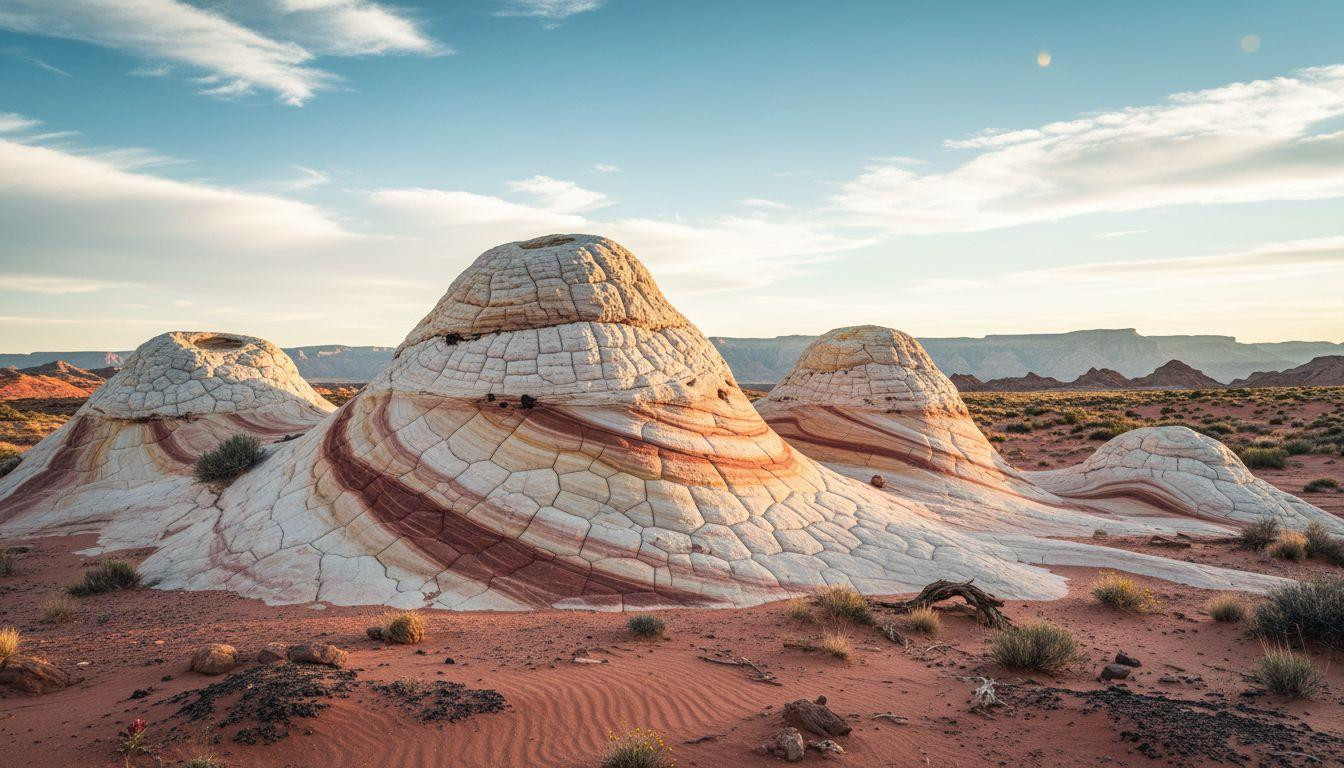
Sixty-five miles from Page, Arizona, a maze of white domes rises from red desert floor like frozen cauliflower. The formations at White Pocket twist into patterns that seem impossible. Navajo sandstone, deposited 190 million years ago, creates brain-like textures that photographers call otherworldly.
Unlike The Wave’s permit lottery system, White Pocket remains accessible to anyone willing to navigate 20 miles of rutted sand roads. The journey requires commitment. High-clearance 4WD vehicles or guided tours become necessities, not options.
Where ancient sand dunes became stone art
The drive along House Rock Valley Road prepares visitors for strangeness ahead. BLM Road 1065 cuts through Vermilion Cliffs National Monument at 6,000 feet elevation. Deep sand traps unprepared vehicles.
According to the Bureau of Land Management, these formations developed over millions of years through wind and water erosion. The white sandstone contrasts sharply with surrounding red rock. Mineral deposits created the bleached appearance that gives White Pocket its name.
Geologists describe the region’s Navajo sandstone as cross-bedded Jurassic deposits. Ancient dune patterns remain visible in stone layers. The polygonal cracking creates brain-like surfaces that appear almost organic.
The formations that stop time
White Pocket covers approximately one square mile of sculpted sandstone. Recent visitor surveys describe the area as surreal and peaceful. The formations rise in rounded domes and twisted spires.
Brain rock textures that defy belief
The most photographed features show polygonal cracking patterns. These weathering crusts developed through arid climate mineral deposition. Surfaces appear smooth from distance but reveal intricate detail up close.
Morning and evening light transforms the white sandstone. Soft golden hues saturate cream and warm tones. Harsh midday sun flattens textures that photographers avoid.
Swirling crossbeds frozen in stone
Red, pink, orange, and yellow bands spiral through white layers. These color variations resulted from different mineral concentrations during deposition. Wind patterns from ancient sand seas remain visible today.
The cauliflower formations cluster in the northern section. Cathedral Wash’s slot canyons offer similar geological drama 40 miles southeast.
Reaching the unreachable through desert roads
Access remains White Pocket’s greatest challenge and protection. The trailhead sits 38 miles from Kanab, Utah, via Highway 89. Page, Arizona, provides alternative staging at 36 miles distance.
The 4WD requirement that filters crowds
House Rock Valley Road becomes increasingly difficult after pavement ends. Deep silty sand and narrow rocky sections require high clearance vehicles. Cell phone service disappears completely.
Guided tour operators charge $220-$239 for full-day experiences. Dreamland Safari Tours and Seeking Treasure Adventures lead most excursions. Group sizes stay limited to 10 people maximum.
When seasons open the window
March through November provides optimal visiting conditions. Winter temperatures drop to 20-50°F with possible snow closures. Summer heat exceeds 100°F regularly.
Spring and fall attract most visitors seeking mild weather. Mountain destinations like Fitz Roy require similar seasonal timing for access.
Why solitude survives in 2025
An estimated 46 daily visitors reach White Pocket based on BLM projections. The Wave receives 64 lottery winners daily when permits succeed. Antelope Canyon processes thousands of tourists daily.
The access difficulty creates natural crowd control. No permit lottery exists, but vehicle requirements limit casual visitors. Photography tours book weeks ahead during peak seasons.
Desert silence dominates the soundscape. Wind whispers across slickrock surfaces. Distant ravens break the quiet occasionally. Remote wilderness experiences like Black Canyon offer similar solitude.
Your questions about White Pocket answered
Do I need permits like The Wave?
No lottery system restricts White Pocket access. Visitors must follow standard BLM Leave No Trace principles. A proposed $10 daily fee may take effect in 2025.
Check BLM trailhead conditions before traveling. Seasonal closures affect winter accessibility. Registration logs at trailheads help track visitor numbers.
Can I drive myself or need a tour?
High-clearance 4WD vehicles handle the approach roads. Rental companies rarely allow off-road driving in these conditions. Guided tours include transportation, water, and local knowledge.
Self-drive expeditions require spare tires, extra water, and GPS navigation. Cell service remains unavailable for emergency situations. Tour guides provide safety backup.
How does it compare to other Southwest formations?
White Pocket offers open landscape photography versus Antelope Canyon’s slot restrictions. The Wave costs $20 permits plus guide fees. White Pocket tours range $220-$239 including transportation.
Crowd levels stay dramatically lower than commercial attractions. Photography opportunities last all day rather than timed slots. Access requires more commitment but delivers greater solitude.
December light angles low across white domes at 7:30 AM. Red and yellow bands intensify in winter clarity. The brain rock formations catch shadows that define every polygonal crack. Silence wraps around stone waves that time froze perfectly.