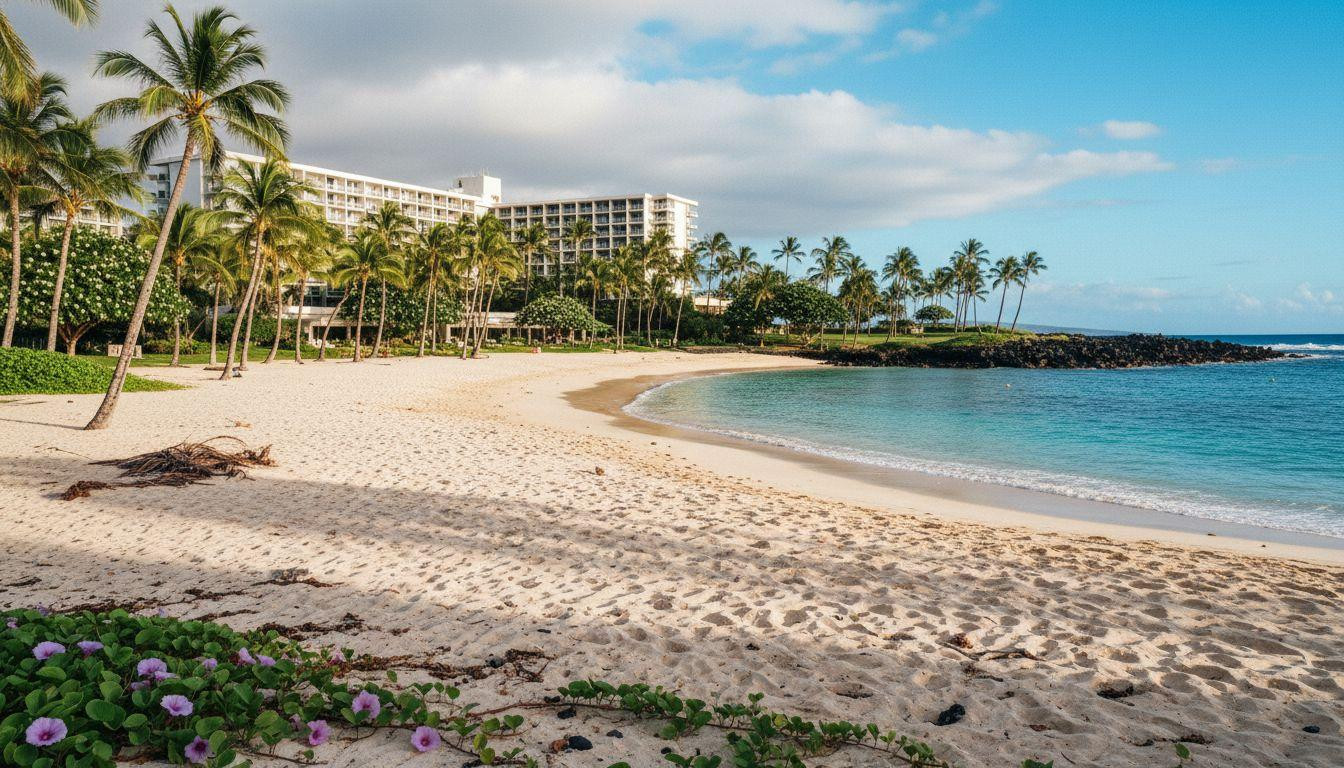
Most Big Island visitors race past Kohala Coast toward Kona’s crowded beaches. They miss Kaunaʻoa Bay, where Mauna Kea Beach Hotel’s white towers rise above what feels like private paradise. Only 40 public parking spots control access to this quarter-mile crescent of powdery white coral sand. The resort’s gate attendant issues numbered passes each morning. By 8am on weekends, pass number 40 disappears.
9 strategic zones that unlock Kaunaʻoa Beach access
This isn’t about wealth or connections. It’s about knowledge and timing. The beach remains legally public despite sitting behind resort gates. Hapuna Beach’s half-mile stretch one mile south offers backup parking when these 40 spots fill.
The 7:30am arrival window when 40 spots become reality
December sunrise touches Kaunaʻoa Bay at 7:17am. Golden light bathes empty white sand while trade winds carry plumeria scents from resort gardens. Arriving by 7:30am on weekdays guarantees parking. Weekend visitors need 7am arrivals to secure spots.
Morning advantage beyond parking
Early arrivals claim palm shade before crowds discover this Kohala Coast jewel. The 5-minute walk from parking to sand follows a paved path through resort grounds. Resort guests sleep while public visitors spread towels on coral sand that stays cool underfoot until 10am.
Palm shade sanctuary where natural cover meets coral sand
Thirty mature coconut palms line the crescent bay. Their moving shadows create natural air conditioning on 78°F December days. Water temperature holds steady at 75°F year-round. The protected bay faces northwest, sheltered from trade winds that roughen eastern shores.
Strategic shade timing
East-side palm shade covers morning swimmers until 11am. Afternoon shade shifts to the west side near Manta Ray Point. Smart visitors follow the shadows, avoiding midday sun that heats sand to uncomfortable temperatures. Resort chairs belong to hotel guests, but palm shade stays free.
Underwater zones where lava meets living coral
Kaunaʻoa’s rocky points hide snorkeling treasures. Yellow tang, parrotfish, and butterflyfish dart through coral gardens growing on volcanic basalt. Pololu Valley’s black sand beach 30 miles north offers dramatic contrast to this white coral paradise.
South point morning, north point afternoon
Snorkeling conditions peak in morning calm before trade winds create surface chop. Visibility reaches 40 feet on clear December days. The gentle sandy slope extends 50 feet offshore before deeper waters begin. Reef shoes protect against sharp lava rock and sea urchins hiding in crevices.
Manta ray ballet after sunset
Resort floodlights attract plankton starting at 8pm. Manta rays arrive to feed in these illuminated waters. Public viewers gather at Manta Ray Point for free shows that rival Dry Tortugas’ fort island exclusivity. Commercial tours charge $150 for water access, but shore viewing costs nothing.
Resort pass protocol that preserves public access
Hawaiian law guarantees beach access despite private resort ownership. The gate attendant issues free passes displayed on dashboards. Public parking sits adjacent to the golf clubhouse, currently relocated near tennis courts during hotel renovations. Traditional parking returns late 2025.
What public access actually includes
Beach access stays completely free. Resort amenities like restaurants and pools remain off-limits to non-guests. Public restrooms and outdoor showers serve day visitors. Cape San Blas offers similar free access on Florida’s Gulf Coast.
Backup strategies when 40 spots disappear
Hapuna State Park charges $10 parking but accommodates hundreds of cars. The coastal trail connects both beaches via a 20-minute rocky walk. Hotel valet parking costs $40 for non-guests. Some visitors use rideshare drop-offs, eliminating parking concerns entirely.
December timing advantages
Winter brings calmer conditions to Kohala Coast while Kona’s south-facing beaches experience larger surf. December air temperatures average 76°F with minimal rainfall. Holiday crowds increase slightly, but 40-spot limits maintain the intimate atmosphere that makes this beach special.
Your questions about Kaunaʻoa Beach answered
How early should I arrive for guaranteed parking?
Weekends require 7am arrival, weekdays allow 8am. Recent visitor reports confirm lot fills completely by 9am most days. Gate attendants suggest trying noon returns when some visitors leave, though success rates vary significantly.
What makes this beach different from Hapuna?
Kaunaʻoa offers finer coral sand and protected crescent shape. Hapuna provides longer beach access with state park amenities. Both feature white sand, but Kaunaʻoa’s 40-spot limit creates unintentional exclusivity that Hapuna’s larger crowds can’t match.
Are cultural programs accessible to public visitors?
Daily hula demonstrations and lei-making classes occur on resort grounds. Public viewers can observe from beach paths, though full participation requires hotel guest status. Programs typically run 10am-2pm with varying seasonal schedules during 2025.
Afternoon light turns turquoise shallows into liquid gems. Palm fronds whisper overhead while gentle waves polish coral sand. This earned paradise rewards those who understand its 40-spot secret.