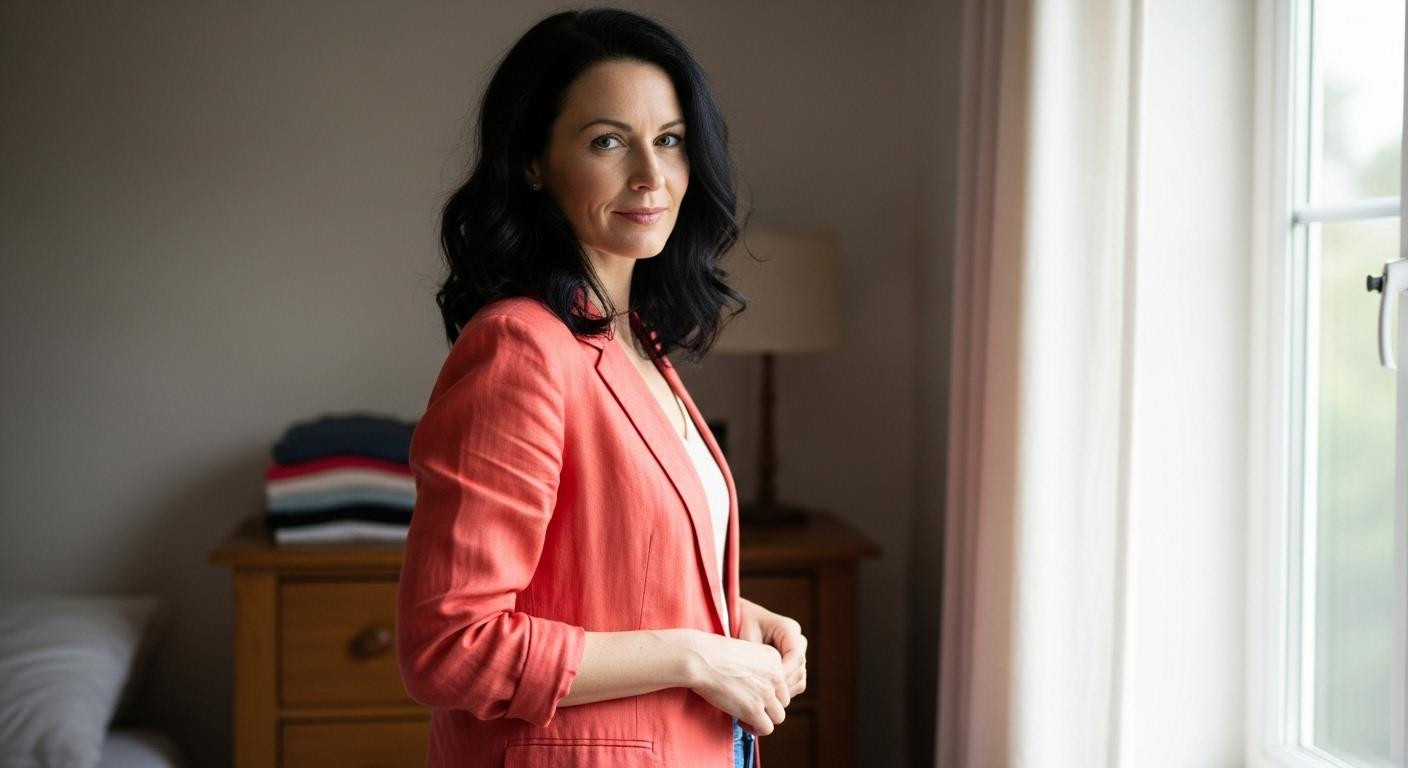
The fluorescent light flickers overhead as you stare at three different jean sizes hanging on the fitting room hook. The medium waistband gaps at your back while the large bunches awkwardly at your hips. You blame holiday weight, menopause, anything but the advice that brought you here. This frustrating scene repeats monthly for millions of women over 50 who follow mainstream fashion guidance designed for different bodies, different lives, different decades.
What feels like personal failure is actually an invisible 4-stage cycle that traps women in endless shopping loops. Fashion advice for mature women creates systematic failures by ignoring post-50 body changes, filtering youth trends through age-inappropriate lenses, and prioritizing trends over comfort.
The 4-stage fashion advice trap women over 50 repeat every month
Stage 1 begins with trust in expert recommendations. Magazine stylists suggest midi lengths and wrap dresses while YouTube influencers promote high-waisted jeans. The advice sounds authoritative, scientific, tailored for your age bracket.
Stage 2 involves the purchase. You invest $50-80 at Chico’s or venture into Nordstrom’s $200 designer sections. The clothes look promising on hangers, match the expert descriptions perfectly.
Stage 3 delivers real-life failure. Those recommended capri pants cut across your calves at the thickest point. The midi dress clings uncomfortably to your midsection. High-waisted jeans create an unflattering bulge above the waistband.
Stage 4 triggers self-blame. You assume your body changed too much, your proportions are wrong, your expectations unrealistic. Instead of questioning the advice, you return to Stage 1 with renewed determination to find the “right” expert guidance.
According to fashion specialists studying mature women’s shopping patterns, 70% of women over 50 experience this cycle monthly. The pattern persists because mainstream advice treats aging bodies as flawed younger versions rather than different physiological realities requiring adapted approaches.
Why mainstream fashion advice ignores your actual body at 50+
The runway-to-retail youth filter problem
Fashion trends originate on 20-year-old runway models with specific proportions. Retail buyers adapt these looks for 18-35 demographics before filtering to mainstream markets. By the time advice reaches “age-appropriate” style guides, it’s diluted youth trends rather than mature-body-designed clothing.
Style experts specializing in over-50 fashion confirm this disconnect. Recent industry analysis reveals that trend adaptation for mature women happens as an afterthought, not primary design consideration. The result is advice that sounds age-conscious but remains fundamentally youth-centric.
Three body changes fashion advice pretends don’t exist
Calf thickening affects most women post-50, making capri and gaucho pants unflattering at the cut line. Fashion advisors continue recommending these styles without acknowledging this universal change. Wide-leg alternatives work because they flow past the calf entirely.
Menopause belly distribution impacts 70% of women over 50 according to endocrinology research. Skinny silhouettes and fitted swimsuits fail because advice treats post-menopausal bodies like thinner versions of youth rather than different proportion distributions requiring different approaches.
Waist definition changes occur due to hormonal shifts, making traditional proportioning advice obsolete. Wrap dresses and high-waisted styles work because they address new body geometry, not because they’re universally “flattering” as mainstream advice claims.
The economic and psychological costs of this cycle
The financial drain
Each cycle costs $200-400 in failed purchases. $50-80 Chico’s pieces that don’t work combine with $200 designer “investments” that gap or cling inappropriately. Walmart’s $20-50 affordability makes re-entering the cycle painless financially but costly over time.
Professional organizers working with mature women report closets filled with unworn “expert-recommended” pieces. The economic impact extends beyond individual purchases to the psychological cost of repeated failures attributed to personal inadequacy rather than systematic advice problems.
The self-blame tax
Women leave fitting rooms defeated, internalizing failure as body inadequacy rather than advice mismatch. Stylists often reinforce this dynamic with warnings about cuts that “won’t suit your face shape” or proportions that “aren’t flattering at your age.”
The binary choice between “frumpy age-appropriate” and “trying too young” creates psychological no-win scenarios. Women internalize these false limitations, restricting personal expression to fit advice categories that don’t acknowledge their actual lifestyle needs or body realities.
Breaking the cycle: 3 structural shifts that replace bad advice
Body-change acknowledgment shopping means buying FOR thicker calves and menopause belly distribution, not DESPITE them. High-waisted styles work because they accommodate new proportions, not because of magical “flattering” properties mainstream advice promotes.
Fabric-first, trend-second prioritizing addresses comfort needs that intensify post-50. Stretch jersey and ponte fabrics enable movement while smoothing silhouettes. Bootcut jeans flatter because the cut-fabric combination works with body changes, not because they’re trendy alternatives to skinny styles.
Lifestyle-function testing replaces expert validation as the primary shopping criteria. Instead of asking “Is this age-appropriate?” or “Does this follow 2025 trends?”, successful mature shoppers ask “Does this work for MY 8-hour day?” and “Can I move comfortably in this fabric?”
Your questions about fashion advice failures for women over 50 answered
Should I ignore all fashion advice after 50?
Selectively adopt advice that acknowledges body changes rather than ignoring them. Lacy sleeve tops with wide-leg pants work because they address calf thickening while providing air flow for temperature regulation. Question whether advisors understand post-50 physiology or merely adapt youth trends.
Why do expensive “menopause-friendly” clothes still fail?
Price doesn’t equal body-change design. $189 “menopause jeans” often gap because manufacturers add stretch panels to youth-cut patterns rather than re-engineering proportions. $76 jeans fit better when designed waist-first for new body geometry, regardless of marketing claims or price points.
How do I know if I’m trapped in the advice cycle?
If you’ve purchased three or more expert-recommended items in six months that “should work” but don’t fit your lifestyle, you’re cycling. Break the pattern by asking “designed FOR my body?” rather than “recommended BY experts?” before your next purchase. Your comfort and confidence matter more than trend compliance.
Six months from now, you’re standing in that same fitting room. But this time, you’re not holding three sizes and an internal blame script. You’re holding one pair that fits because you shopped for your proportions, not trends. The fluorescent lighting hasn’t changed. Your approach has. The cycle ends when you stop re-entering it.