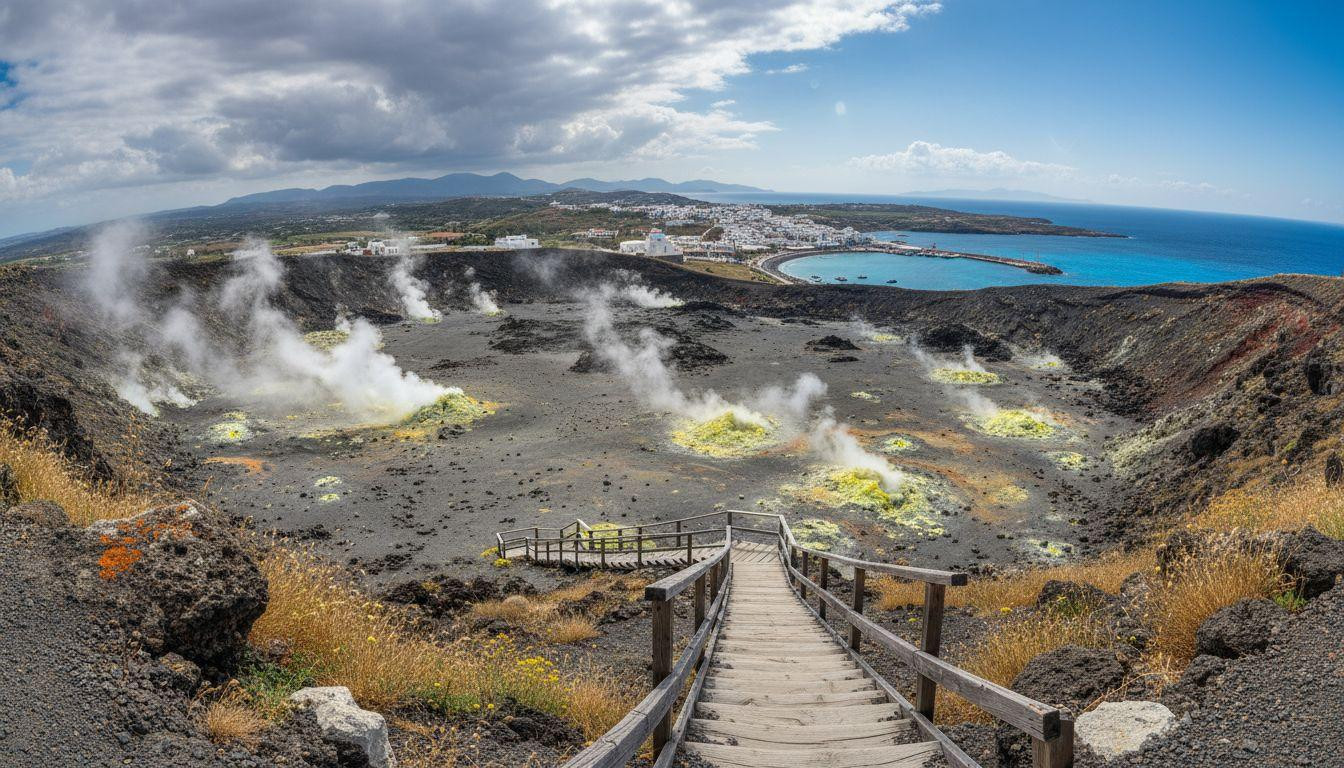
The ferry from Kos cuts through turquoise water as Nisyros emerges from morning haze. This volcanic island holds secrets that mass tourism hasn’t discovered. White houses cascade down cliffsides above black pebble shores. Steam rises from the earth’s core through an active crater you can walk inside.
Most Greek islands promise beaches and nightlife. Nisyros delivers something rarer: geological drama paired with authentic village life. The island measures just 15 square miles yet contains an active volcano, traditional fishing port, and cliff-perched villages where time moves differently.
Where the earth still breathes
Stefanos crater dominates the island’s heart, measuring 1,150 feet across and 89 feet deep. Steam vents hiss from yellow sulfur deposits scattered across the crater floor. The last eruption occurred in 1888, but fumaroles continue releasing gases from deep underground.
A wooden stairway descends into the crater where visitors walk on compacted volcanic ground. The air smells of sulfur and feels noticeably warmer near active vents. Safety ropes mark boundaries around the most active steam emissions.
Unlike Etna or Vesuvius with their restricted access, Stefanos welcomes walkers on its broad, flat floor. The phreatic crater formation creates this unusual accessibility. Monitoring equipment tracks seismic activity, ensuring visitor safety while preserving access to Europe’s most walkable active volcanic crater.
Inside geology’s theater
The crater floor experience
Walking into Stefanos takes 10-15 minutes from the rim parking area. Grey-black volcanic rock contrasts sharply with bright yellow sulfur encrustations and Aegean blue sky above. Steam hisses audibly from multiple vents across the crater.
The ground feels warm underfoot near fumaroles. Visitors describe the experience as “hearing the earth breathe.” Early morning visits before 9:30am avoid day-trip crowds from Kos. Winter weather provides clearer visibility than summer’s heat haze.
Why this volcano stayed accessible
Nisyros avoided mass tourism development through geographic constraints and local choice. The island’s single small port limits cruise ship access. Limited accommodation keeps overnight visitor numbers low. Local communities throughout the Greek islands increasingly favor sustainable tourism over rapid development.
Village life after the day-trippers leave
Mandraki’s evening quiet
Mandraki port transforms after 5pm when the last ferry departs. Day-trip buses disappear, revealing authentic island rhythms. Fishing boats return with fresh catches. Church bells echo across the harbor from Panagia Spiliani monastery perched 300 feet above the port.
Tavernas serve traditional dishes made with volcanic-soil produce. Tomatoes, capers, and olive oil grown in mineral-rich earth taste distinctly intense. Meals cost $11-22 per person. Overnight accommodation ranges from $33-66 in simple guesthouses during winter months.
Nikia’s caldera views
Nikia village clings to the caldera rim at 1,150 feet elevation, offering panoramic views across Stefanos crater to the Aegean beyond. The 4-mile drive from Mandraki takes 12 minutes on winding mountain roads. Traditional Greek island architecture defines the village: whitewashed cubic houses, narrow stone alleys, and centuries-old agricultural terraces.
The island time forgot
Nisyros preserves what larger Greek islands lost to development. The island’s 1,048 permanent residents maintain traditional rhythms. Morning markets operate from 7-11am. Businesses close for afternoon siesta from 2-5pm. Evening life begins when day-trippers have departed.
Ferry crossings from Kos take 45-75 minutes and cost $11-22 one way. Volcanic islands throughout the Mediterranean attract geology enthusiasts, but few offer Nisyros’ combination of accessibility and authenticity. December temperatures reach 59°F with frequent rain, creating a moody landscape perfect for crater exploration.
Your questions about Nisyros answered
How do I reach Nisyros from Kos?
Multiple ferry operators run daily services from Kos port to Mandraki. Conventional ferries take 75 minutes and cost approximately $11-22 one way. Fast ferries complete the crossing in 45 minutes at higher prices. December schedules reduce frequency compared to summer operations. Book tickets at Kos port or through local tour operators.
When is the best time to visit the crater?
Early morning visits between 7-9:30am provide solitude before day-trip groups arrive. Peak crowds occur 10:30am-2pm when tour buses unload. Late spring through early autumn offers warmest weather, but winter visits showcase dramatic skies and clearer air. Small island destinations worldwide reward off-season exploration with authentic local encounters.
Where should I stay overnight?
Mandraki offers several small guesthouses and family-run hotels. December rates drop 30-60% below July peak season pricing. Overnight stays unlock exclusive experiences: solitary crater walks at sunrise, authentic taverna evenings after day-trippers leave, and unhurried exploration of Nikia village terraces and viewpoints.
At sunset from Nikia’s rim, steam continues rising from Stefanos crater as golden light touches whitewashed walls. The earth exhales quietly while fishing boats return to Mandraki’s protected harbor. Time moves differently when tourists have departed and islands return to their authentic rhythms.