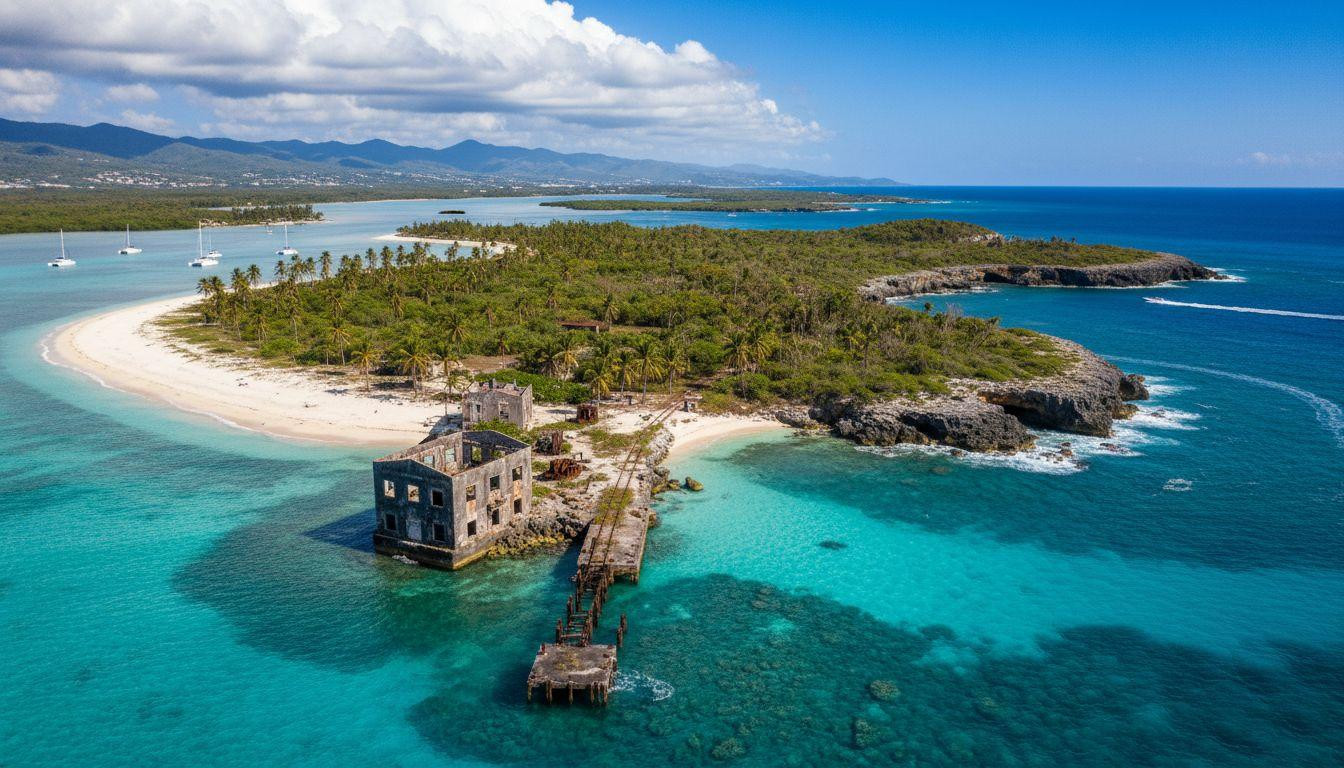
The morning water taxi cuts through calm Caribbean waters, revealing a crescent of powdery white sand against impossible turquoise shallows. Cayo Icacos floats like a dream 45 minutes from San Juan airport, where 10 distinct natural zones pack adventure into half a square mile. No passport required for Americans, no crowds if you arrive before 10am, no facilities beyond what nature provides on this uninhabited island paradise.
10 natural zones where limestone meets coral in Caribbean perfection
The boat slows as we approach the west beach, where diamond-dust sand stretches 0.5 miles in a perfect crescent. Crystal-clear water reveals every shell and coral fragment beneath the surface. This uninhabited cay sits 1.5 miles from Fajardo, part of La Cordillera Nature Reserve protecting 10 islands along Puerto Rico’s northeast coast.
Zone 1: West beach where turquoise shallows invite endless swimming
Powdery coral-based sand feels silk-soft underfoot, stretching in an unbroken crescent facing the mainland. Water temperatures hover around 82°F in December, perfect for extended swimming sessions. Sea grape bushes provide scattered shade along the beach’s edge, while gentle trade winds keep conditions comfortable even at midday.
Swimming and sunbathing perfection
The shallow turquoise lagoon extends 200 yards from shore before deepening. Families with children love the gradual slope and calm conditions. Morning arrivals find empty beaches, while afternoon catamaran tours bring brief bursts of activity around the old railroad dock area.
Zone 2: Rocky point reef where tropical fish create underwater rainbows
Coral gardens flourish 50 feet from the rocky eastern shore, accessible directly from the beach without boats. Depths range from 5-15 feet, ideal for novice snorkelers exploring vibrant reef fish populations. This fort rises from turquoise Gulf waters 70 miles past Key West’s last dock offers similar snorkeling, but Icacos provides free access from rocky shores.
Free snorkeling from shore
Bring reef-safe sunscreen and basic snorkel gear for optimal coral viewing. Visibility often exceeds 100 feet during December’s calm season. Rocky entry points require water shoes, but rewards include close encounters with parrotfish, angelfish, and occasional rays gliding over sandy patches.
Zone 3: Limestone quarry ruins where 1930s industry meets nature
Abandoned mining buildings dot the island’s southern section, remnants of limestone extraction operations from the 1930s. Worker housing foundations remain visible among sea grape vegetation, creating an archaeological playground. Short railroad tracks once carried limestone to loading docks, now popular spots for catamaran anchoring and impromptu reggaeton parties.
Historical exploration through guided hikes
Tour operators offer optional hike add-ons ($20-30) exploring quarry ruins and interior trails. Termite mounds cling to palm trees while lizards dart between crumbling foundations. This French island receives 200 visitors a year where ruins crumble under ancient palms shares similar historical mystique, but Icacos offers day-trip accessibility.
Zone 4: Bat cave cliffs echoing with wildlife sounds
Limestone formations create natural caves along the island’s northern rocky outcrops. Bat colonies roost in these caverns, emerging at dusk in dramatic swarms over the water. Early morning visits reveal bats returning from nighttime feeding, while geological formations showcase millions of years of Caribbean coral reef development.
Cave exploration with experienced guides
Safety requires guided access due to unstable limestone and protected bat habitats. Tours coordinate cave visits during optimal viewing times when bats are least disturbed. Echo chambers amplify wing beats and calls, creating an otherworldly auditory experience beneath the tropical sun.
Zone 5: Pirate lagoon where 18th-century hideouts sheltered treasure ships
A protected inlet on the island’s southeast side once provided shelter for Caribbean pirates. Calm water and strategic concealment made this cove perfect for ship repairs and treasure division. Today’s visitors swim in the same protected waters where legendary buccaneers once anchored.
Hidden cove swimming and historical interpretation
Access requires a 10-minute hike through interior vegetation from the main beach. The secluded lagoon offers intimate swimming away from catamaran crowds. Local maritime history suggests multiple shipwrecks occurred near these treacherous reefs, though visible remains are scattered and fragmentary.
Zone 6: Jungle interior where icaco fruit trees give the island its name
Dense vegetation covers the island’s center, dominated by native sea grape bushes and Caribbean palms. Wild icaco fruit trees (resembling small apples) still grow throughout the interior, providing the island’s namesake. Bird species include frigatebirds, pelicans, and terns nesting in protected vegetation.
Nature trails and botanical discovery
Hiking trails wind through low-density tropical forest, revealing termite mounds and diverse plant life. This Grenada beach hides reef fish against cliff walls 15 minutes past the airport offers similar Caribbean biodiversity, but Icacos combines forest and reef experiences. Closed-toe shoes and water bottles are essential for interior exploration.
Zone 7: Shipwreck trail where maritime history surfaces at low tide
Scattered shipwreck remains appear during low tide periods around the island’s perimeter. Rusted metal fragments and weathered wooden debris tell stories of centuries of Caribbean maritime traffic. These remnants complement the quarry’s industrial history, creating multiple layers of human interaction with this isolated cay.
Low-tide exploration and maritime archaeology
Optimal viewing occurs during December’s lowest tides, typically in early morning hours. Fragments vary from recent fishing boats to older cargo vessels, though specific identification requires expert knowledge. Beach combing reveals interesting metal pieces and coral-encrusted artifacts along shifting sand lines.
Zone 8: Old railroad dock where catamaran parties create floating nightclubs
The historic limestone loading dock now serves as the island’s social hub during peak afternoon hours. Catamarans anchor nearby while passengers enjoy provided lunch and reggaeton music. Speedboats with DJ setups occasionally create impromptu dance parties on the water, blending modern Caribbean culture with industrial archaeology.
Social scene and cultural immersion
Weekend afternoons bring the liveliest atmosphere as tour groups overlap around the dock area. 12 experiences where Staniel Cay keeps swimming pigs and underwater caves within one boat circuit offers similar boat-based island culture, but Icacos includes authentic Puerto Rican music and food traditions.
Zone 9: North shore viewpoint where El Yunque rainforest creates dramatic backdrops
Elevated rocky points along the northern coast provide panoramic views across the strait to Puerto Rico’s mainland. El Yunque rainforest’s misty peaks frame the horizon while smaller cays dot the turquoise channel. Sunrise and sunset photography opportunities showcase the Caribbean’s natural grandeur from this uninhabited perspective.
Photography and scenic contemplation
Morning light offers the clearest views of El Yunque’s distinctive silhouette. Sunset photography captures golden light reflecting off mainland mountains while boats dot the channel between islands. December’s dry season provides optimal visibility for long-distance photography and peaceful contemplation.
Zone 10: East tidal pools where protected shallows nurture juvenile marine life
Rocky formations on the eastern shore create natural tide pools during high tide periods. These protected shallows serve as nurseries for juvenile fish and provide safe swimming areas for families. Wave action remains gentle even during winter’s trade wind season.
Marine life observation and family-friendly swimming
High tide creates the deepest and most interesting tide pools for exploration. Small fish, crabs, and sea urchins inhabit these protected microenvironments. Children particularly enjoy the shallow depths and calm conditions, making this zone ideal for multi-generational families.
Planning your uninhabited island adventure
Water taxis ($40-60 per person) and catamaran tours ($108-140 with gear and lunch) depart from Fajardo marinas like Puerto del Rey and Las Croabas. December through April offers optimal weather with gentle trade winds and minimal rainfall. Pack all food, water, and supplies as no facilities exist on this protected nature reserve.
Midweek visits avoid weekend crowds, while early morning departures ensure solitude among 10 distinct natural zones. Private charters ($850+ per group) provide maximum flexibility for exploring quarry ruins, bat caves, and hidden lagoons. Marine reserve regulations require pack-in, pack-out practices to preserve this uninhabited Caribbean paradise.
Your questions about Cayo Icacos answered
How much do boat trips to Icacos cost in 2025?
Water taxis range from $40-60 per person for basic transportation, while catamaran tours including snorkel gear and lunch cost $108-140. Private group charters start at $850, offering maximum flexibility for exploring all 10 zones. These prices are approximately 20% below other Puerto Rico beach destinations like Vieques or Culebra.
What makes Icacos different from other Caribbean islands?
As a completely uninhabited cay within a federal nature reserve, Icacos maintains pristine conditions without commercial development. The combination of 10 distinct natural zones within half a square mile creates unique diversity. No passport is required for American travelers, and accessibility from San Juan airport (45 minutes) exceeds most Caribbean destinations.
How does Icacos compare to the Bahamas or Virgin Islands?
Icacos offers similar turquoise waters and white sand beaches at approximately half the cost of Bahamas Exuma cays or US Virgin Islands day trips. While those destinations require flights ($300+) or longer boat transfers, Icacos provides comparable snorkeling and beach experiences with convenient day-trip access from a major airport.
Morning mist lifts from turquoise shallows as water taxis return to Fajardo, carrying memories of 10 natural zones explored within Puerto Rico’s most pristine uninhabited paradise. December’s trade winds whisper through sea grape leaves while the old quarry dock fades into Caribbean blue, promising return visits to this accessible slice of untouched Caribbean perfection.