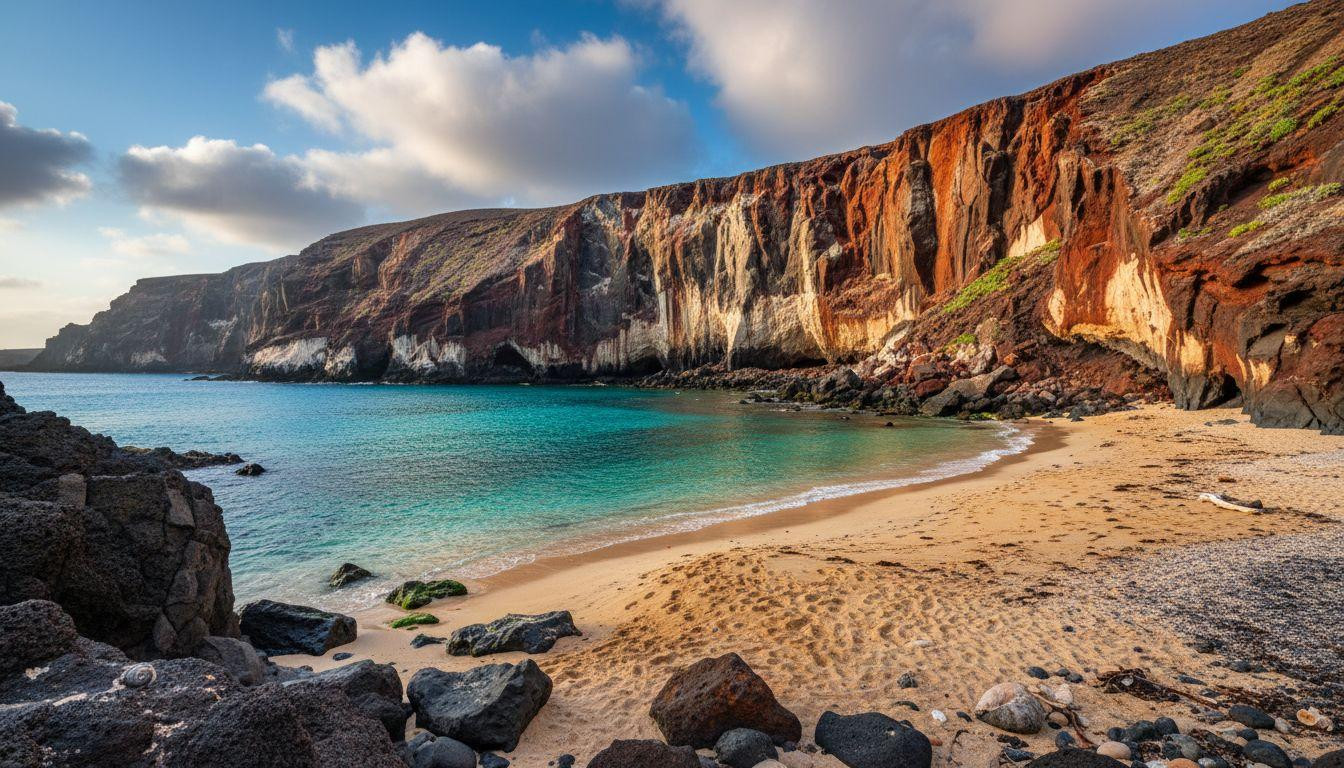
December sun illuminates eight distinct coves along Lanzarote’s southern shore, each carved by volcanic forces into protected swimming zones. While northern Europe shivers through winter, Playa de Papagayo maintains 68°F water and 72°F air temperatures. These aren’t random beach stretches but geological masterpieces where lava flows created individual personalities within a 1.5-mile coastal stretch.
Each cove delivers different water clarity, sand composition, and shelter patterns. Volcanic rock formations separate swimming areas that range from family-friendly shallows to snorkeling reefs. The December advantage reveals itself immediately: minimal crowds, glass-calm conditions, and that rare European winter swimming experience most travelers never discover.
Zone 1: Playa Mujeres transforms morning light into electric blue water
The northernmost cove stretches 200 meters with the widest sandy expanse in the complex. Volcanic minerals darken the sand just enough to create maximum contrast with turquoise shallows. Water visibility reaches 50 feet on December mornings when Atlantic swells calm to gentle wavelets.
Families claim this zone for good reason. Gradual depth increases allow comfortable entry into 68°F water that feels refreshing rather than shocking. Small reef formations at the north end shelter tropical fish species typically found further south. Early morning timing (8-10am) captures the cove before afternoon trade winds arrive.
The key discovery: volcanic sand retains solar heat better than white sand beaches. By noon, this cove maintains noticeably warmer conditions than neighboring zones. Portuguese fishing villages share similar morning light phenomena across the Atlantic.
Zones 2-3: Protected amphitheaters where geology creates calm
Playa del Pozo: Natural wind barrier perfection
The middle zone forms a natural amphitheater where 100-foot volcanic cliffs block wind from three directions. Historical records note Spanish conquistadors landed here in 1402, choosing this exact spot for its protected harbor conditions. Those same geological advantages create December swimming perfection.
Golden sand (lighter than Zone 1) reflects sunlight upward, illuminating water to depths of 20 feet. Rock pools at low tide trap warm water that reaches 75°F by afternoon. Non-slip shoes become essential for exploring tide pool ecosystems filled with starfish and hermit crabs.
Caleta del Congrio: Snorkeling gateway through narrow passage
A 65-foot passage between volcanic walls opens into a circular cove where reef formations begin just 100 feet from shore. Named for conger eels in deeper waters, this zone offers the complex’s best snorkeling without boat excursions. December’s reduced wave action makes the narrow entrance safely navigable.
Underwater visibility exceeds 80 feet on calm days. Volcanic rock shelves create natural steps for easy water entry and reef observation platforms. Greek island coves share similar geological snorkeling advantages.
Zones 4-6: Temperature variations reveal volcanic heating
East-facing morning warmth advantage
Playa de la Cera captures first light at 7:45am, warming water earliest in the day while other coves remain shadowed. This east-facing orientation creates a 4-5°F temperature advantage until 2pm when cliff shadows cool the zone rapidly. December sunrise timing makes dawn swimming surprisingly comfortable.
The smallest cove (150 feet long) concentrates warmth efficiently. Fine white sand and gradual depth increase appeal to swimmers testing December water temperatures. Local regulations maintain this zone’s undeveloped character within Los Ajaches Natural Monument protection.
Afternoon heat retention champions
Puerto Muelas preserves ancient harbor remnants where volcanic rock formations create natural swimming pools. These pools warm to 77°F in December afternoons while main ocean areas read 68°F. Former fishing infrastructure provides diving platforms ranging 3-6 feet high.
Playa de las Coloradas earns its name from iron oxide concentrations that turn cliff faces rust-red in late afternoon light. Water maintains the deepest turquoise hue due to offshore reef shelves reflecting sunlight upward. December sunset timing (5:30pm) creates optimal photography conditions when cliff colors peak.
Zones 7-8: Architectural geology and practical access
Caleta de los Arquillos features a natural volcanic arch measuring 26 feet wide, formed by millennia of wave erosion. Swimming through the arch reveals different water perspectives and hidden cave formations. December’s moderate seas make arch passage safer than summer swell season.
Playa Papagayo Main combines all zone elements: white sand, turquoise water, volcanic cliffs, and protective cove geometry. The complex’s largest parking area ($3 daily fee) makes this the access hub. December sees 50-100 daily visitors versus summer’s 400+. The single beach bar operates December through March, providing the only food and beverage source within the cove system.
Car rental costs $27-49 daily from Lanzarote Airport, 7.5 miles away. Japanese islands require similar transportation planning for pristine beach access.
Your questions about Playa de Papagayo answered
Which coves stay warmest in December?
Zones 4-6 maintain the highest water temperatures due to geological heat retention and solar orientation. Puerto Muelas’ pools reach 77°F in afternoons while east-facing Playa de la Cera warms earliest at sunrise. Main beach (Zone 8) offers consistent mid-range temperatures throughout the day.
How does December swimming compare to other Canary Islands?
Lanzarote maintains 68-72°F air and 68°F water temperatures, slightly cooler than Gran Canaria’s 75°F but with dramatically fewer crowds. Papagayo’s protected cove system eliminates wind chill factor that affects exposed beaches on other islands. Bahamas beaches offer warmer but require much longer travel times.
What makes the 8-zone system worth exploring?
Each zone offers distinct water clarity, sand texture, and thermal characteristics within a 1.5-mile walking distance. Volcanic geology created natural variety that eliminates the need to change beach locations. December’s calm conditions allow safe exploration of all zones in a single day, something impossible during summer’s crowded, windier conditions.
December light fades at 5:30pm, illuminating volcanic cliffs in amber tones while turquoise water holds luminosity. Eight zones revealed their secrets: morning warmth in eastern coves, afternoon pools retaining solar heat, protected passages accessing pristine reefs. This coastal laboratory demonstrates how volcanic forces carved perfect winter swimming conditions when the rest of Europe freezes.