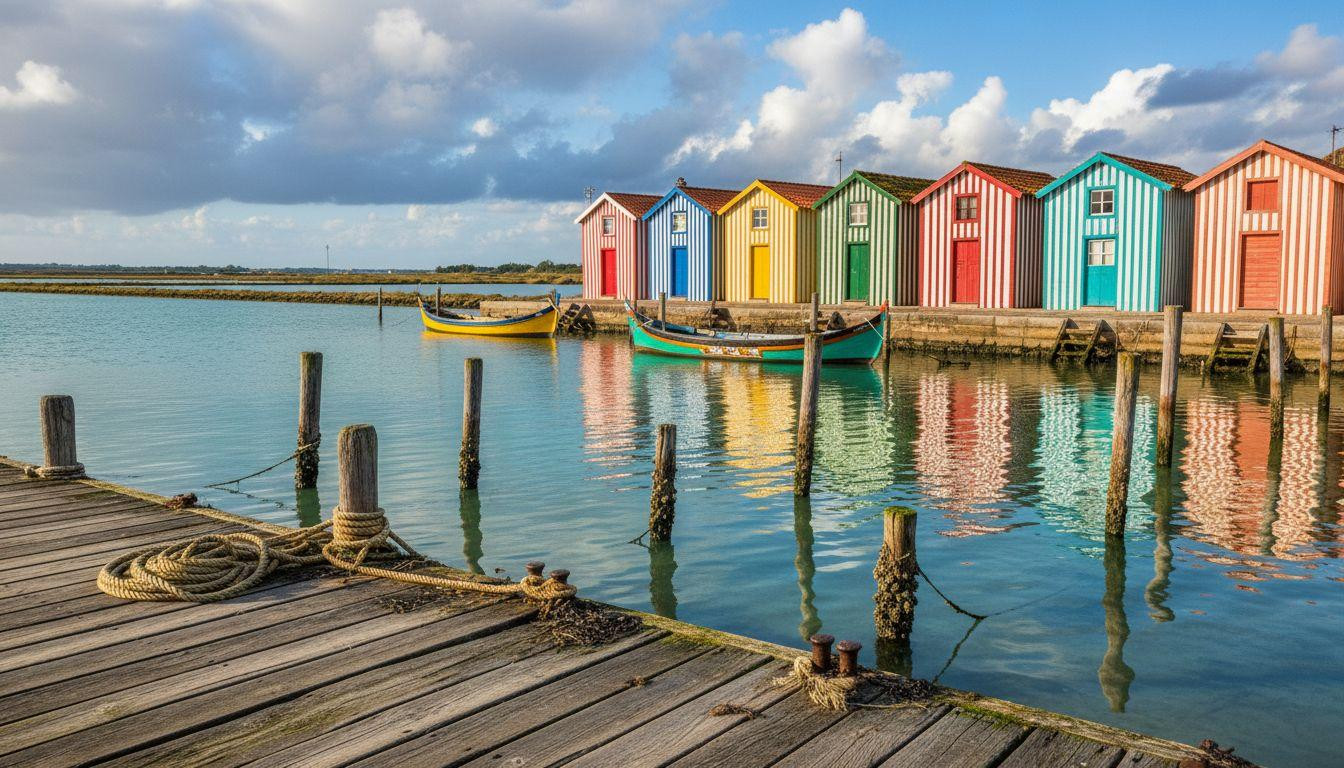
Morning light catches the vertical stripes of wooden houses lining Costa Nova’s lagoon shore. Red and yellow bands alternate with blue and white patterns across fishing cottages that have stood here since 1808. This Portuguese village of 800 residents paints its maritime heritage in bold geometric lines, creating the most photogenic coastal settlement 31 miles from Porto that mainstream tourism hasn’t discovered.
The lagoon geography
Costa Nova occupies a narrow peninsula between the Atlantic Ocean and the shallow Ria de Aveiro lagoon system. The village stretches along a 2-mile beach strip where calm lagoon waters meet open ocean swells. Salt pans extend inland from the settlement, creating geometric white patterns when crystallization occurs during dry periods.
The lagoon provides protected waters averaging 6 feet deep at high tide. Traditional fishing boats anchor in these sheltered channels while Atlantic waves crash against the outer beach. This dual-water position allows both lagoon fishing and ocean access from the same village base.
Why lagoon not ocean matters
The calm lagoon waters permit traditional fishing methods using shallow-draft boats and fixed nets. Fishermen can work year-round in protected conditions while maintaining access to Atlantic fish migrations. The still water also creates perfect reflections of the striped palheiros houses during golden hour photography sessions.
The striped houses story
Fishermen from nearby Ílhavo built the first palheiros in 1808 as functional storage huts for nets and tackle. Original structures used ochre red and black stripes for property identification during foggy lagoon conditions. By the 19th century, families expanded these huts into permanent residences while maintaining the distinctive vertical stripe patterns.
Each color combination marked different family fishing territories along the shore. Yellow and red stripes indicated one family’s allocated space, while blue and white bands marked another’s zone. This Mediterranean island maintains similar territorial fishing traditions through visual markers.
The colors explained
Modern palheiros display bright combinations: red with white, green with white, blue with yellow, or traditional red with black. Families maintain their ancestral color schemes when repainting every 3-5 years. The vertical stripes maximize visibility from lagoon boats during morning fog conditions that frequently blanket the water surface.
Seeing them best
Sunrise illuminates the houses from the east with soft golden light filtering through Atlantic cloud cover. Sunset provides dramatic backlighting from the west, intensifying color saturation against darkening skies. December mornings offer particularly clear light quality with minimal haze, creating sharp color contrasts impossible during summer heat.
Living fishing traditions
Local fishermen depart at 5am during winter months when eel fishing reaches peak intensity. Traditional wooden boats launch from lagoon beaches while diesel vessels head for Atlantic waters. Family operations continue techniques passed down through six generations, adapting traditional methods to modern fishing quotas.
The village maintains 40 active fishing boats serving both lagoon and ocean fishing grounds. This Massachusetts harbor preserves similar working maritime traditions alongside tourism development.
What locals actually do
Morning fishing departures begin at dawn with net preparation and boat loading. Afternoon hours involve net repairs, catch processing, and equipment maintenance in waterfront workshops. Evening fish sales occur directly from boats to local restaurants and visiting buyers from Aveiro markets.
The Ria de Aveiro ecosystem
The lagoon system supports 180 bird species including flamingos, herons, and migrating waterfowl. Salt-water mixing creates brackish conditions ideal for specific fish varieties and shellfish populations. Traditional salt harvest methods continue in mechanized form, producing crystalline formations visible from village viewpoints.
December timing advantages
Winter temperatures average 55-59°F, eliminating the need for heavy coats while providing crisp coastal atmosphere. December brings 14 rainfall days but typically brief showers rather than sustained downpours. Tourism drops to minimal levels, leaving beaches empty and restaurants serving primarily local residents.
Accommodation rates decrease 15-30% from summer pricing, with guesthouses charging $45-75 nightly instead of peak season $85-120. This Croatian island offers similar winter solitude advantages for off-season travelers. The Christmas period December 20-January 2 sees modest visitor increases from Portuguese families maintaining seasonal residences.
Your questions about Costa Nova answered
How to get there from Porto
Regional trains connect Porto to Aveiro in 45-60 minutes for $3-9 tickets with frequent daily service. Taxis complete the final 5-mile connection from Aveiro station to Costa Nova for $17-22. Car rental costs $33-66 daily, with the A1 and A17 highways providing 45-minute access via direct routes.
What makes this different from typical Portuguese villages
The lagoon position between salt water and fresh water creates unique ecosystems unavailable in purely coastal or inland settlements. Active fishing operations continue alongside tourism rather than being displaced by development. This Italian island maintains similar authentic working communities amid scenic beauty.
Winter versus summer experiences
December through February offer complete beach solitude with authentic local atmosphere and 20-30% lower costs. June through August bring Portuguese holiday crowds, increased pricing, and busy restaurants requiring reservations. Winter fishing activity becomes more visible as operations intensify during eel season.
Salt-laden air carries the scent of seaweed and ocean minerals across empty winter beaches. Striped palheiros houses stand in perfect rows along the lagoon shore, their bold patterns reflecting in still water during the brief moments between December showers.