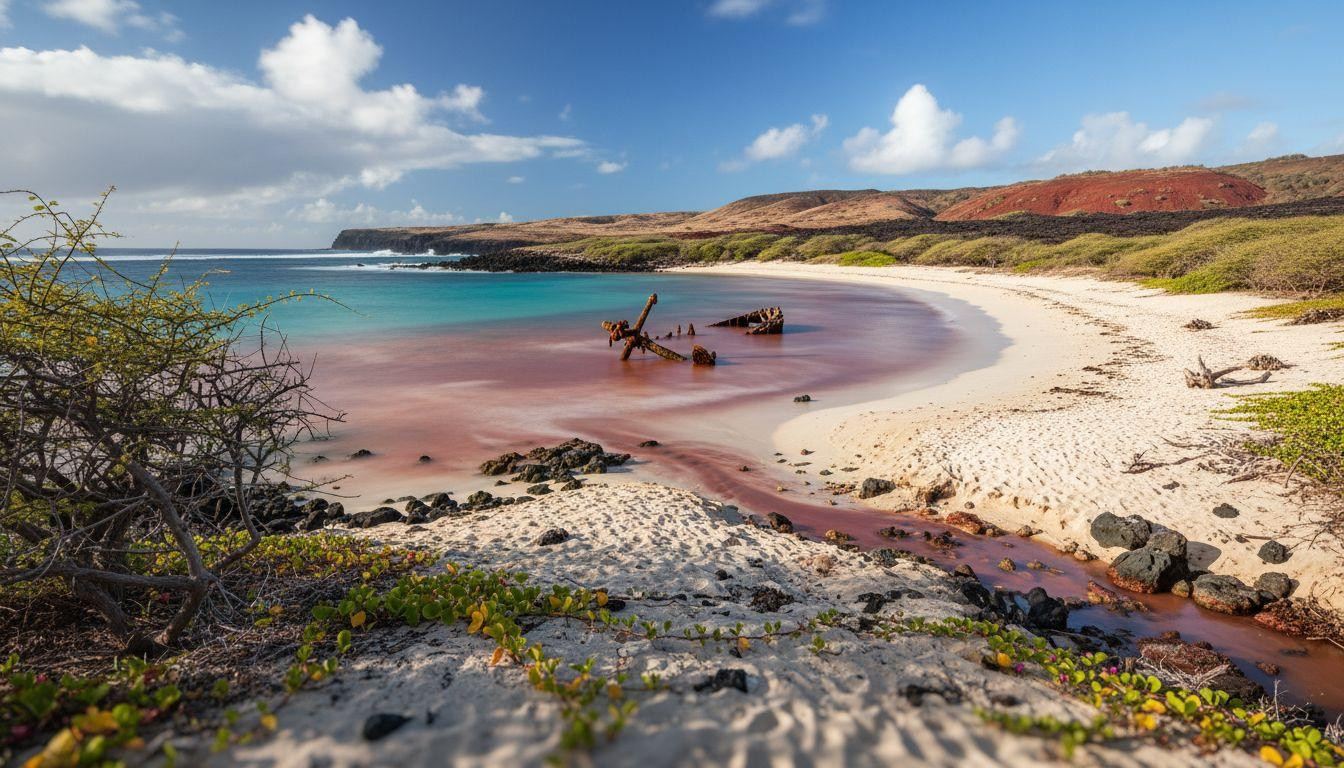
Morning mist clings to Molokai’s west shore as I first glimpse the massive anchor resting in crystal-clear water. This isn’t another Hawaiian beach story. At Dixie Maru Cove, a 1916 shipwreck transforms peaceful swimming into maritime archaeology. The remnants of a wooden fishing vessel create an underwater museum where snorkelers drift above history. After rain, volcanic soil turns the protected waters from turquoise to rusty red, painting scenes that belong more in Iceland than Hawaii.
Where Molokai’s forgotten coast keeps maritime secrets
Twenty miles from Hoolehua Airport, Pohakuloa Road winds toward Maunaloa town before ending at a small parking lot. A single shower head and trash bin mark civilization’s edge. Beyond lies Kapukahehu Beach, known locally as Dixie Maru Cove for the vessel that met its end here over a century ago.
The trail to the beach stretches just 200-300 feet through stream bed. Mud reaches ankle-deep after storms. Boots help, though most visitors arrive prepared for the squishing sensation between toes. This protected cove differs dramatically from Maui’s exposed reefs where winter swells create dangerous conditions.
The wreck that colors the water
When rain transforms the cove
The Dixie Maru wasn’t Japanese despite its name. Built in Honolulu in 1916 by Harold Morris, a Denver tourist, this Chinese-style fishing sampan foundered during heavy seas off Molokai’s west end on April 26, 1916. The two-man Hawaiian crew swam to safety, walking the horse trail to Kaunakakai for rescue.
Today, the large anchor and partial hull sections rest in the cove’s center, easily visible during calm conditions. Recent storms wash red volcanic soil into the bay, creating the surreal rusty-red water effect that makes this spot Instagram-famous among the few who discover it.
Swimming among history
The reef protects this half-moon shaped cove from ocean swells. While Papohaku Beach 3 miles away churns with surf, Dixie Maru stays glassy on winter days. Water temperature holds steady at 72-82°F through December, perfect for extended snorkeling sessions around the wreck remnants.
No diving certification required. The anchor and hull pieces sit in shallow water, clearly visible from the surface. Unlike Kauai’s hidden snorkel spots, this site offers easy ocean access without treacherous entry points.
The Molokai difference
What under-the-radar means here
Molokai’s 7,345 residents maintain fierce independence from Hawaii’s tourism machine. The Maunaloa area houses just 300-500 people. Fewer than 5,000 visitors annually reach Dixie Maru Cove, compared to Hanauma Bay’s reservation-required crowds and $25 entry fees.
Local tourism boards report that west Molokai archaeological protections prevent resort development. The Southwest Molokai Archaeological District preserves burial sites and ancient trails throughout the area. Community opposition keeps this coastline authentic.
Getting there without crowds
Mokulele Airlines operates 25-40 minute flights from Honolulu to Hoolehua Airport for $100-200 round-trip. Car rentals at the airport run higher than Maui due to limited options. The 30-45 minute drive to Dixie Maru covers 20 miles of paved roads until the final muddy approach.
Remote Caribbean sandbars require boat access, but Dixie Maru stays accessible by standard sedan in dry conditions. Four-wheel drive helps during Molokai’s rainy season, typically November through March.
Planning your winter escape
December 2025 offers ideal conditions for this forgotten cove. Trade winds moderate temperatures while winter storms create the red-water phenomenon. West Molokai accommodations range from $150-250 nightly for guesthouses to $250-400 for beachfront bed-and-breakfasts.
Dining options stay limited within 10 miles. Pack snacks and water. The nearest restaurants cluster around Maunaloa town, serving local Hawaiian fare like fresh poke ($15-20) and laulau ($20-35). This isolation differs from accessible Greek island escapes where tavernas line every beach.
Your questions about Dixie Maru Cove answered
Is the wreck safe to explore?
The anchor and hull sections remain stable after 109 years underwater. Snorkeling around the remnants poses no safety risks during calm conditions. Avoid climbing on wreck structures to preserve the site. Strong currents exist beyond the reef, where a recent kayak rescue occurred 2 miles offshore.
How does this compare to Hawaii’s famous snorkel spots?
Dixie Maru offers solitude impossible at Hanauma Bay or Molokini Crater. No entry fees, no reservation requirements, no tour boat crowds. The trade-off involves limited facilities and muddy beach access. Water clarity matches Hawaii’s best reef sites when conditions align.
What’s the best time to see the red water effect?
Within 24-48 hours after significant rainfall, creek runoff creates the rusty-red coloration from suspended volcanic soil. Check Molokai weather forecasts before visiting. Morning light between 7-9am shows the color contrast most dramatically against the blue reef outside the cove.
Steam rises from warm mud as morning sun touches the protected bay. The anchor emerges slightly at low tide while frigate birds circle overhead. In this moment, with red water lapping against white sand, Molokai’s timeless spirit feels completely intact.