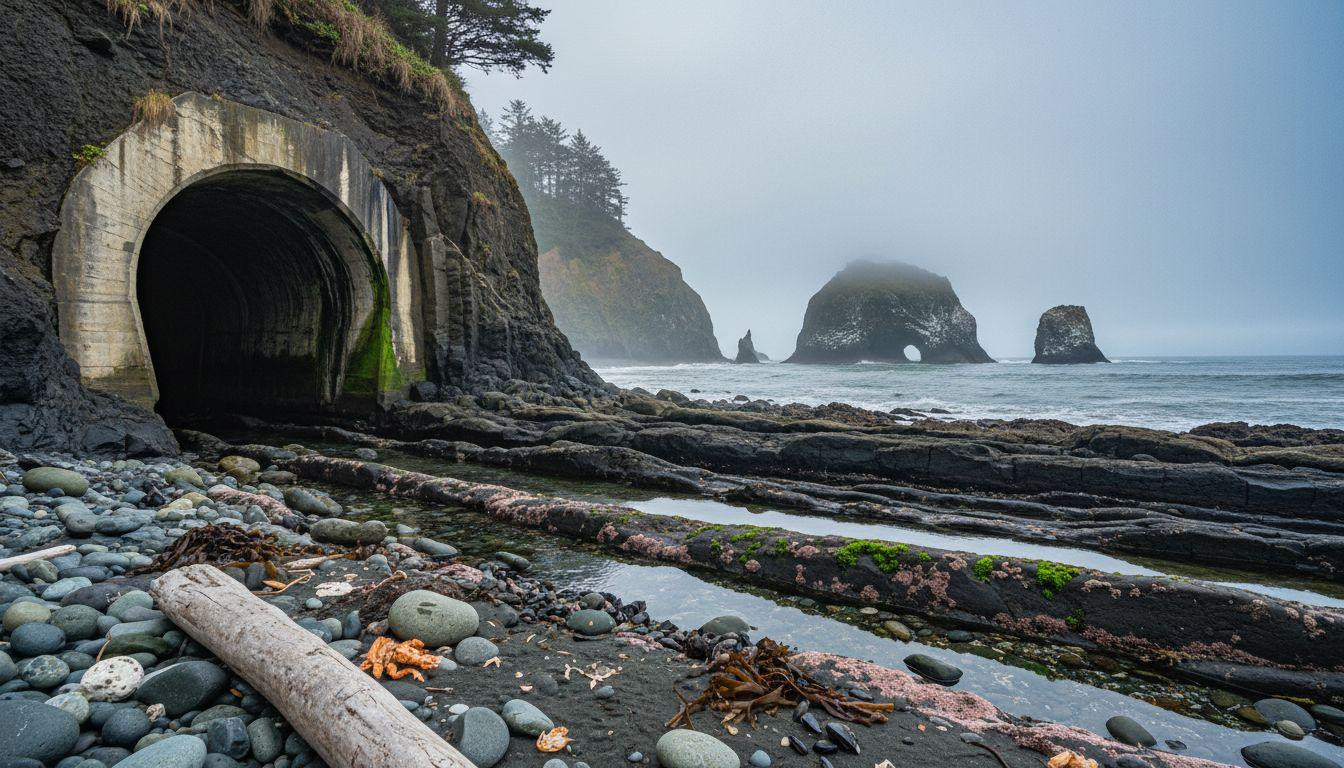
The concrete tunnel mouth appears ordinary from Oceanside’s parking lot. Nothing suggests the portal waiting 90 feet ahead. Step into Maxwell Point’s hand-carved passage and darkness swallows the Pacific’s roar. Emerge on the other side and fog-wrapped Three Arch Rocks rise from gray-green waters like ancient sentinels. This is Oregon’s quietest revelation.
Where Cannon Beach’s haystack rock crowds 40 miles north draw thousands daily, Oceanside receives maybe 50 winter visitors. The tunnel changes everything.
The tunnel that opens everything
Brothers H.H. and J.H. Rosenberg carved this passage in 1926 using dynamite and shovels. Their resort guests needed safe passage to northern beaches. Maxwell Point stood 191 feet above, solid basalt blocking the way.
The tunnel starts as smooth concrete then transitions to rough volcanic rock. Surfaces stay slick year-round from Pacific mist. High tides bring debris that crunches underfoot.
Locals call it “the hole through the mountain.” Official records list Maxwell Point Tunnel. Either way, it delivers the same shock: stepping from enclosed darkness into infinite ocean light.
Three Arch Rocks emerge from Pacific fog
President Theodore Roosevelt designated these offshore stacks America’s first bird refuge west of the Mississippi in 1907. Nine rocks total 15 acres. Three large formations create the signature arches visible half a mile offshore.
Morning mist theater
December fog wraps the 320-foot stacks in shifting veils. Sea lions bark from invisible haul-outs. Dawn light filters through marine layers, revealing then concealing volcanic silhouettes.
Winter mornings offer the clearest views. Marine fog lifts between 10am and noon most days. Sunset brings fresh mist rolling inland.
Why 1907 matters
Over 230,000 seabirds nest here annually. Sixty percent of Oregon’s puffins call these rocks home. 200,000 common murres create the state’s largest colony south of Alaska.
Threatened Steller sea lions find their only northern Oregon pupping site here. The refuge remains closed to boats but viewing from shore reveals constant wildlife activity.
Walking tunnel beach in winter
The 0.8-mile round trip from parking to tunnel’s end takes 20 minutes. Winter brings 47°F highs and persistent drizzle. Bundle up for the full experience.
Tide pool kingdom
Low tide reveals purple sea urchins clinging to basalt shelves. Orange starfish sprawl across tide pools. Green anemones wave in shallow water.
Check tide charts before exploring. King tides flood lower rocks. NOAA warns of sneaker waves year-round along this exposed coast.
Storm wave drama
December through February brings 15-foot swells crashing against offshore rocks. The sound echoes through the tunnel like distant thunder. Stand behind the high-tide line for safety.
Recent storms knocked out Cape Lookout’s winter storm waves 15 miles south. Oceanside’s protected position offers calmer viewing conditions.
The feeling Cannon Beach cannot deliver
Cannon Beach processes 4 million annual visitors. Oceanside sees maybe 100,000. Parking costs $5 daily at Haystack Rock. Oceanside’s state recreation site stays free.
Tourist shops crowd Cannon Beach’s main street. Oceanside offers one café and scattered vacation rentals. Authentic discovery requires leaving comfort zones.
Winter brings near-solitude to tunnel beach. Midweek visits guarantee private tide pool exploration. This California river mouth hides 200 seals in December fog 90 minutes from San Francisco offers similar winter wildlife viewing.
Your questions about Oceanside Oregon tunnel beach answered
When does fog lift on Three Arch Rocks?
Marine layers typically lift between 10am and noon during winter months. Spring and fall offer clearest visibility. Summer brings persistent morning fog that often lingers past noon.
Local weather apps show marine forecasts. NOAA’s marine weather radio broadcasts hourly fog conditions for coastal Oregon waters.
Can you walk to the tunnel at high tide?
High tides make tunnel passage dangerous due to debris and slippery conditions. Check NOAA tide charts before visiting. Low tide plus two hours provides safest access.
Winter king tides can flood tunnel approaches entirely. Plan visits around minus tides for maximum beach exploration time.
How does this compare to Ruby Beach in Washington?
Both feature dramatic Pacific sea stacks and tide pools. Ruby Beach draws heavier crowds from Seattle. Oceanside offers easier tunnel access and free parking.
Washington’s Olympic Peninsula requires longer drives from major cities. Oregon’s coast provides similar scenery with better accessibility from Portland.
Fog lifts from Three Arch Rocks revealing winter light on wet basalt. Sea lions call from invisible rocks. The tunnel frames this wild theater perfectly. Step through and discover what patience delivers.