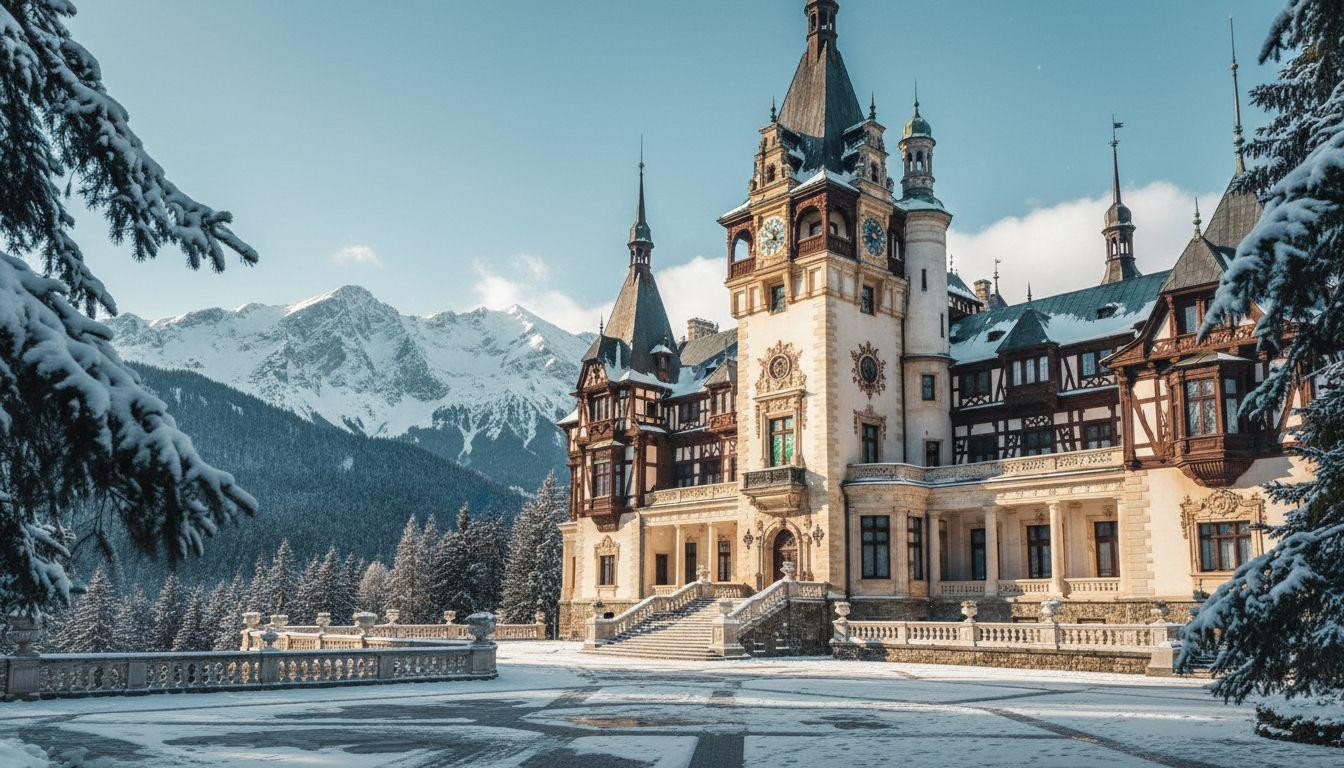
Bran Castle charges tourists $30 for Halloween parties and Dracula myths while 20 miles away, Peleș Castle reveals Romania’s actual royal soul for $15. Every October, 50,000 visitors crowd Bran’s narrow corridors chasing vampire legends with zero historical evidence. Meanwhile, authentic 19th-century royal chambers sit quietly in the Carpathian foothills, preserving King Carol I’s genuine legacy.
Why Bran Castle fails the history test
Vlad the Impaler never lived at Bran Castle. Bram Stoker never visited Romania. The Dracula connection exists purely in tourist marketing departments.
Built in 1388 as a Saxon fortress against Ottoman invasions, Bran morphed into a Dracula theme park after 1993. Today’s torture chambers and Time Tunnel experiences cost extra fees while actual medieval history gets buried under vampire kitsch.
Winter 2025 brings Medieval Christmas Villages and Halloween after-parties. VIP vampire experiences sell for $226 per person. The authentic 14th-century fortress disappears behind commercial exploitation.
Meet Romania’s true royal castle
Architecture that changed European history
Peleș Castle rises from Carpathian forests like a Neo-Renaissance fairy tale. Construction began in 1873 when Germany’s Prince Carol became Romania’s king. The castle cost $120 million in today’s currency.
Golden limestone walls frame 160 rooms across three buildings. Mahogany panels gleam under crystal chandeliers. Stained glass windows filter mountain light through royal apartments where Queen Maria actually lived.
The electricity revolution
Peleș became the world’s first castle powered by locally produced electricity in 1883. Royal innovations included central heating, elevators, and private bathrooms decades before other European palaces.
King Carol I hosted European nobility here until 1914. Original furnishings remain untouched. Royal libraries contain 4,000 weapons and priceless manuscripts. This represents authentic Romanian monarchy, not manufactured tourism.
Experience authentic royalty
What you actually see
Guided tours reveal royal apartments where history happened. The weapons room displays 4,000 pieces from medieval armor to Ottoman swords. Winter light streams through colored glass onto Persian carpets.
Photography inside costs nothing extra. No vampire exhibits interrupt the royal narrative. Visitors walk through actual throne rooms where European diplomacy shaped the Balkans.
Surrounding mountain culture
Sinaia village preserves traditional Romanian mountain life. The 1695 monastery inspired the castle’s location. Local restaurants serve authentic ciorbă de burtă (tripe soup) and mici (grilled meat rolls) without Dracula themes.
Train access from Bucharest takes 90 minutes to Sinaia station. The castle sits a 10-minute walk uphill. Saxon villages nearby offer overnight stays in medieval farmhouses.
The winter 2025 advantage
December crowds at Peleș average 500 visitors daily versus Bran’s 2,000. Snow covers the Carpathian peaks while castle interiors stay heated. Photography captures royal chambers without tourist hordes.
Sinaia hotels cost $60-120 per night compared to Bran’s $80-180. Mountain restaurants serve seasonal game dishes and mulled wine. The nearby medieval architecture continues throughout the Carpathian region.
Train schedules run hourly from Brașov to Sinaia. Winter tickets include museum access and guided tours. The royal experience costs 40% less than Bran’s vampire entertainment.
Your questions about authentic Romanian castles answered
How much does Peleș Castle actually cost in 2025?
Standard entry costs 30 lei ($8) for adults, 15 lei ($4) for students. Guided tours add 25 lei ($7). Photography permits cost nothing. Total visitor expense averages $15-20 compared to Bran’s $30-50 with extras.
Why don’t more tourists visit Peleș over Bran?
Marketing drives tourism patterns. Dracula sells easier than royal history. Bran’s location on the Bucharest-Brașov tourist trail captures more traffic. Peleș requires intentional cultural interest over vampire entertainment.
Which castle offers better winter photography?
Peleș provides consistent interior lighting and heated galleries. Royal apartments photograph beautifully year-round. Bran’s stone corridors stay cold and dim. Dramatic clifftop locations exist elsewhere without tourist crowds.
Golden afternoon light streams through Peleș royal chambers while winter snow dusts the Carpathian peaks beyond stained glass windows. The castle preserves Romania’s royal legacy in mahogany and crystal, far from vampire marketing schemes.