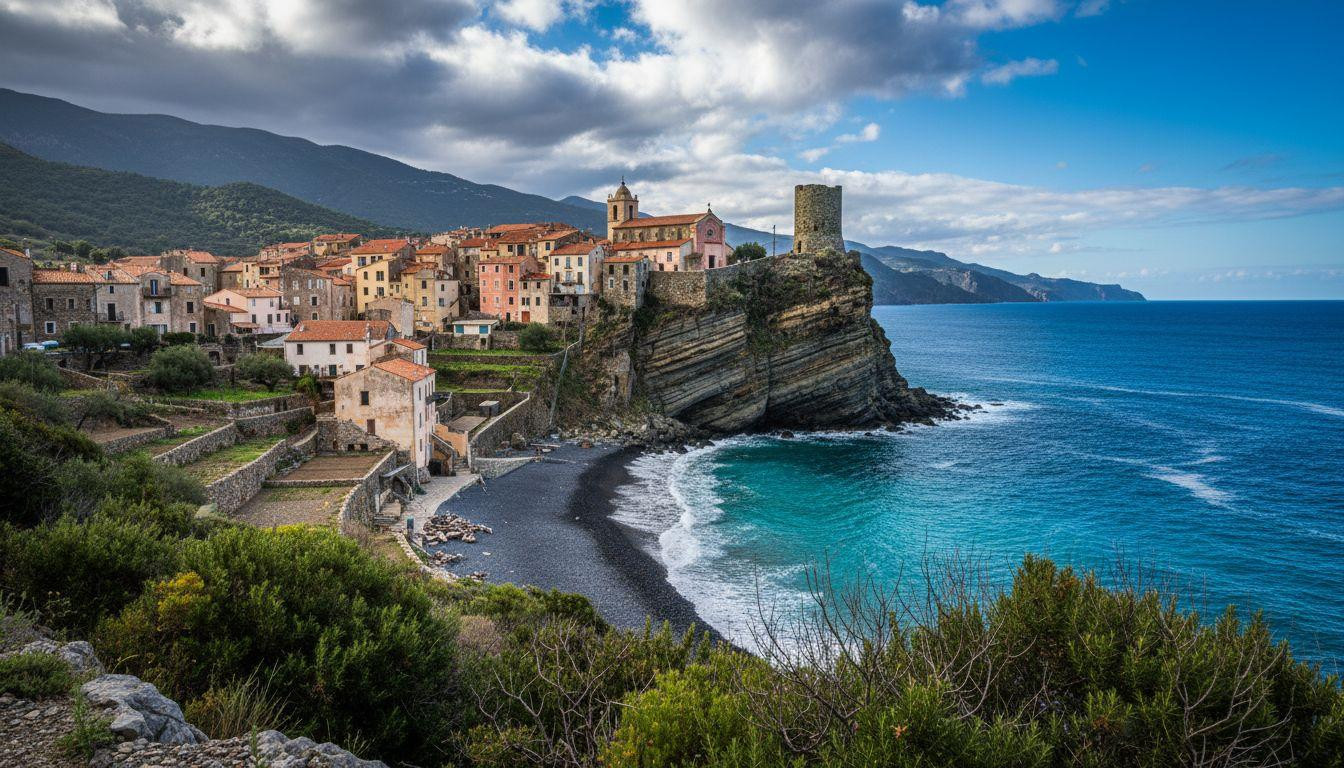
Nine cliff-edge experiences await where medieval stone meets volcanic black shores on Cap Corse’s forgotten northern peninsula. Nonza clings to 550-foot cliffs above Corsica’s only black pebble beach. The Torra di Nonza rises from 12th-century castle ruins. Winter light gilds honey-colored stone while turquoise waters crash against dark volcanic shores 45 minutes from Bastia airport.
Climb the Torra di Nonza for panoramic Gulf views
The three-story Genoese tower dominates Cap Corse’s western cliffs from 509 feet above sea level. Built in 1760 on medieval castle foundations, this defensive monument requires 125 stone steps to reach its panoramic platform. Gray-green stone walls frame 360-degree views across the Gulf of Saint-Florent.
Morning light transforms the tower’s weathered stones into golden sentinels. The climb reveals Corsica’s maritime heritage through narrow window openings. December’s crisp air carries salt-scented breezes from the Mediterranean below.
Free access welcomes visitors from dawn to dusk year-round. Wear grip-soled shoes for worn stone steps. The tower stands as a Monument Historique since 1926, preserving eight centuries of coastal defense.
Descend to Corsica’s black pearl beach
Volcanic pebbles create Corsica’s most dramatic coastal contrast 550 feet below the village. The steep descent path winds through Mediterranean scrubland toward dark shores. Black stones warm under afternoon sun while turquoise shallows create stunning visual drama.
The geological wonder of volcanic shores
Ancient volcanic activity scattered dark basaltic pebbles along this isolated cove. The protected coastline preserves natural formations dating back millennia. Strong Mediterranean currents shaped these shores over thousands of years.
Swimming and safety considerations
Local currents require caution for swimmers near shore areas only. Summer stones reach temperatures above 100°F by midday. Winter visits offer dramatic wave action against dark pebbles under moody skies.
Explore medieval stone lanes and polychrome church
Vernacular Corsican houses climb vertical alleys between harbor ruins and tower heights. Honey-colored stone walls support red-tile roofs weathered by centuries of sea winds. The Sainte-Julie church displays an unusual red-and-yellow facade unique among Cap Corse villages.
Village architecture perched on cliff edges
Stone houses balance along precipitous slopes above crashing waves. Narrow passages connect terraced gardens where residents grow Mediterranean herbs. Ancient building techniques secure structures against coastal storms for over 200 years.
The colorful church and sacred fountain
Pink and yellow stones create visual contrast against green maquis vegetation. The Santa-Giulia fountain maintains local healing legends among island residents. Church bells mark village rhythms unchanged since medieval times.
Experience Cap Corse’s dramatic coastal road
The D80 coastal route delivers constant cliff-edge views between Bastia and Nonza’s northern approaches. Winding asphalt follows ancient mule paths carved into vertical rock faces. Multiple pullouts frame the village against Mediterranean horizons.
Counter-clockwise driving from Bastia keeps ocean views on the passenger side. Maritime scenery includes isolated beaches and fishing harbors. Allow 90 minutes for the 28-mile journey including photo stops.
Narrow passages require careful navigation during peak summer months. Winter fog creates atmospheric driving conditions. Fuel stations concentrate in Bastia before Cap Corse exploration begins.
Savor Corsican specialties with cliff-top views
Village restaurants serve figatellu sausage, brocciu cheese, and chestnut-based breads during tourist season. Local wines from Patrimonio appellations complement traditional charcuterie plates. Canistrelli biscuits provide authentic island flavors.
Dining costs range from $20-40 per person for traditional meals. Seasonal closures affect winter availability. Saint-Florent offers year-round alternatives 15 miles south.
Walk scented maquis trails above the Mediterranean
Maritime scrubland covers cliff slopes with rosemary, myrtle, and thyme vegetation. Informal paths connect village edges to abandoned fishing dock ruins. Spring blooms create natural perfume gardens above crashing waves.
Best hiking occurs May through June when wildflowers peak. December fog wraps headlands in mysterious atmosphere. Stay on visible trails due to dangerous cliff edges and prickly vegetation.
Capture winter light on medieval stone
December’s low-angle sun transforms golden facades into photographic gold. Rain-wet black pebbles reflect surrounding cliffs in mirror-like surfaces. Empty village lanes provide intimate compositions without summer crowds.
Sunrise illuminates the tower platform around 8am local time. Late afternoon light creates dramatic shadows across stone architecture. Fog-wrapped mornings offer moody atmospheric conditions.
Plan half-day circuits combining Cap Corse highlights
Combine Nonza with Erbalunga fishing port 11 miles southeast for complete coastal diversity. Centuri harbor lies 19 miles north featuring active lobster boats. Full circuits require 4-5 hours including meal stops.
Car rentals from Bastia-Poretta airport cost $45-65 daily during winter months. GetYourGuide tours include transportation for $45-100 per person. Village parking accommodates 20-30 vehicles in designated areas.
Your questions about Nonza’s cliff-edge experiences answered
What’s the best time to visit for fewer crowds?
December through February offers empty village lanes and dramatic winter light. May-June provides wildflower blooms and moderate temperatures. September maintains warm swimming conditions with reduced tourist numbers.
How does Nonza compare to Cinque Terre villages?
Nonza receives significantly fewer daily visitors outside July-August peak season. Corsican culture and cuisine differ from Italian Riviera experiences. Accommodation costs remain 40% lower than Monterosso alternatives.
What safety precautions should visitors take?
Beach currents require swimming caution near shore areas only. Cliff edge paths demand proper footwear and attention. Village businesses close November-March requiring advance planning for winter visits.
Morning mist rises from black pebbles while church bells echo across empty stone lanes. Ancient defensive towers frame turquoise waters where medieval Corsica meets volcanic shores in perfect cliff-edge silence.