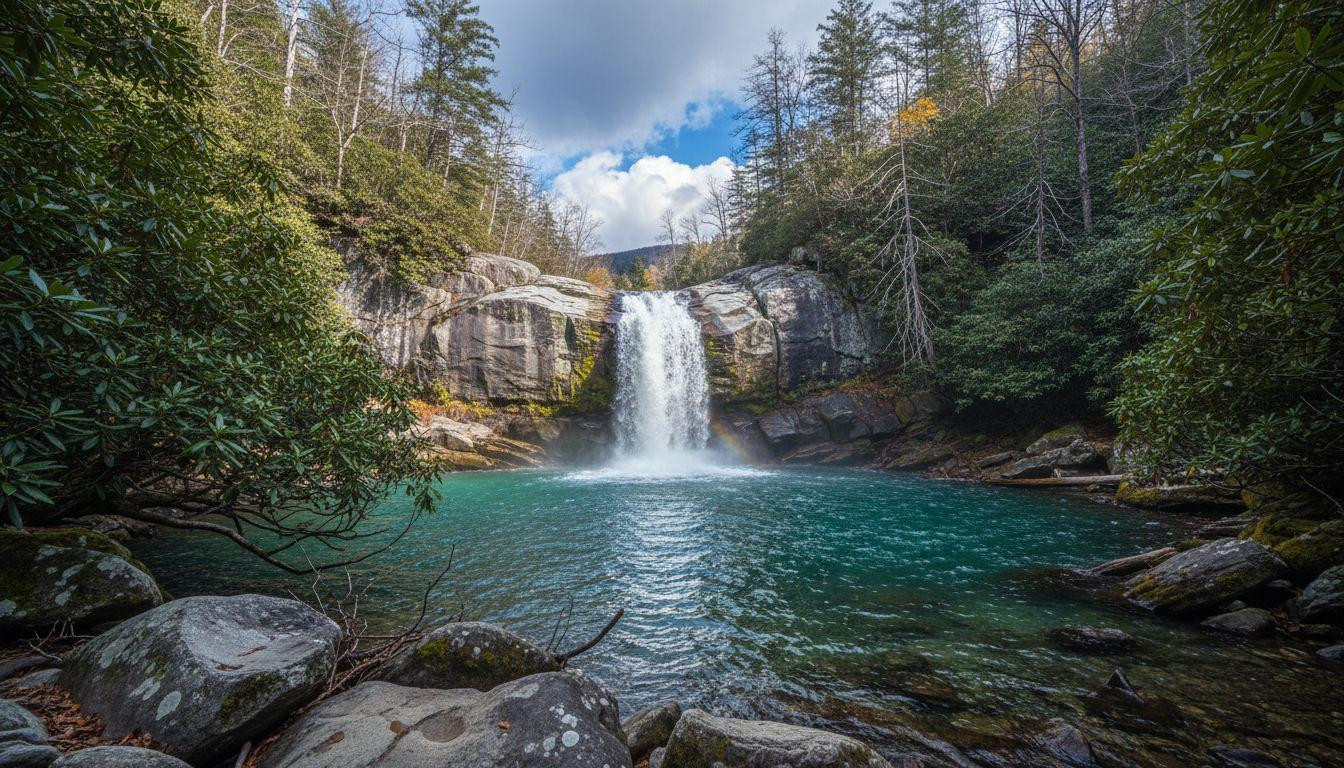
The first cascade tumbles 15 feet into a pool so blue it mirrors December sky. Cedar Creek Falls sits quietly in Pisgah National Forest, where three granite tiers drop 45 feet through rhododendron tunnels. Most visitors rush past toward Looking Glass Falls, missing this jewel-toned swimming hole 90 minutes from Asheville.
Winter transforms these mountains into a photographer’s cathedral. Ice sculptures form where water meets stone. The crowds vanish, leaving only the sound of cascading water and your footsteps on frost-covered trails.
12 clear-pool waterfalls where North Carolina keeps its swimming holes free
Pisgah National Forest contains over 500,000 acres and hundreds of waterfalls. Twelve stand out for their crystal-clear plunge pools and year-round accessibility. No permits required. No entrance fees. Just pure mountain water tumbling over ancient granite.
These falls cluster within a 60-mile triangle between Brevard, Sapphire, and Cashiers. Each offers something different: roadside access, hidden gorges, or natural water slides carved by millennia of flowing water.
Cedar Creek Falls: The sapphire secret
Three distinct cascades create Cedar Creek’s magic. The top tier drops 20 feet over smooth granite. Water gathers in a turquoise pool before spilling another 15 feet. The final 10-foot plunge creates the deepest swimming hole.
Rhododendron thickets frame every angle. These evergreen tunnels stay green year-round, providing Instagram-worthy contrast against white water and slate-grey rock. Early morning light filters through the canopy, creating dappled patterns on the water.
Winter ice formations
December through February brings spectacular frozen displays. Icicles form curtains along the cliff faces. The lower pool rarely freezes completely, maintaining its blue clarity even when temperatures drop to 20°F.
Swimming season details
Summer water temperatures reach 72°F in the main pool. Local guides confirm the pool is 8 feet deep at its center, safe for jumping from designated rocks. Better than Colorado pools that require $16 shuttle fees, Cedar Creek offers the same mountain swimming experience for free.
The complete falls circuit
Looking Glass Falls provides roadside drama with its 60-foot curtain cascade. No hiking required. Parking fills by 10am even in winter, so arrive at sunrise for the best light and fewer crowds.
Sliding Rock transforms into a natural water slide during summer months. The $2 entry fee (May through September) includes lifeguard supervision. Winter visitors find it empty and free, though icy conditions require traction devices.
DuPont State Forest cluster
Four waterfalls within DuPont require only a $5 honor-system parking fee. Bridal Veil Falls lets you walk behind 120 feet of falling water. Triple Falls creates three distinct tiers, each with swimmable emerald pools. High Falls provides observation deck views from 150 feet above.
Like volcanic pools in remote islands, these mountain cascades offer tropical-blue water in accessible Appalachian settings.
Hidden gems for adventurers
Moore Cove Falls shelters visitors behind a natural rock overhang. You stay dry while 50 feet of water crashes around you. The 0.7-mile trail stays family-friendly year-round.
Courthouse Falls requires off-trail scrambling but rewards experienced hikers with twin 50-foot chutes and guaranteed solitude. No cell service means complete disconnection from the digital world.
Winter’s quiet revelation
Regional tourism actively markets “Secret Season” from December through March. Lodging prices drop 40% from summer rates. Trails empty of crowds. While Colorado ski resorts charge $400 per night, Brevard offers mountain lodges from $80 nightly.
According to regional visitor surveys conducted in 2025, winter waterfall photography has increased 300% over the past two years. Photographers discover that frozen cascades create better contrast than summer’s green abundance. The soft morning light illuminates ice formations that last until afternoon.
Like winter scenes in remote badlands, Pisgah’s frozen waterfalls offer pristine solitude just 90 minutes from major cities. Local outfitters confirm that January and February provide the clearest pool visibility and most photogenic ice sculptures.
Your questions about Pisgah waterfall swimming answered
When do the pools reach swimming temperature?
Most pools warm to comfortable swimming levels (65-72°F) from June through early September. Cedar Creek and Triple Falls maintain the warmest water due to sun exposure and pool depth. Always test water temperature and assess current conditions before swimming.
Which waterfalls offer the clearest blue water?
Cedar Creek, Moore Cove, and the upper pools at Triple Falls display the most intense blue coloration. This results from depth, mineral content, and granite bedrock reflection. Winter provides the clearest visibility as algae growth decreases and debris settles.
How do these compare to famous western waterfalls?
Pisgah waterfalls offer similar visual drama to Colorado’s Hanging Lake or Utah’s emerald pools without permit systems, shuttle requirements, or entrance fees. The rhododendron framing creates a unique Appalachian aesthetic not found in western desert landscapes.
Morning mist rises from Cedar Creek’s triple cascade as first light touches the rhododendron cove. Three pools reflect winter sky. The sound of falling water echoes through empty forest. This is North Carolina’s swimming hole secret, free for anyone willing to walk the trails.