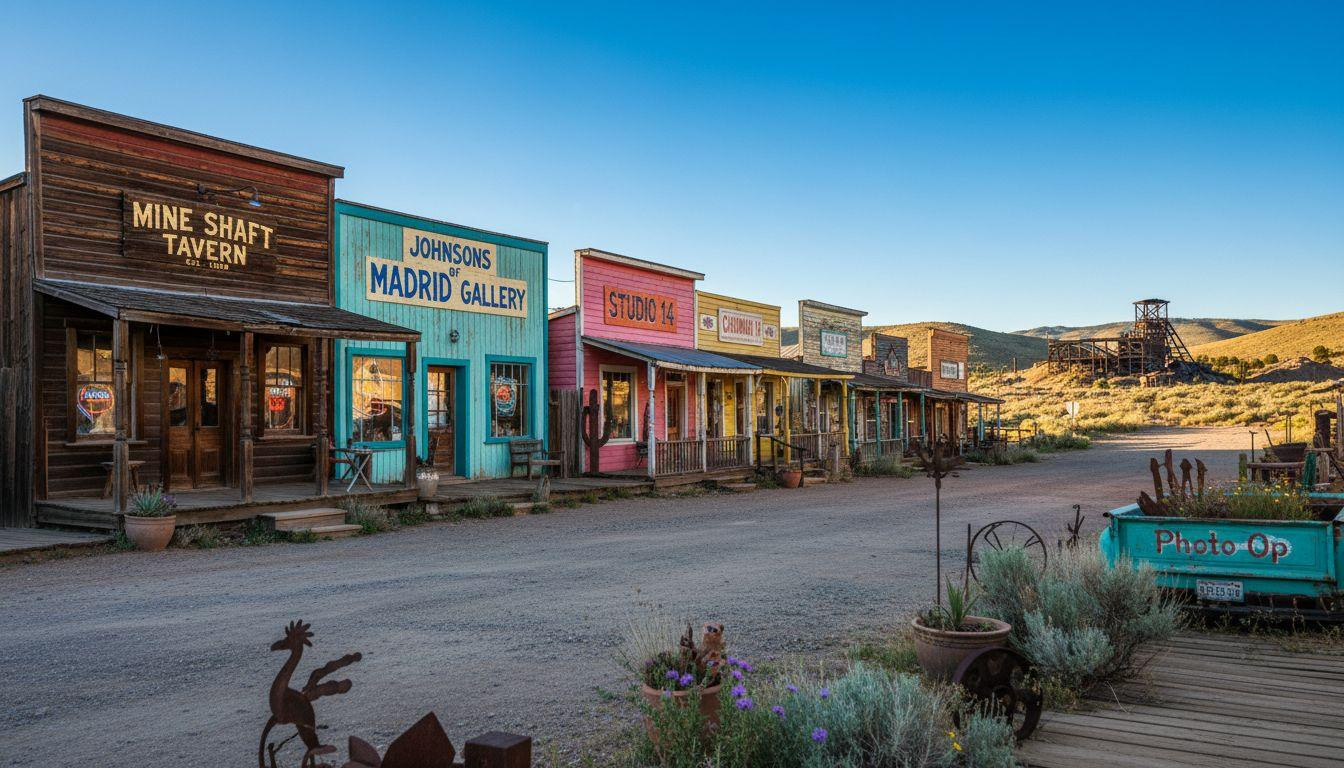
Morning light touches weathered wooden buildings where coal dust once settled thick. These same structures now house 40 galleries selling turquoise jewelry and abstract paintings. Madrid, New Mexico sits 45 minutes from Albuquerque, a ghost town that refused to stay dead when artists replaced miners in the 1970s.
Where 3,000 miners left everything behind
Coal mining began here in 1835 when settlers discovered rich deposits in Coal Bank. The Atchison, Topeka and Santa Fe Railroad acquired exclusive mining rights in 1891. Peak population exceeded 3,000 residents by the early 1900s.
Mining operations provided coal for Los Alamos National Laboratory during World War II. When Los Alamos switched to natural gas in 1954, owner Oscar Huber closed the last mines. The entire town sat empty for 20 years.
Buildings weathered under high desert sun. Mine shafts filled with silence. This 1883 ranch house where winter bison move through snowy badlands silence shares that same Western emptiness Madrid once knew.
The artists who bought houses for $100
How hippies discovered Madrid
In the early 1970s, Joe Huber rented abandoned miner cabins to artists and craftsmen. Bohemian settlers arrived seeking mountain solitude. The counterculture found sanctuary in industrial ruins.
By 1975, Huber sold 150 remaining buildings individually. All sold in 16 days. Larger houses cost $2,000, smaller ones $1,500. Population swelled to 80 artistic residents.
From mine shafts to art galleries
Today’s Madrid houses over 40 galleries in former mining buildings. Rustic adobe and wooden vernacular architecture showcase colorful murals. Gallery facades display vibrant pinks, turquoises, and yellows against golden high-desert hills.
The Mine Shaft Tavern preserves its 1890s saloon atmosphere. Outdoor whimsical sculptures dot the outskirts. This Abruzzo village where women carry flower vessels on their heads every September dawn shares Madrid’s artistic community preservation spirit.
Walking Main Street’s half-mile art corridor
What you’ll find in repurposed buildings
Native Americans mined turquoise here since 900 CE at nearby Mount Chalchihuitl. Local galleries sell jewelry from Cerrillos mines. Prehistoric turquoise pits remain visible today.
Main Street spans 0.5 miles of walkable galleries. Connie’s Photo Park offers quirky photo cutouts for $2 donations. The Old Coal Town Museum preserves 1890s mining artifacts for $5-10 entry.
The green chile burger nobody expects
Mine Shaft Tavern serves green chile cheeseburgers for $15. New Mexican specialties include enchiladas ($18-22) and posole. Cash payment preferred at quirky local shops.
Pinon coffee accompanies turquoise-inspired cafe themes. 5 American towns where one strange invention became everything from horse troughs to flight explores similar single-industry transformations across America.
December when artists outnumber visitors
Winter temperatures range 20-45°F at 7,000 feet elevation. Light snow dusts gallery rooftops. December brings minimal crowds to this unhurried artist colony.
Winter visitors enjoy empty Main Street browsing. Crisp pinon-scented air carries occasional live music from the tavern. Madrid’s population of 400 residents creates authentic small-town intimacy.
Madrid offers 30% cheaper meals than Santa Fe. Jerome, Arizona requires 2 hours from Phoenix while Madrid sits 45 minutes from Albuquerque airport. Abingdon’s 1933 theater where Depression farmers traded vegetables for Shakespeare tickets demonstrates similar cultural preservation through economic hardship.
Your Questions About Madrid answered
How do I get there from Albuquerque?
Drive 30 miles east via NM-14 (Turquoise Trail National Scenic Byway). Trip takes 45 minutes by car. Car rentals cost $50-80 daily at Albuquerque International Sunport.
GPS coordinates center on 35.413°N, 106.156°W. No direct train service exists. Rideshare costs $100-150 one-way from airport.
What’s the turquoise mining connection?
Mount Chalchihuitl represents North America’s largest prehistoric turquoise deposit. Native Americans traded turquoise across the Southwest and Mesoamerica. Spanish colonists mined turquoise, silver, and lead from the early 1600s.
The Cerrillos Mining District established around 1600 as America’s oldest documented mining district. Prehistoric mining pits remain visible near Madrid.
Is Madrid really more authentic than Santa Fe?
Madrid’s 400 residents compare to Santa Fe’s heavy commercialization. Working artist studios outnumber tourist shops. Local tourism boards confirm authentic bohemian community atmosphere.
Madrid maintains cash-preferred local businesses. Gallery prices range significantly lower than Santa Fe equivalents. Artist residency opportunities still exist for serious creators.
Sunset light touches adobe walls where pickaxes once struck coal seams. Sculptures cast shadows across silent mining ruins. December snow settles on gallery signs painted by hands that chose art over abandonment.