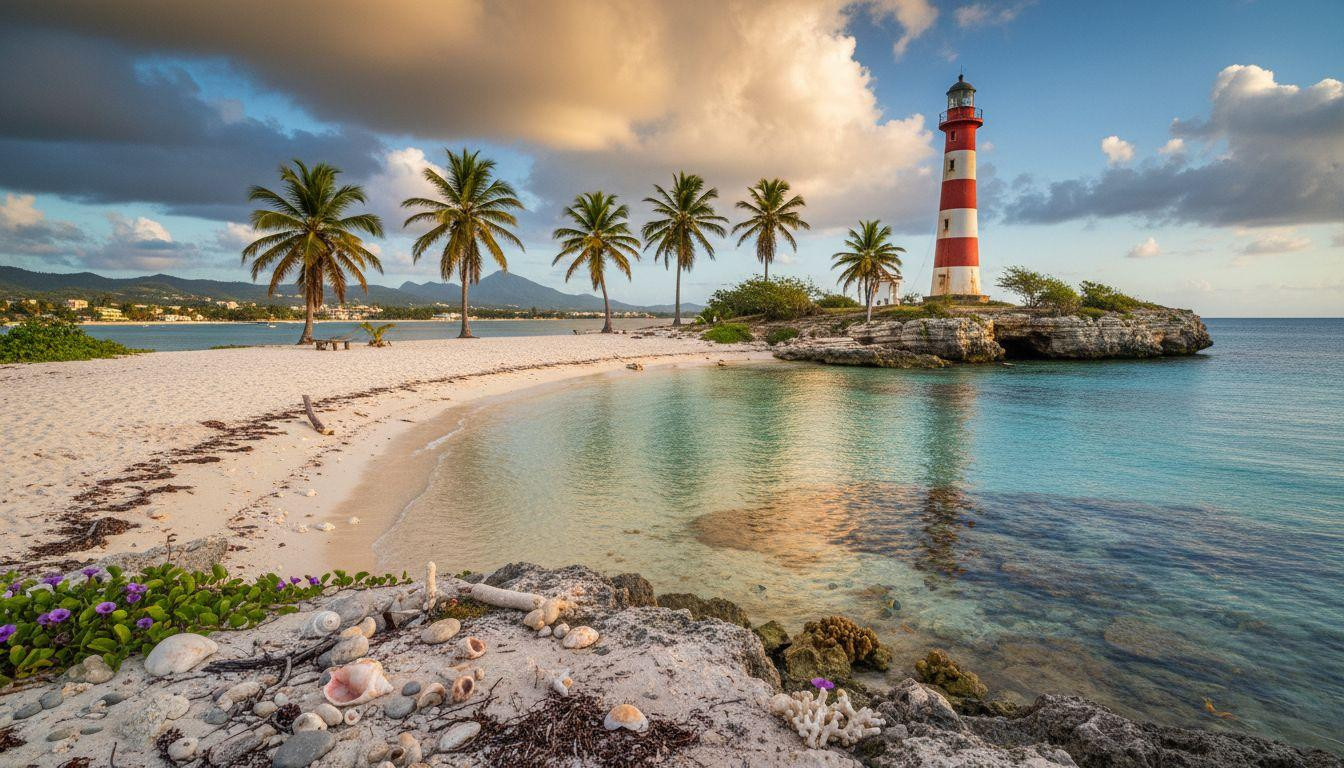
At 5:45 PM, the last shuttle departs Îlet du Gosier as most visitors head back to mainland Guadeloupe. But those who stay witness something extraordinary. The turquoise lagoon begins its daily transformation, shifting from crystal clear to molten gold as the Caribbean sun drops toward the horizon. For 20 minutes, this tiny coral islet becomes a living postcard.
Located just 500 meters off Le Gosier’s coast, this 3-hectare paradise offers the Caribbean’s most accessible golden hour experience. No expensive resort required.
A coral sanctuary suspended in time
Îlet du Gosier measures barely 1 kilometer long and 150 meters wide. White coral sand beaches stretch along the northern shore. Limestone cliffs rise from the southern edge.
The 10-minute shuttle ride from Anse Tabarin pier costs $7 round trip. Boats depart every 30 minutes until 5 PM. Strong swimmers can cross the 500-meter channel in 15 minutes with proper safety equipment.
A 69-foot red and white lighthouse stands at the islet’s tip. Automated since 1973, it has guided boats through these protected waters for nearly a century. This Guadeloupe lagoon creates the perfect amphitheater for nature’s daily light show.
When water turns to liquid amber
The science behind the magic
The shallow lagoon averages just 3-6 feet deep. White coral sand covers the bottom like a giant reflector. As the sun drops below 15 degrees above the horizon, light wavelengths shift.
Blue wavelengths scatter through the atmosphere. Red, orange, and gold wavelengths penetrate the clear water. The coral sand amplifies these warm tones, creating an otherworldly amber glow beneath the surface.
A photographer’s hidden treasure
Instagram hashtag #IletDuGosier shows over 100,000 golden hour posts. The islet’s compact size means every angle captures the light transformation. Palm trees create perfect silhouettes against the painted sky.
Most visitors return on the 5 PM shuttle, missing the show entirely. Vieques beaches offer similar golden moments, but require expensive boat charters. Here, kayak rentals cost just $25 for the entire day.
Beyond the sunset spectacle
Morning serenity before the crowds
Arrive at 9 AM for empty beaches and calm waters. Green iguanas bask on the lighthouse trail. Amerindian cistern ruins dot the eastern coastline, remnants of settlements dating to 200-800 AD.
Snorkeling reveals colorful fish darting through coral gardens. Water temperature stays a comfortable 79-82°F year-round. The fringing reef protects swimmers from Atlantic swells.
Cultural layers beneath paradise
Brown pelicans dive for fish at dawn and dusk. These “grands-gosiers” (large-throated birds) gave the area its name centuries ago. Archaeological excavations uncovered 10 pre-Columbian burials and ceramic artifacts.
Mancenillier trees line the southern cliffs. Local guides warn visitors never to shelter under these during rain. The toxic sap causes severe skin burns, earning them the nickname “beach apples of death.”
The evening return through painted water
Swimming back at sunset requires confidence and proper planning. This Caribbean sandbar offers similar ephemeral magic, but Îlet du Gosier provides reliable daily beauty.
The 500-meter crossing takes 15 minutes through water that glows like liquid gold. Trade winds stay calm during December-January dry season. Full moon periods provide extra visibility for evening adventures.
This tiny islet punches above its weight class. While resort beaches charge $200 per day, this natural paradise costs less than a coffee. Caribbean dive sites demand premium prices for underwater beauty. Here, the show happens above the surface.
Your questions about Îlet du Gosier answered
When should I visit for the best golden hour experience?
December through May offers the most reliable conditions. Dry season means 75% clear sky days and calm seas. Sunset occurs between 5:45-6:15 PM during winter months. Arrive by 4 PM to secure the best viewing spots on the western beaches.
How crowded does it get at sunset?
Most of the 300-400 daily visitors leave on the 5 PM shuttle. Only 20-30 people typically remain for sunset, mostly kayakers and strong swimmers. Weekdays see even fewer crowds. The islet’s most visited status applies to daytime hours, not evening.
How does this compare to other Caribbean golden hour spots?
Tobago Cays require $150 boat tours and full-day commitments. St. Barts islets charge $50+ for transfers. Îlet du Gosier offers world-class golden hour beauty for under $30 total (shuttle plus kayak rental). The 500-meter distance from mainland makes it the Caribbean’s most accessible coral islet paradise.
As twilight deepens, the lagoon holds its golden glow for precious minutes longer. The lighthouse beam sweeps across water that still shimmers with sunset’s last whispers. This tiny island delivers outsized magic.