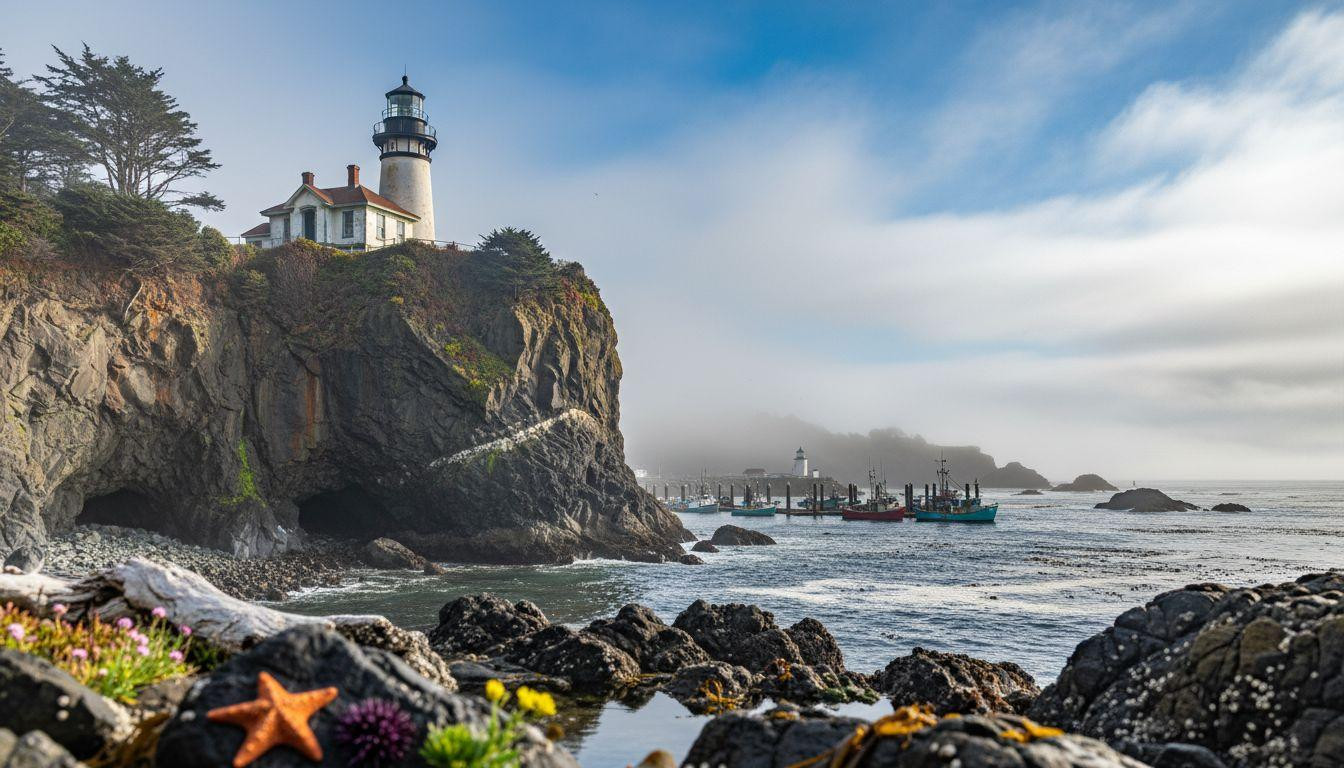
While Big Sur charges $10 for crowded lighthouse parking and battles Highway 1 closures, Trinidad keeps two historic lighthouses completely free. This overlooked Humboldt County gem offers fog-wrapped maritime heritage without the tourist chaos that has consumed California’s famous coastal drive.
The contrast hits immediately. Big Sur’s McWay Falls now requires advance planning, parking lottery luck, and deep pockets for $300+ Carmel hotels. Meanwhile, Trinidad’s 370 residents welcome visitors to cliff-top lighthouses where parking costs nothing and trails stay empty even on weekends.
Why Big Sur’s lighthouse coast disappoints in 2025
McWay Falls parking fills by 9am on weekends. Cars line Highway 1 for miles, waiting for $10 spots that may never open. Recent storm damage closed large portions of Julia Pfeiffer Burns State Park, limiting access further.
The current reality stings worse than the fees. Visitors report hour-long waits just to glimpse the 80-foot waterfall. Beach access remains completely prohibited, with cliffs beyond fenced boundaries strictly off-limits. Point Sur Lighthouse tours now require advance booking and cost $15 per person.
Highway 1 closures plague the route regularly. Emergency work between Vicente Creek and Lime Creek created indefinite full closures in 2024. The Dolan Fire aftermath keeps major trails shuttered, forcing visitors into overcrowded viewing areas. Even when accessible, the Pacific Northwest’s quieter maritime heritage offers better value.
Meet Trinidad’s fog-wrapped lighthouse pair
Trinidad Head Lighthouse perches 380 feet above crashing waves
Built in 1871, this active lighthouse survived a record 196-foot wave in 1914. The keeper relit the beacon within four hours, creating local legend. Monthly docent tours happen first Saturdays from 10am-12pm, completely free through the Trinidad Museum Society.
The 1-mile loop trail circles the headland with zero crowds. Morning fog transforms rocky outcrops into ghostly silhouettes. Visitors walk Victorian keeper quarters and examine the original fourth-order Fresnel lens without fighting photo lines or paying entrance fees.
Memorial Lighthouse honors maritime heritage in Seascape Harbor
This 25-foot concrete replica houses the original 1871 Fresnel lens and 1898 fog bell. Built in 1949 by the Trinidad Civic Club, it creates perfect foreground for harbor photography. Tide pools spread below while harbor seals rest on nearby rocks.
The working fishing fleet anchors here during Dungeness crab season (December-March). Local fishermen unload catches at dawn while tourists sleep in distant hotels. Similar maritime authenticity exists but requires finding these overlooked harbors.
The Trinidad experience Big Sur cannot match
Authentic working harbor versus tourist spectacle
Trinidad’s fishing fleet operates year-round, not for show but for survival. Crab boats depart at 5am while fog still blankets the harbor. Visitors walk among working docks where nets dry and locals repair equipment.
Old Home Beach stretches south with tide pools and sea stacks emerging from morning mist. No crowds, no fees, no restrictions beyond common sense. The fog creates natural sculptures from volcanic rocks while waves crash in solitude.
Cost reality reveals stark differences
Trinidad Inn charges $80-120 per night versus Big Sur’s $300+ hotel rates. Local seafood restaurants serve Dungeness crab for $15-20 while Big Sur equivalents demand $40+. Gas costs match Eureka prices instead of Big Sur’s gouging.
Lighthouse access stays free forever. Trail parking costs nothing. Harbor viewing requires no reservations or time limits. Free natural wonders still exist for travelers who seek them out.
December timing reveals Trinidad’s true character
Gray whale migration peaks in December as Pacific giants pass Trinidad’s headlands. Morning fog burns off by noon, revealing clear Pacific horizons. Winter temperatures hover between 45-55°F, perfect for layered exploration.
The fishing fleet works hardest during winter months. Dungeness crab season brings boats loaded with orange treasures. Local restaurants serve the freshest catches while visitors warm up with coffee and harbor views.
Crowds disappear completely. The lighthouse trails belong to visitors and resident deer. Winter destinations reward travelers who embrace quiet seasons over peak chaos.
Your questions about Trinidad, California answered
How do I reach Trinidad from major cities?
Fly into Arcata-Eureka Airport, 20 miles south with $50-80 daily car rentals. Drive takes 5-6 hours from San Francisco via Highway 101, avoiding Highway 1’s closure problems. Amtrak bus reaches Eureka for $50-100 from Bay Area, then local bus or taxi to Trinidad.
When should I visit for the best experience?
November through March offers peak authenticity with minimal crowds and active fishing seasons. December brings gray whale migration and Dungeness crab harvest. Summer fog frustrates many visitors, while winter fog creates mystical lighthouse photography opportunities.
How does Trinidad compare to other lighthouse destinations?
Trinidad offers two lighthouses within 0.5 miles, both free with working heritage intact. Maine’s lighthouses charge $8-15 entrance fees and battle summer crowds. Oregon’s coast requires longer drives and offers fewer combined attractions in walking distance.
Fog horns echo across empty headlands as December mist reveals Trinity’s lighthouse beacons. Two centuries of maritime heritage wait beyond Big Sur’s chaos, where authentic California coast survives without crowds or fees.