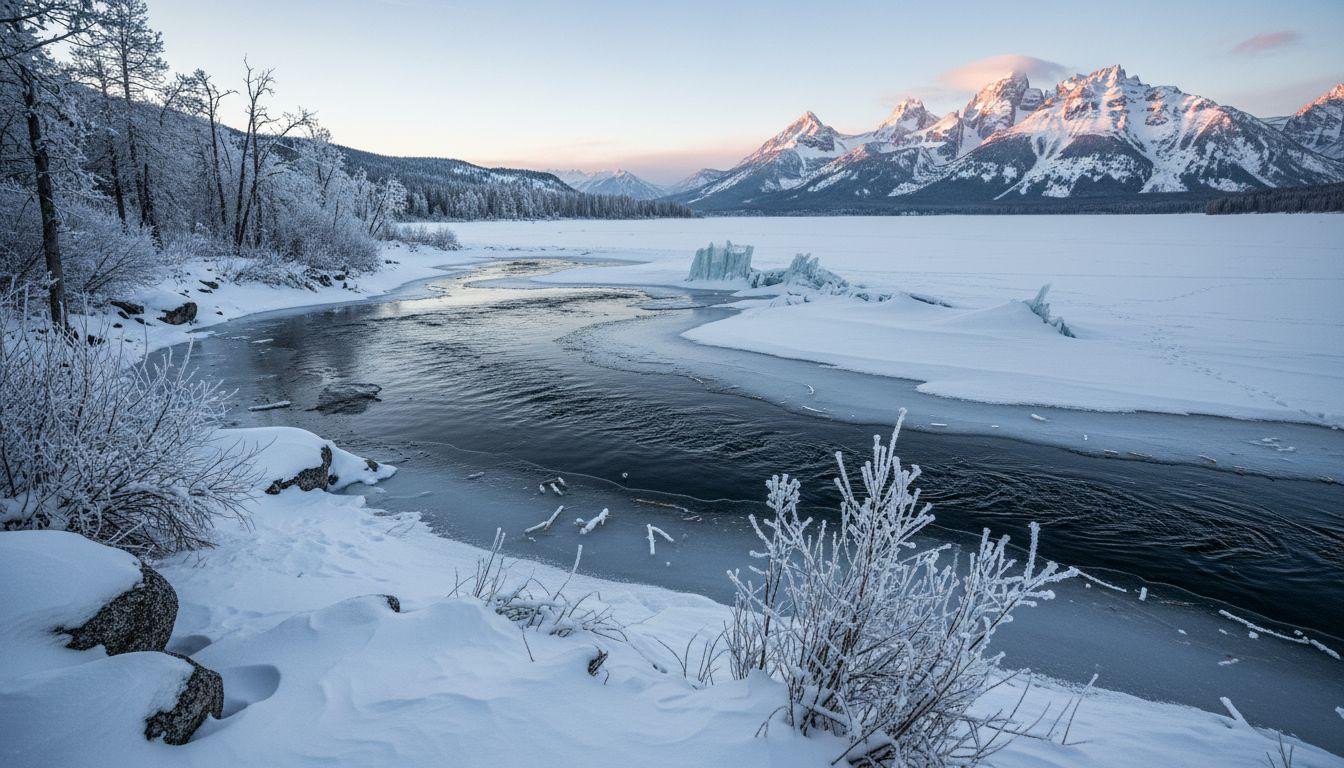
Steam rises from a bull moose’s nostrils as he browses frost-covered willows at Leigh Lake’s edge. The Teton Range towers behind him, snow-draped peaks catching first light while the lake’s surface lies frozen in perfect silence. This is Grand Teton National Park’s quietest winter theater, where wildlife drama unfolds at 6,900 feet elevation without the summer crowds that pack nearby Jenny Lake.
Where giants gather in alpine silence
Leigh Lake sits in Grand Teton’s northern wilderness, accessible only by snowshoe or cross-country ski from December through March. The Moose-Wilson Road closes to vehicles at Granite Canyon, creating a 2.3-mile winter pilgrimage through untouched backcountry. Unlike the park’s high-elevation lakes that freeze solid, Leigh’s spring-fed inlets keep shoreline edges partially open.
This creates perfect moose habitat during the harshest months. Bulls recovering from autumn’s rutting season seek willows and cottonwoods along the protected shores. Cows prepare for spring calving in areas where deep snow doesn’t bury their food sources. The lake’s relatively low elevation makes it a winter refuge when higher country becomes impassable.
Winter brings predator drama to frozen shores
Recent GPS collar data shows two wolf packs patrolling within 2 miles of Leigh Lake this winter. The combination of vulnerable moose and open terrain creates visible predator-prey interactions rarely seen in summer’s thick vegetation. Fresh tracks in powder snow tell stories of midnight hunts and narrow escapes.
When wolves test the giants
Park wildlife specialists document 3-4 wolf encounters with moose near Leigh Lake weekly during peak winter months. Healthy adult moose can defend themselves effectively, but deep snow creates vulnerability for young, old, or weakened animals. Visitors often hear howling across the frozen lake surface between 8-10 PM on clear nights.
The Teton amphitheater frames every moment
Snow-cloaked peaks rise 7,000 feet directly above the lake’s surface, creating one of America’s most dramatic wildlife viewing backdrops. Morning alpenglow turns granite walls pink while moose browse in golden light reflected off fresh snow. Unlike crowded Northeast winter destinations, no summer trail traffic obstructs pristine viewpoints.
Following animal highways through powder
Free ranger-led snowshoe walks operate Tuesdays and Thursdays from January 6 through March 12, 2026. Groups of 15 follow animal tracks from String Lake trailhead, learning to read winter ecology written in snow. Reservations open December 1 through recreation.gov, though self-guided routes remain open daily.
The groomed approach via Teton Park Road reaches String Lake in 1.8 miles of moderate snowshoeing. Most visitors spot fresh moose tracks within the first half-mile. Actual moose sightings occur on 65-85% of winter trips, with January offering peak visibility when deep snow concentrates animals at predictable feeding areas.
What the silence reveals
Leigh Lake sees perhaps 50 winter visitors daily compared to 300+ in summer. Sound carries differently across frozen water and snow-muffled terrain. The quiet rivals Minnesota’s most remote winter landscapes, broken only by snowshoe crunches, wind through pines, and occasional moose splashing at ice edges.
Winter’s wildlife beyond moose
Bald eagles patrol open water sections where fish remain active. Trumpeter swans (20-30 individuals) gather at thermal springs. Red fox tracks crisscross the lake’s frozen surface, and coyote packs follow moose movements hoping for vulnerability. Each snowfall rewrites the story in tracks and trails.
Teton winter without resort prices
Jackson Hole lodging drops to $150-250 nightly during winter months, compared to $400+ during ski season peaks. Park entry costs $35 per vehicle for 7 days, unchanged from summer rates. Equipment rentals cost half what Colorado mountain towns charge for similar snowshoe experiences.
Guided wildlife tours run $149 for 4-hour experiences through Teton Science Schools. Local diners serve elk chili ($18.50) and huckleberry pie ($8.75) at prices that haven’t changed much since summer. Compare this to Pennsylvania’s winter hiking costs and Wyoming delivers better wildlife value.
Your questions about Leigh Lake answered
When do moose appear most frequently?
Dawn (7:15-9:30 AM) and dusk (4:45-6:15 PM) offer highest sighting probabilities. January provides peak visibility at 85% success rate as deep snow forces moose into predictable travel corridors. Rangers recommend arriving 30 minutes before sunrise for optimal photography light and animal activity.
How close can visitors approach wildlife?
Park regulations require 25-yard minimum distance from moose, extended to 100 yards when calves are present. Cow moose become particularly protective in March as calving season approaches. Rangers carry bear spray as standard protocol, though grizzly activity remains minimal during winter months.
How does winter compare to summer visits?
Summer brings 300,000+ park visitors compared to 30,000 winter-wide. Leigh Lake specifically sees under 10 daily winter visitors versus 100+ summer hikers. Wildlife becomes more visible through bare vegetation while photography opportunities improve dramatically. Costs drop 40% while authenticity increases exponentially.
Morning mist rises from thermal springs where moose drink while wolves watch from distant ridgelines. The Tetons catch first light in perfect silence, broken only by the quiet splash of a giant moving through winter’s edge.