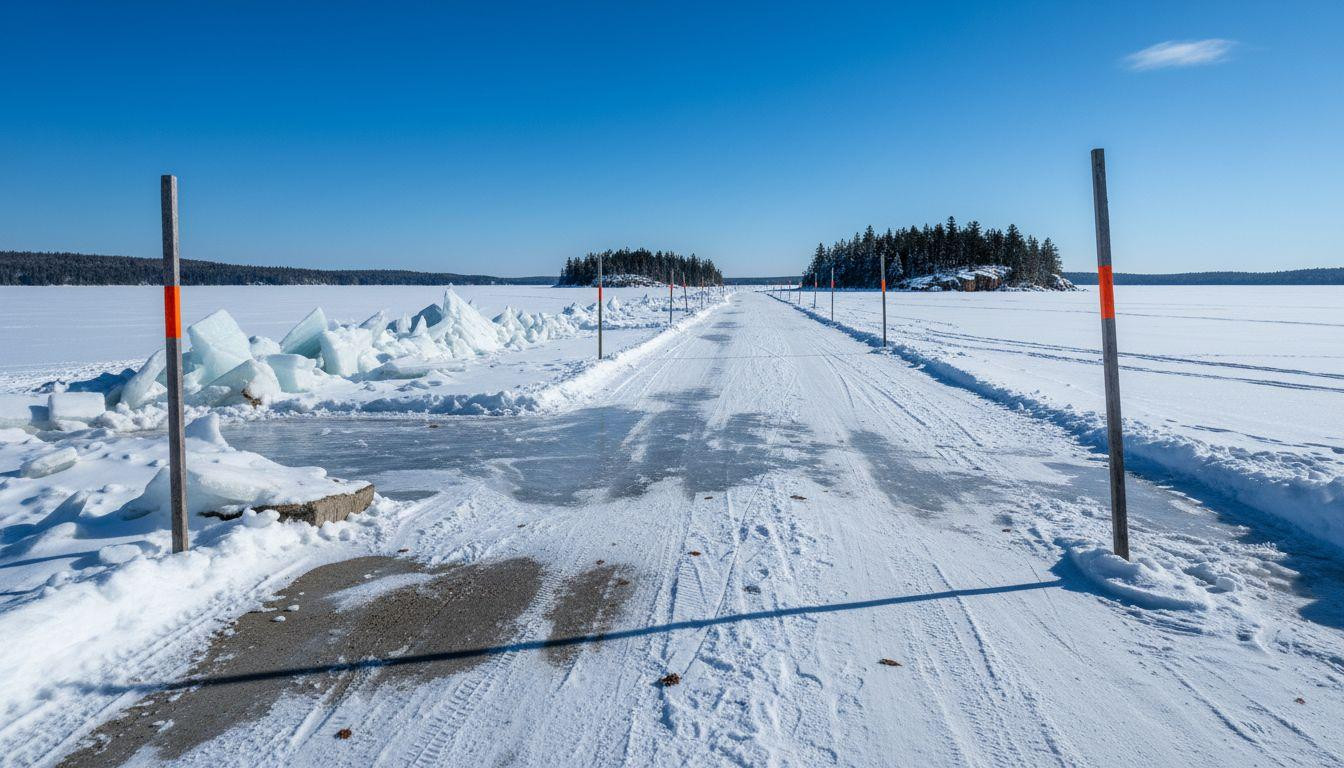
The stakes disappear into white distance as your vehicle descends the boat ramp onto Kabetogama Lake’s frozen surface. This is Minnesota’s most overlooked ice highway, where groomed paths cross 15 miles of solid lake to reach snowbound islands. Voyageurs National Park transforms its summer waterways into winter roads each December, creating an Arctic driving experience just 5 hours from Minneapolis.
The ice highway infrastructure
Crews groom and stake the Kabetogama Lake Ice Road when ice reaches 12-18 inches thick. The main route connects Kabetogama and Ash River Visitor Centers across frozen lake surface. Stakes mark safe passages around pressure ridges, those jagged ice walls that form naturally as the lake expands and contracts.
According to National Park Service records, “the Kabetogama Ice Road has been extended, with the east and west spurs now open.” These spurs lead to Sphunge Island, roughly 3-5 miles from the visitor center. Remote winter destinations like this offer experiences impossible during summer boat season.
Crossing frozen Kabetogama
The visual experience
Your tires contact glare ice as you leave shore behind. The lake stretches white in every direction, broken only by dark boreal islands crowned with snow-heavy pines. Pressure ridges rise like natural sculptures, creating an otherworldly landscape of upheaval and stillness.
On clear nights, aurora borealis dances over the ice road. The park’s certified dark skies reveal northern lights that photographers chase from December through March. Wolf tracks crisscross the groomed surface like hieroglyphs in snow.
Winter culture
The ice road tradition evolved from French-Canadian voyageur routes of the 1700s. These lakes served as winter highways for fur traders long before snowmobiles existed. Today’s groomed paths follow centuries-old travel corridors across the same frozen surfaces.
Local customs emphasize ice safety above adventure. Residents check pressure ridge warnings and respect stake boundaries that mark safe passage. Upper Midwest winter traditions center around reading ice conditions and moving with caution.
Island destinations and activities
What you can do
Sphunge Island features a sledding hill and ice rink accessible only via the ice road. Snowmobile trails extend 110 miles throughout the park, connecting frozen bays and remote coves. The National Park Service offers ski and snowshoe rentals for $5-10 daily starting January 1st.
Ice fishing access opens wherever the road reaches deep water. Walleye and northern pike swim beneath 18 inches of solid ice. Winter camping sites on islands provide Arctic isolation without the passport requirements.
The remote experience
Summer islands become winter destinations when ice roads open access. These same spots require boats from May through November, limiting visitors to day trips. Winter transforms isolated outposts into snowmobile-accessible adventures.
The absolute quiet strikes visitors immediately. No boat engines, no summer crowds. Only wind across ice and the distant crack of thermal expansion. Alternative winter recreation destinations rarely offer this level of pristine solitude.
The frontier feel
Kabetogama’s ice roads deliver Arctic aesthetics without international travel costs. The experience mirrors Lapland’s frozen highways but costs 70% less than Finnish winter tours. Snowmobile rentals run $200-300 daily compared to $400+ in Scandinavian destinations.
Unlike many national parks, Voyageurs charges no entrance fees. This accessibility makes world-class winter landscapes available to families who can’t afford resort prices. The park sees only 10-20% of its annual 225,000 visitors during winter months.
Recent visitor surveys reveal growing appreciation for under-the-radar winter destinations. Seasonal transformations create entirely different experiences from the same geographic locations.
Your Questions About Kabetogama Lake Ice Road Answered
When can you drive on the ice?
The ice road typically opens mid-December when ice reaches safe thickness of 12-18 inches. Official seasons run through March, depending on spring thaw timing. Check National Park Service weekly reports for current conditions and opening status.
What’s the best way to experience it?
Snowmobiles offer the most flexibility for exploring spurs and distant islands. Rental costs average $200-300 daily from local outfitters. Cross-country skiing works well for shorter distances, with free equipment available through park services starting January.
How does this compare to other winter parks?
Yellowstone’s winter access requires expensive snowcoach tours starting at $150 per person. Voyageurs provides free ice road access once conditions permit. Winter crowds remain minimal compared to western national parks, with authentic boreal forest isolation.
Dawn light catches ice crystals as you return across the groomed highway. Islands shrink behind you while the visitor center grows larger ahead. Stakes mark your path home from Minnesota’s frozen frontier.