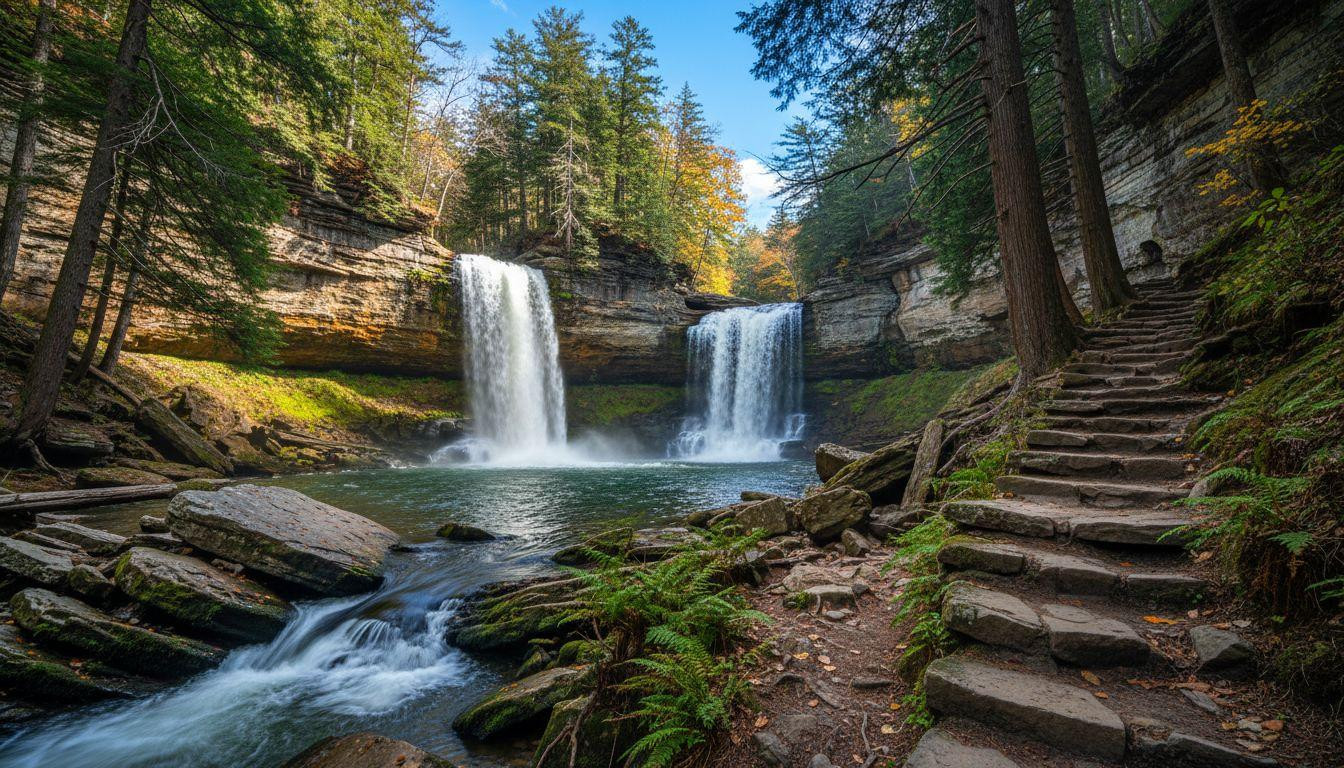
Tucked into the Endless Mountains of northeastern Pennsylvania, Ricketts Glen State Park harbors America’s most concentrated waterfall experience. Twenty-one named cascades tumble through ancient hemlock groves along a single 7.2-mile trail system. Each waterfall appears roughly every third of a mile, creating an unmatched rhythm of discovery. Most hikers expect maybe three or four significant falls on a Pennsylvania trail, but Ricketts Glen delivers constant surprises.
The trail that redefines waterfall hiking
The Falls Trail begins at Lake Rose Trailhead, where GPS coordinates 41.337°N, 76.267°W guide visitors into Pennsylvania’s most spectacular gorge system. Kitchen Creek carved three distinct glens through Devonian sandstone over millennia. Glen Leigh, Ganoga Glen, and the main Ricketts Glen each cradle multiple waterfalls within their rock-strewn walls.
Morning mist rises from the creek as hikers descend stone steps carved into cliff faces. Old-growth hemlocks, some exceeding 300 years, filter sunlight into cathedral-like beams. The constant sound of rushing water grows louder as the trail drops 1,000 feet through the gorge system.
Pennsylvania’s crown jewel: Ganoga Falls
At 94 feet, Ganoga Falls commands attention as the park’s tallest cascade. The waterfall plunges in a single dramatic drop over a sandstone ledge, sending mist 50 feet across the trail. Spring snowmelt transforms this impressive fall into a thundering spectacle that drowns out conversation.
Ancient forest cathedral
Hemlock giants surround Ganoga Falls like living pillars. These trees predate European settlement, creating an atmosphere unchanged for centuries. Moss carpets every surface within the mist zone, while ferns cascade down the gorge walls in emerald sheets.
The Iroquois connection
Local historians confirm the name derives from the Iroquois word meaning “water on the mountain.” Early park literature incorrectly attributed the name to a fictional Chief Ganoga. The true linguistic heritage connects visitors to the Native Americans who first marveled at these cascades centuries ago.
Waters Meet: where two worlds converge
The trail’s emotional center occurs at Waters Meet, where Glen Leigh and Ganoga Glen streams merge into Kitchen Creek. This junction sits at 1,500 feet elevation, offering hikers their only flat resting spot along the challenging route. From here, experienced waterfall seekers can look back to spot Erie Falls in the distance.
The photographer’s dream sequence
Harrison Wright Falls drops 27 feet just above Waters Meet, creating the park’s most photographed waterfall. Its curved sandstone ledge forms a perfect curtain of water that catches afternoon light. Clear pools below reflect the surrounding hemlocks, doubling the visual impact.
Hidden gems beyond the headlines
Ozone Falls plunges 60 feet in two dramatic tiers, tucked into a narrow cleft requiring careful approach. Mohican Falls creates a 39-foot veil of mist that hikers can walk behind on the overhang trail section. Even modest Cayuga Falls, at just 11 feet, surprises with its unique dual-channel design where water splits around a central rock formation.
The secret 22nd waterfall experience
While most visitors focus on the famous 21 waterfalls along the main trail, Adams Falls offers a bonus discovery just 0.2 miles from the Evergreen Parking Lot. This overlooked cascade remains accessible even when winter ice closes the main Falls Trail from December through March.
Spring timing transforms the entire experience, with snowmelt tripling water flow rates from April through May. October brings dual rewards: peak foliage frames each waterfall while cool nights create morning mist that rises from every pool. Recent visitor surveys conducted in 2025 reveal that fewer than 200,000 hikers annually complete the full loop, keeping crowds manageable even during peak seasons.
Your questions about Ricketts Glen State Park answered
How difficult is the Falls Trail?
The Pennsylvania Department of Conservation and Natural Resources rates this as “Most Difficult” due to steep stone stairs and slippery rock surfaces. The 7.2-mile loop requires 4-5 hours with photography stops. Hiking boots are essential, and the counterclockwise direction proves easier for most visitors since the steepest descents become climbs.
What makes this different from other waterfall hikes?
Waterfall density sets Ricketts Glen apart from every other Eastern trail. Niagara Falls draws millions to see one massive cascade, while Yosemite requires strenuous climbs for distant waterfall views. Here, 21 named falls appear every 0.34 miles, creating constant visual rewards without the massive crowds of famous destinations.
When should I visit for the best experience?
Spring offers peak water flow but muddier conditions, while fall combines moderate flows with spectacular foliage. Summer brings crowds but offers comfortable temperatures in the shaded gorge. Winter closes the Falls Trail except for ice climbing experts, though easier trails like Bear Walk remain open year-round.
Dawn at Waters Meet reveals why locals treasure this place beyond tourist seasons. Mist rises from the confluence pools while hemlocks stand silent as centuries-old sentinels. Here, Pennsylvania’s most concentrated waterfall experience unfolds one cascade at a time, each fall building toward the next in an ancient rhythm carved by time and water.