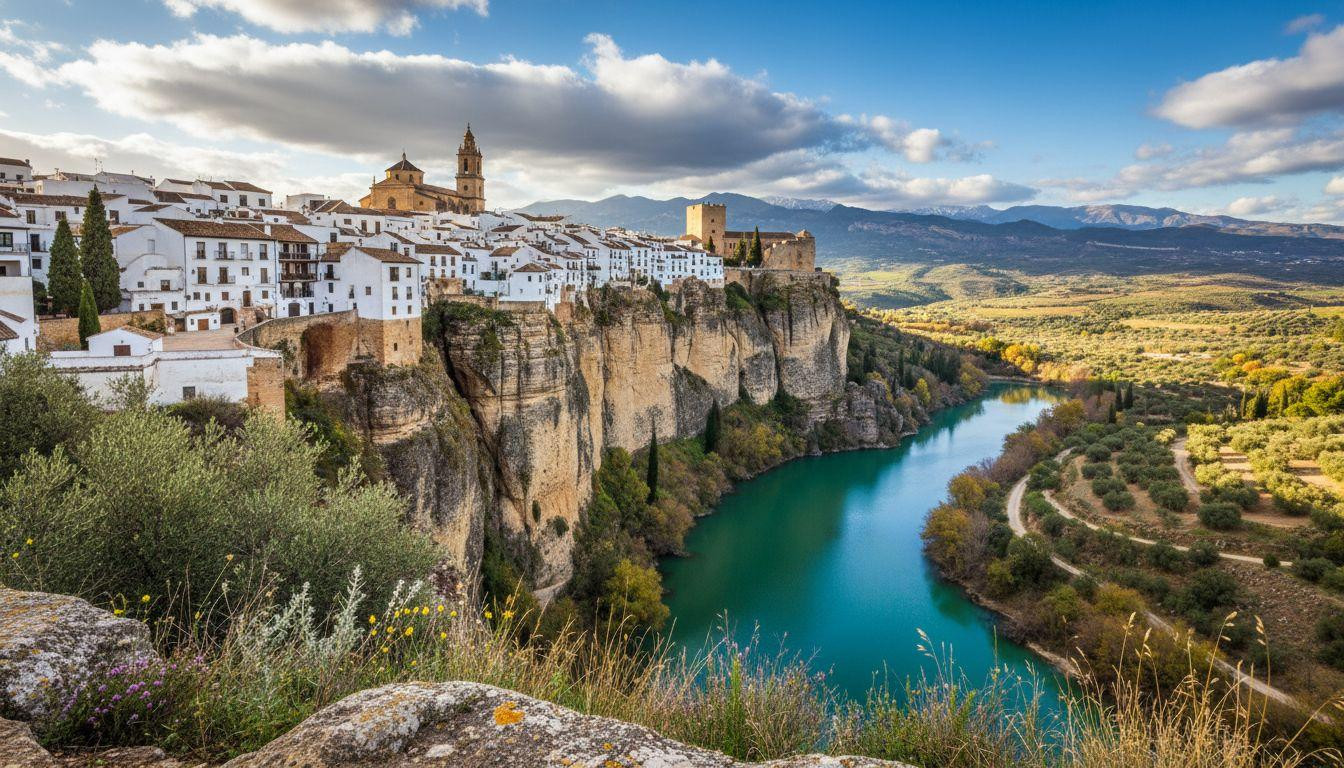
Standing at Plaza del Cabildo’s southern edge, you peer down a sheer 328-foot cliff where the Guadalete River curves through golden olive groves far below. This white Andalusian village perches impossibly on a sandstone plateau, its narrow Muslim-era streets cascading toward precipice viewpoints that few Americans discover. While Ronda draws 1.5 million tourists annually, Arcos de la Frontera welcomes just 250,000 visitors to its cliff-edge drama.
The fortress village above the valley
Arcos occupies a massive rock plateau 741 feet above sea level, jutting from the Guadalete valley like a natural watchtower. The town’s strategic position earned its “de la Frontera” designation during the medieval Reconquista. From Jerez airport, just 16 miles away, the drive winds through Sherry vineyards before revealing white facades spilling down cliff faces.
The Embalse de Arcos reservoir stretches 9 miles below the town’s precipice. Morning mist rises from turquoise waters while church bells echo across the valley. Similar cliff-top villages exist across Europe, but few offer Arcos’ combination of Muslim heritage and vertiginous drama.
Where medieval streets meet cliff edges
Plaza del Cabildo’s dramatic precipice
The town’s main square ends abruptly at a 328-foot drop to the river valley. Gothic-Renaissance facades of the Basilica de Santa María frame panoramic views across olive groves stretching to the Sierra de Grazalema. The Parador hotel, built within a reconstructed 16th-century magistrate’s house, offers cliff-edge terraces where guests sip morning coffee above the abyss.
Orange trees line the plaza’s northern edge while the southern boundary opens to endless valley vistas. December brings crisp 46-57°F temperatures and golden light that paints white walls amber against the darkening gorge below.
Muslim-era alleyways frozen in time
Callejón de las Monjas preserves its 11th-century width, barely allowing two people to pass. Flower-adorned archways connect white houses where laundry dries across narrow passages. The Mirador de Abades features the viral “Bésame en este arco” sign, creating Instagram-worthy shots through its romantic flower-framed arch.
Puerta Matrera stands as the lone remnant of medieval defensive walls. European villages with similar preservation dot the continent, but Arcos maintains its authentic Andalusian character without commercialization.
The castle, the basilica, and December silence
Castillo de los Duques fortress
The 11th-century Muslim fortress crowns the plateau’s highest point, rebuilt during the 14th-15th centuries by Christian nobility. While the interior remains private, exterior walls frame classic Arcos views over the Guadalete valley. The castle’s strategic positioning commanded frontier defenses against the Granada kingdom for centuries.
Basilica tower climb and cliff panoramas
Santa María de la Asunción’s Baroque tower requires climbing 130 stone stairs for 360-degree pueblo views. The $5 entry fee grants access to vertiginous perspectives over red-tiled roofs cascading toward the reservoir. Live bell tolls mark the hours while golden eagles soar at eye level above the valley.
Tourism boards confirm the basilica sits atop a 14th-century Arab mosque foundation. Gothic and Renaissance elements blend with Islamic architectural remnants throughout the structure.
Winter tranquility returns
December transforms Arcos into a locals-only enclave. Empty cobblestone streets echo with footsteps while café owners reclaim plaza terraces after summer crowds depart. Morning light phenomena paint white facades gold during winter’s crisp, clear days.
Why Arcos trumps overcrowded Ronda
Daily costs average $55-88 in Arcos versus $88-132 in Ronda. Hotel rooms start at $66 compared to Ronda’s $110 minimum. More importantly, you’ll share cliff viewpoints with handfuls of visitors rather than tour bus crowds. Access proves easier too: Arcos sits 30 minutes from Jerez airport while Ronda requires 90 minutes from Málaga.
The town offers identical white village drama without commercialization. Villages preserving authentic character grow rarer as tourism increases, making Arcos increasingly precious.
Your questions about Arcos de la Frontera answered
When should Americans visit for optimal weather?
March through May and September through November offer 59-72°F temperatures with blooming flowers. December through February brings 46-59°F highs with minimal rainfall, perfect for uncrowded exploration. Avoid June through August when temperatures reach 86°F and summer crowds arrive.
How do you reach the best cliff viewpoints safely?
Park near Plaza del Cabildo (limited spaces available) and walk 300 yards through narrow streets to Mirador de Abades. No physical challenges exist beyond steep cobblestone alleys. Six primary viewpoints offer different valley perspectives, each accessible within a 10-minute walk.
What distinguishes Arcos from other Andalusian white villages?
Arcos’ unique plateau setting creates more dramatic cliff edges than hillside villages like Vejer or Casares. The National Historic-Artistic Monument designation since 1962 preserves authentic Muslim-era street layouts. Unlike touristy Ronda, local life continues naturally around visitor presence.
Evening light fades across the Guadalete valley while church bells mark vespers from the basilica tower. White walls glow amber above the darkening gorge, and distant olive groves disappear into purple shadows.