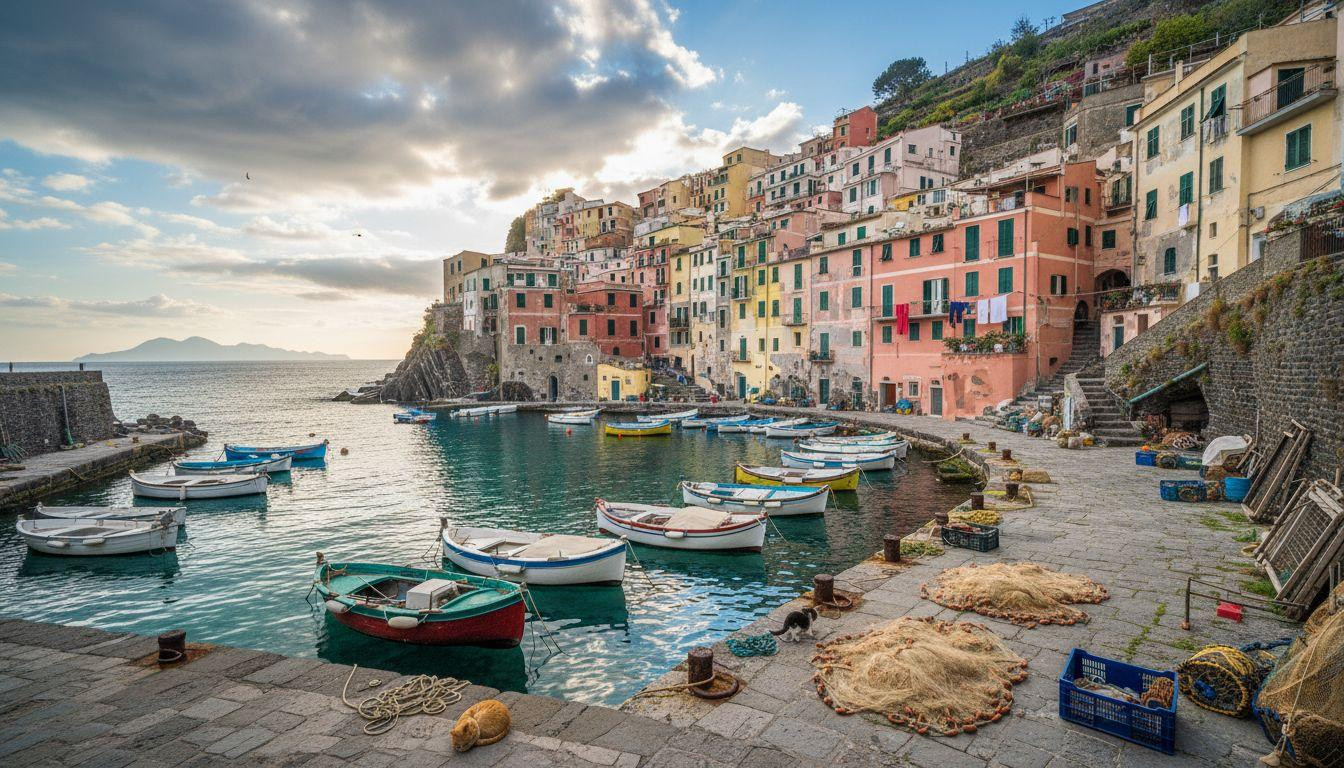
Eight coastal villages across Europe guard centuries-old secrets behind pastel facades and working harbors. These fishing communities survived mass tourism by staying authentic: nets dry on ancient quays, cats nap on colored doorsteps, and morning boats return with fresh catches while visitors sleep. December 2025 brings these harbors back to their fishing roots, with 70% fewer crowds and winter light that transforms painted houses into watercolor dreams.
Marina Corricella, Procida: where cars never conquered cobblestones
Peach and rose houses cascade down cliff faces to a postage-stamp harbor. Medieval alleys stay car-free, preserving sounds of lapping waves and distant conversations. The village appeared in Paolo Sorrentino’s 2021 film The Hand of God, yet maintains its fishing soul.
Day-trippers arrive by 25-minute ferry from Naples ($17-22) but depart by 4pm. Evening brings the real Procida: locals emerge for unhurried passeggiata as harbor lights reflect on calm water. Fresh anchovy dinners cost $22, served on terraces overlooking working fishing boats.
The colors fishermen painted for survival
Local historians confirm the pastel tradition began when fishermen painted homes bright colors for sea navigation. Storms and fog made distinctive hues essential for spotting home harbor from boats. Today, 1,500 residents maintain this maritime rainbow across vertical neighborhoods carved into cliff faces.
December brings empty beaches to yourself
Winter temperatures hover around 50-57°F with occasional sunny days reaching 60°F. According to tourism data from 2025, December crowds drop to 20% of summer levels. Swimming remains possible in protected coves where water stays around 59°F.
Manarola, Cinque Terre: the fishing village older than tourism
Rainbow houses climb impossible cliff faces above a 200-yard harbor. Founded in 1276, Manarola claims status as oldest Cinque Terre village. UNESCO World Heritage designation in 1997 protects terraced vineyards dating to Roman times.
Train access from La Spezia costs $11 with winter service every two hours. Village population of 800 swells to crowds of 500,000 annually, but 80% arrive during summer months. December brings quiet mornings when fishing boats outnumber tourists.
Via dell’Amore and vineyard trails above the sea
The famous coastal walking path reopened sections in 2025 after rockfall repairs. Terraced vineyards produce Sciacchetrà dessert wine from grapes hand-harvested on 45-degree slopes. Local wine tastings cost $18 with harbor sunset views.
Stone steps carved by centuries of fishermen
Ancient stone staircases connect harbor to hilltop neighborhoods through passages barely six feet wide. Laundry lines stretch between medieval buildings while cats claim sunny spots on worn steps. Morning light illuminates pastel walls in shades of rose, peach, and lemon.
Cudillero, Asturias: amphitheater harbor where cider flows
Candy-colored houses form a perfect horseshoe around a working harbor. 100-meter cliffs frame this 18th-century fishing amphitheater where morning fish auctions continue traditions from Spain’s maritime past. The village population of 1,200 maintains authentic Asturian culture despite postcard fame.
Bus service from Oviedo takes 90 minutes for $13, dropping visitors into a harbor scene unchanged for decades. Active fishing boats dock alongside recreational vessels, proving this remains a working community first.
Fish auctions at dawn and cider ceremonies at dusk
Daily fish auctions begin at 6am on harbor docks, open to public viewing. Fresh catches include Atlantic sea bream and sole. Evening cider pouring traditions involve holding bottles high above glasses, creating foam that enhances flavor. Local sidrerías charge $4 per bottle with free tapas.
Cliff-top mirador reveals horseshoe perfection
Hiking paths climb to scenic viewpoints 300 feet above harbor level. December weather averages 48-55°F with occasional rain showers that clear quickly. Tourism office reports annual visitors around 200,000, with winter months seeing 85% fewer crowds than July peaks.
Azenhas do Mar and Polignano a Mare: Atlantic meets Mediterranean drama
White cottages perch on Portuguese cliffs above natural seawater pools. Azenhas do Mar’s population of 300 guards dramatic coastline 28 miles from Lisbon. Golden hour transforms cliff faces into glowing amphitheaters while waves crash 200 feet below.
Italian Polignano a Mare offers similar limestone drama on the Adriatic coast. Train service from Bari costs $7 for 40-minute journey to this medieval village of 2,000 residents. Houses balance on cliff edges above blue-green waters perfect for summer cliff diving.
Your Questions About European fairytale villages,top 8 coastal villages with pastel houses and quiet harbors answered
When do these villages feel most authentic?
December through February brings villages back to local rhythms. Fishing boats dominate harbors, restaurants serve residents rather than tourists, and morning markets sell to neighbors instead of visitors. Temperatures range from 45-60°F depending on location.
How much less expensive is winter travel?
Accommodation costs drop 25-40% during winter months. Italian villages offer guesthouse rooms from $66-99 compared to $165-220 in summer. French and Portuguese locations show similar savings, with restaurant meals costing 15% below summer pricing.
Which villages offer the most dramatic photography?
Azenhas do Mar and Polignano a Mare provide cliff drama, while Manarola offers classic Cinque Terre rainbow cascades. Marina Corricella delivers intimate harbor scenes with fishing boat reflections. All locations benefit from winter’s softer light and empty compositions.
Evening light paints pastel walls in deeper hues while harbor water reflects colored facades like liquid mirrors. Fishing nets dry on ancient stones as cats emerge for twilight prowls. These villages belong to fishermen first, visitors second, creating timeless scenes where Mediterranean calm defines unhurried days.