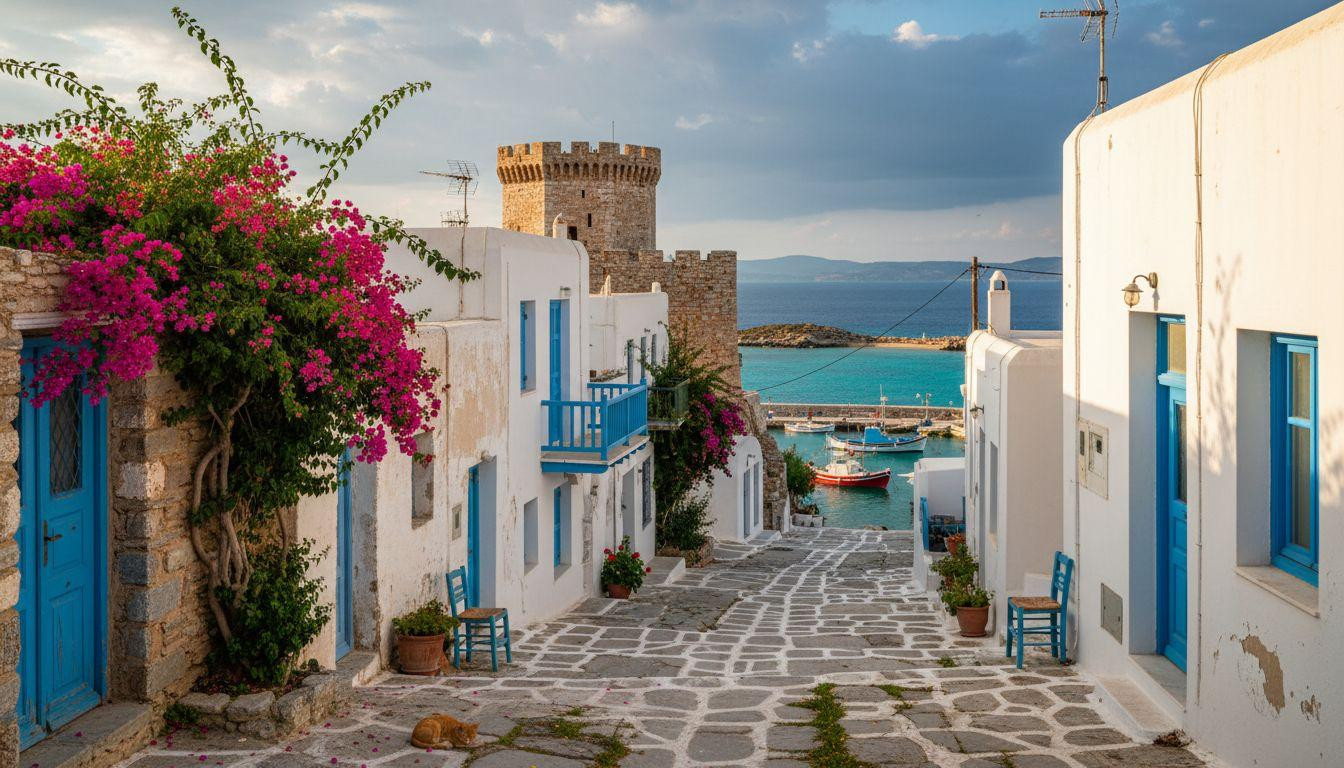
While Mykonos drowns under 2.2 million annual tourists who pay $460 per night for overcrowded beaches, a seven-minute ferry ride delivers you to Antiparos. Here, 1,200 residents welcome visitors to 35 miles of empty coastline where whitewashed houses cascade toward turquoise waters that shimmer like liquid glass.
The contrast strikes immediately upon arrival. Mykonos airport processes 80,000 daily visitors during peak season, creating three-hour baggage delays and $85 taxi rides to town.
Antiparos requires no airport chaos. A $6 ferry from Paros delivers you to a harbor where fishing boats outnumber tour vessels 10 to 1.
Why Mykonos lost its Cycladic soul
Numbers tell Mykonos’ overtourism story starkly. The island’s 11,000 permanent residents face 80,000 daily visitors during summer months. That creates a crushing 7:1 tourist-to-local ratio that has destroyed authentic village life.
Beach clubs charge $85 sunbed minimums at Paradise Beach. Restaurants demand $45 for grilled octopus that costs $18 on Antiparos. Hotel rates average $460 nightly during peak season, with luxury properties reaching $800.
Ferry delays stretch to four hours during July and August. Nearby beaches offer similar frustrations as cruise ships discharge 1.29 million passengers annually.
Pre-booking data reveals Mykonos declining 27% for 2025 as travelers seek authentic alternatives. The party reputation that built its fame now drives away visitors seeking genuine Greek island experiences.
Meet Antiparos: authentic Cyclades preserved
Antiparos spans just 19 square miles, supporting 1,200 year-round residents who maintain traditional rhythms. The main town clusters around a 15th-century Venetian castle, creating intimate squares where bougainvillea spills over ancient stone walls.
Landscape that captivates without crowds
Classic Cycladic architecture dominates the landscape. Cubic white houses feature bright blue shutters and wooden doors weathered by decades of Aegean salt air. Cobblestone streets wind between buildings that house family bakeries operating since the 1950s.
The coastline stretches 35 miles with 12 distinct beaches. Golden sand meets limestone cliffs at Livadia Beach, while Camping Beach offers clothing-optional solitude. Water clarity averages 82 feet of visibility compared to Mykonos’ crowded bays at 59 feet.
Culture rooted in island traditions
Local tavernas serve grilled octopus for $18 versus Mykonos’ $45 prices. Family-run establishments like Captain’s House prepare fresh catch daily, sourced from boats that dock at 7:00 AM. Village festivals remain free, featuring traditional music under starlit skies.
The island’s “barefoot rebel” culture embraces unhurried exploration. Hiking trails connect remote chapels and hidden coves where silence reigns supreme.
The Antiparos experience: freedom restored
December transforms Antiparos into a local’s paradise. Temperatures hover around 57°F, perfect for cave exploration and coastal walks. The famous Antiparos Cave descends 411 steps into ancient chambers adorned with stalactites formed over 5,000 years.
Activities beyond beach clubs
Scooter rental costs $30 daily, providing freedom to explore empty coastal roads. The cave charges just $8 entry, revealing Europe’s oldest recorded stalagmite formations. Boat trips to uninhabited Despotiko island run $25, offering archaeological sites without tour bus crowds.
Morning harbor walks reveal authentic fishing culture. Locals mend nets while discussing weather patterns in rapid Greek. Church bells from Agios Ioannis mark island time at 8:00 AM, 1:00 PM, and 5:00 PM.
Cuisine that feeds the soul
Taverna meals cost $20-30 for fresh fish, fava dip, and local wine. Family recipes passed down through generations create flavors impossible to replicate in tourist-focused establishments. The village bakery produces traditional bread using wood-fired ovens operational since 1953.
Island alternatives throughout the Mediterranean rarely match this combination of accessibility and authenticity.
December rewards: solitude without sacrifice
Winter shoulder season reveals Antiparos at its most genuine. Hotel rates drop to $95-185 nightly while maintaining full service. Restaurants remain 70% operational, ensuring dining variety without summer crowds.
Local residents reclaim public spaces, creating opportunities for authentic cultural exchange. The owner of a family café operating since 1947 notes that winter visitors experience the island as locals do, sharing morning coffee and evening discussions about island life.
Weather statistics show 8-10 rainy days monthly with average highs of 57°F. Sea temperature reaches 61°F, unsuitable for swimming but perfect for dramatic coastal photography. Alternative destinations worldwide struggle to match this winter appeal.
Your questions about Antiparos answered
How do visitor numbers compare with Mykonos?
Antiparos welcomes approximately 75,000 annual visitors versus Mykonos’ 2.2 million. Even during peak August, beaches maintain spacious comfort with 3:1 tourist-to-local ratios. December brings near-solitude with 10:1 local-to-visitor ratios, creating authentic community atmosphere.
Is December weather suitable for island exploration?
December temperatures average 48-57°F with Mediterranean sunshine. Perfect hiking weather allows cave exploration and coastal walks without summer heat exhaustion. Sea activities shift from swimming to dramatic photography and peaceful contemplation.
Can day trips capture Antiparos’ essence?
Day trips from Mykonos require complex ferry connections through Paros, consuming valuable exploration time. Antiparos rewards overnight stays when evening silence and morning solitude reveal the island’s authentic character. Local rhythms emerge only after sunset when day-trippers depart.
Morning light touches the harbor as fishing boats return with silver catches. Church bells echo across empty squares while bougainvillea petals drift on salt-scented breezes. This is Greece as it was meant to be experienced.