December’s first snow transforms Europe’s most enchanting villages into living storybooks, where cobblestone streets echo with centuries of history rather than tourist footsteps. These 15 medieval gems preserve authentic fairytale architecture through community commitment, not museum reconstruction. With winter bringing 60-90% fewer crowds and 30-45% lower costs, now offers the perfect window to experience genuine medieval magic.
Hallstatt sees 1,300 visitors per resident annually, but December averages just 1,200 daily visitors versus summer’s 5,000. The new timed entry system implemented January 2025 has reduced morning congestion by 40%, protecting the village’s soul while welcoming respectful travelers.
Alpine reflections and medieval walls create storybook scenes
Hallstatt’s pastel limestone houses (built 16th-19th centuries) reflect perfectly in Hallstätter See during December’s 7:30-8:30 AM golden hour. The world’s oldest operating salt mine (since 1595) maintains authentic miner traditions with December tours at $28.
Mid-range guesthouses average $160/night in December, down from $285 in July. The scenic boat arrival from Obertraun ($13, 15 minutes) remains the most cinematic approach, with first boats departing at 6:30 AM.
Rothenburg ob der Tauber preserves Germany’s only completely intact medieval fortification system across 43.32 square miles. Night watchmen still patrol original walls, visible at 7:30 AM before tour buses arrive at 9:30 AM. Nearby Black Forest villages transform into Advent calendar displays throughout December.
Half-timbered canals and Gothic spires preserve medieval authenticity
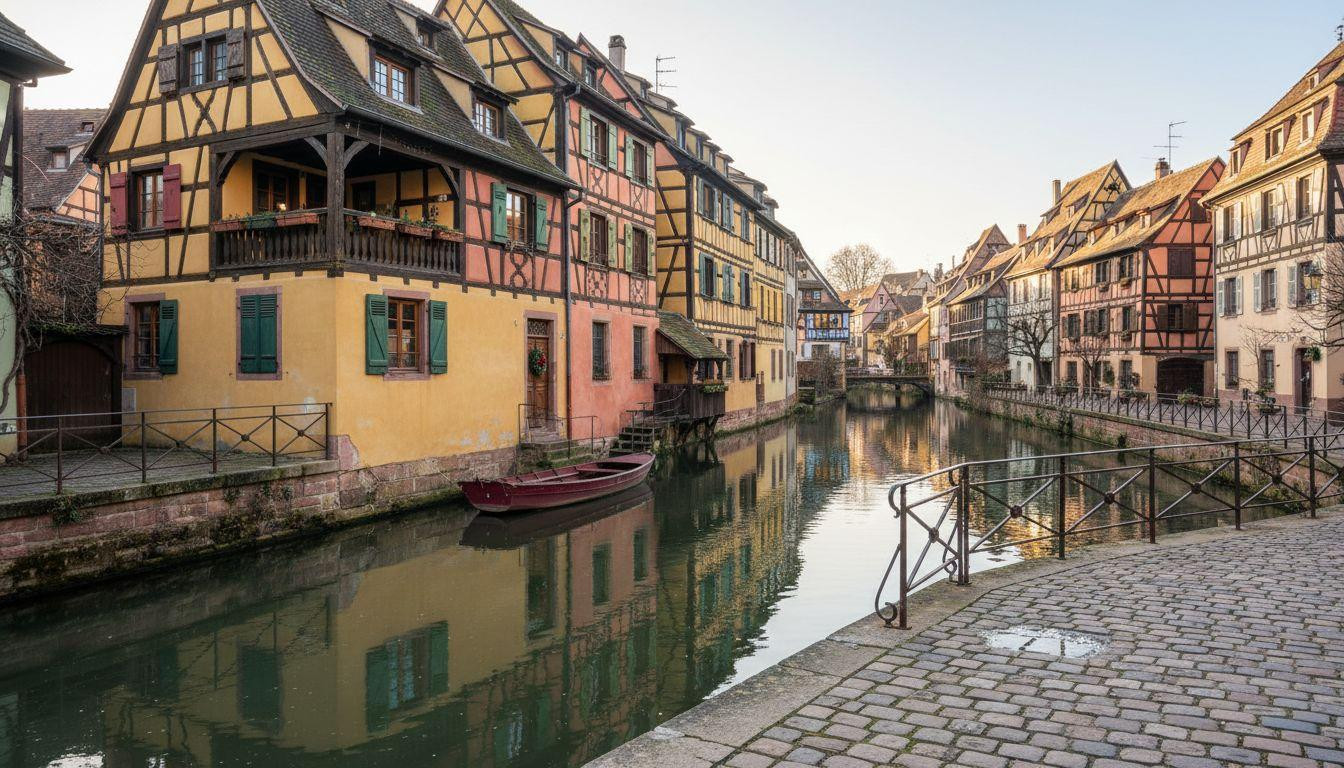
Colmar’s half-timbered houses span 14th-17th centuries, with restoration completed in 2023 on the iconic Maison des Têtes. The vibrant colors (ochre, terracotta, mustard) glow under December’s soft light, creating perfect canal reflections between 3:30-4:30 PM.
Christmas markets transform medieval squares into wonderlands
The 2024 Christmas market runs December 1-31, with Petite Venise open daily 10 AM-8 PM. The Marché de Noël des Dominicains features 80+ Alsatian artisans selling traditional crafts and seasonal delicacies.
Half-timbered guesthouses in Petite Venise average $143/night in December, down from $242 in September. Eguisheim’s circular wine village lies just 10 minutes away, creating perfect Alsatian pairings.
Baltic wooden architecture survives centuries of occupation
Tallinn’s UNESCO-listed Old Town features 1.2 miles of 14th-century walls with 20 towers. St. Olaf’s Church (12th century) offers the tallest medieval viewpoint in the Baltics, with December views of snow-dusted rooftops between 10 AM-2 PM.
Medieval guesthouses in the Old Town average $115/night in December. A heritage architect explains: “Tallinn survived wars and occupations because our architecture is our identity. When you walk these cobblestone streets in December, hearing Christmas carols in Town Hall Square, you’re experiencing 800 years of continuous life.”
Dramatic fjords and lakeside castles create Nordic fairytales
Reine’s iconic red cabins (rorbuer) stand on wooden stilts over Reinefjord, using construction techniques unchanged since the 1800s. The 3,280-foot Lofoten peaks create dramatic backdrops, especially at blue hour (3:30-4:30 PM).
Northern lights dance above authentic fishing villages
December 2024 offers 85% Northern Lights probability with clear skies. Authentic fisherman’s huts average $181/night December-March, up from summer due to aurora demand. A sixth-generation fisherman notes: “These cabins aren’t for tourists, they’re working homes. When you see nets drying in December’s twilight, with Northern Lights dancing above, you’re witnessing real Lofoten life.”
Eastern Europe’s only lake castle reflects medieval grandeur
Trakai Island Castle (14th-15th centuries) creates mirror-like reflections on Lake Galvė between 11 AM-1 PM. The Karaim wooden houses (14th century) feature distinctive thatched roofs preserving unique Baltic heritage.
December averages 800 daily visitors, down from 5,000 in July. Croatia’s coastal villages offer similar medieval fishing traditions with Mediterranean warmth year-round.
Winter transforms preserved villages into living history
Bruges survived by falling into poverty centuries ago, never modernizing its Gothic architecture. Canal boat tours run hourly 10 AM-4 PM ($15), with December fog creating atmospheric photography opportunities 60% of the month.
San Gimignano’s 15 remaining tower houses (out of 72 at its peak) create dramatic skylines. December light creates perfect tower reflections between 2-3 PM, especially from Piazza della Cisterna. Medieval guesthouses average $126/night in December.
Regional clustering maximizes winter travel efficiency. The Germanic arc (Rothenburg, Beilstein, Colmar) offers direct train connections. Greek island villages provide Mediterranean alternatives with preserved Venetian architecture.
Your questions about European fairytale villages answered
Which villages offer the best winter accessibility?
Colmar, Bruges, and Rothenburg feature excellent train connections from major airports. Tallinn and Riga require budget airline connections but offer 40% lower costs. Remote villages like Reine require domestic flights but reward with authentic experiences.
How do December costs compare to summer rates?
Accommodation averages $105-160/night across villages, representing 30-45% savings from summer peaks. Nordic destinations (Reine) cost more due to Northern Lights demand, while Southern European villages (Obidos, San Gimignano) offer deepest winter discounts.
What makes these villages more authentic than major tourist cities?
These communities preserve medieval architecture through continuous habitation, not museum reconstruction. Residents maintain traditional crafts, seasonal festivals, and family businesses spanning centuries. Winter visits reveal authentic daily life when day-tripper crowds disappear.
Frost glistens on ancient walls as Christmas markets glow under medieval arches. These 15 villages offer authentic fairytale experiences summer tourism can’t replicate. Step into living history where centuries-old traditions breathe life into cobblestone streets and half-timbered houses.