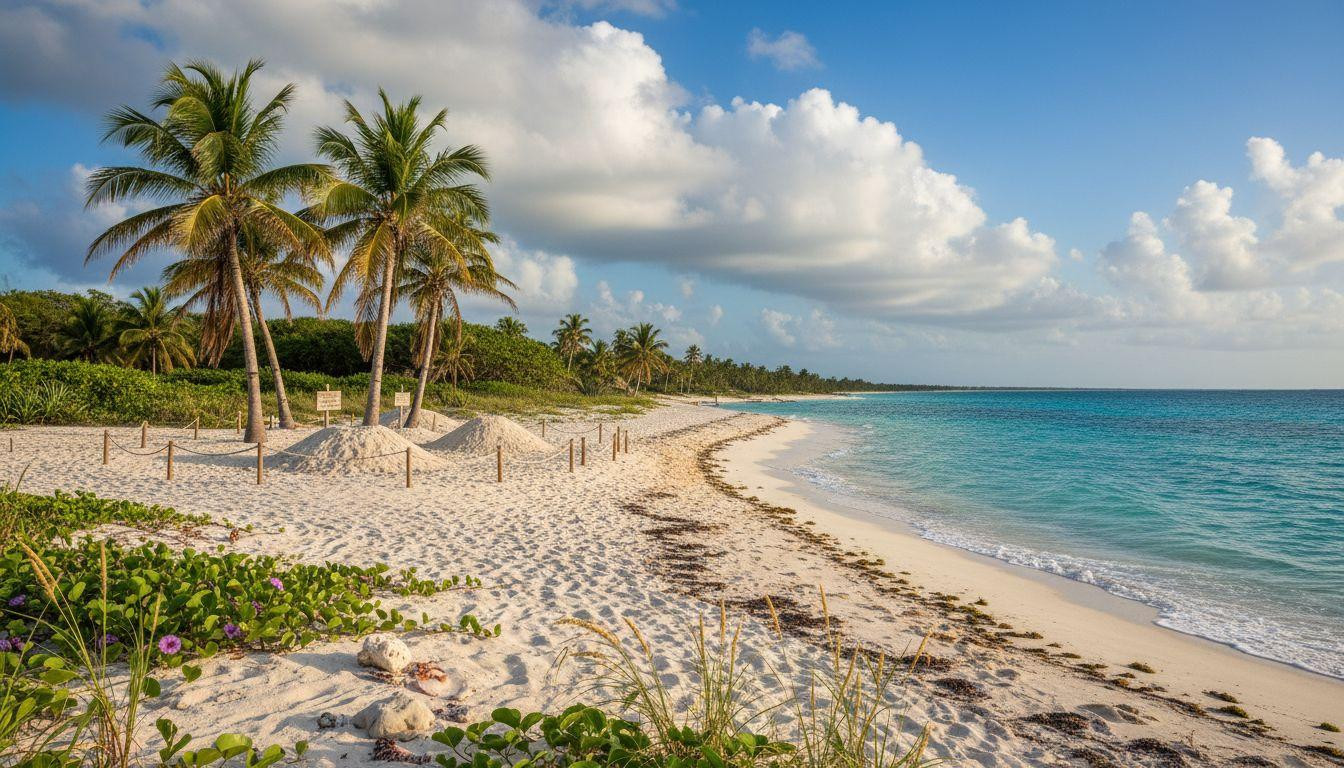
White sand stretches untouched where gentle waves meet protected shores. Sea turtles choose this quiet beach for nesting while tourists rush past to crowded destinations. Xcacel Beach holds Mexico’s most important turtle sanctuary just 20 minutes from Tulum’s chaos.
Entry costs just $6 while nearby beach clubs demand $50 minimum consumption. The protected status keeps development away and crowds minimal.
Where conservation meets Caribbean perfection
Highway 307 cuts through jungle between Tulum and Playa del Carmen. A dirt road branches east toward the sea. Ten minutes of walking through coastal vegetation leads to Xcacel-Xcacelito Natural Protected Area.
The state designation covers 905 acres of diverse ecosystems. Beaches, mangroves, coastal dunes, cenotes, reefs, and jungle create interconnected habitats. Green turtles and loggerheads choose these shores for nesting above all others in the Riviera Maya.
Conservation teams monitor nesting sites from May through October. Biologists track 1,247 turtle nests recorded during the 2024-2025 season. The sanctuary ranks second among Riviera Maya turtle beaches after Sian Ka’an Biosphere Reserve.
The beach that tourists bypass
Visual perfection without development
Powdery white sand extends 1,500 feet along pristine coastline. Crystal-clear turquoise water reveals the sandy bottom 30 feet offshore. No hotels, no beach clubs, no music systems disturb the natural aesthetic.
Jungle vegetation grows to the high-tide line. Palm fronds create natural shade while mangroves filter freshwater into hidden cenotes. The coral reef system 150 feet north protects the shore from large waves.
Raised sand mounds mark protected turtle nesting zones. Unlike commercialized Akumal where turtle tours cost $139, conservation takes priority over tourism revenue here.
Turtle conservation in action
Green turtles create 65% of nests while loggerheads account for 25%. Hawksbill turtles contribute the remaining 10%. Conservation staff patrol beaches nightly during nesting season to protect eggs from predators and human interference.
The 114-peso entry fee supports conservation programs entirely. No profits flow to private companies or resort developers. Visitor education emphasizes turtle protection over entertainment value.
December falls outside nesting season but juvenile turtles still frequent shallow waters. Snorkelers often spot them grazing on seagrass beds near the reef.
What makes Xcacel different
Activities beyond sunbathing
The northern reef system offers exceptional snorkeling 150 feet from shore. Visibility exceeds 100 feet due to protected water quality. Brain coral, elkhorn coral, and sea fans create underwater gardens supporting tropical fish populations.
A hidden freshwater cenote sits 300 yards inland through jungle paths. Water temperature holds steady at 75°F year-round. The cenote connects to underground river systems extending miles into the Yucatan Peninsula.
Mangrove channels offer kayaking opportunities through protected wetlands. Bird watchers spot over 40 species including frigatebirds, pelicans, and colorful tropical varieties.
December timing advantages
December represents peak dry season with minimal rainfall. Daily temperatures range from 72-82°F with comfortable humidity levels. Water temperature holds at 78°F for extended swimming sessions.
Post-nesting season means full beach access without restrictions. Extended hours run from 6:00 AM to 10:00 PM compared to limited nesting-season schedules. Visitor numbers drop 40% below high-season levels.
Early morning arrivals find virtually empty beaches. While Tulum attracts 2.3 million tourists annually, Xcacel maintains deliberate capacity limits protecting the environment.
The authentic Riviera Maya experience
Tulum beach clubs charge 800-1,200 peso minimum consumption while Xcacel costs 114 pesos total. No overpriced drinks or food service pressure visitors into excessive spending. The carry-in, carry-out policy allows budget-friendly beach days.
Distance from major tourist zones preserves authentic Mexican coastal atmosphere. Local fishing boats still work these waters while international cruise ships dock elsewhere. The protected status prevents future resort development.
Conservation mission creates purposeful tourism focused on environmental education. Visitors leave understanding sea turtle biology and coastal ecosystem importance rather than simply posting Instagram photos.
Your questions about Xcacel Beach answered
How do I get there from major airports?
Cancun International Airport sits 65 miles north requiring 1 hour 45 minutes by car. Highway 307 provides direct access with the turnoff at kilometer marker 65 between Chemuyil and Xel-Ha. Colectivo shared vans cost 45 pesos from Playa del Carmen and 35 pesos from Tulum with departures every 20-30 minutes.
What can I bring to this protected beach?
Strict “no bottles, no processed foods” rules protect wildlife and water quality. Only fresh fruit and water in reusable containers gain entry approval. Biodegradable sunscreen is required and enforced at the entrance. Like other protected Mediterranean beaches, preservation takes priority over convenience.
When should I visit for the best experience?
December through April offers ideal weather with minimal rainfall and comfortable temperatures. May through October provides turtle nesting activity but requires advance planning due to access restrictions. Weekday visits guarantee fewer crowds while weekend arrivals may encounter 75-100 other visitors maximum.
Dawn light transforms turquoise water into liquid crystal while jungle birds announce the new day. Fresh cenote water offers cool relief from warm sand. This protected sanctuary preserves what Mexico’s coast once offered before development changed everything else.