The GPS coordinates glow on your phone screen: 35.79839, -92.95774. No signs mark this Arkansas trailhead. Only a dirt parking area and the quiet promise of Richland Creek Wilderness stretching beyond.
Hamilton Falls waits 2.3 miles through unmarked forest. This 12-foot cascade rewards those willing to navigate by GPS alone through one of Arkansas’s most protected waterways.
The bushwhack into silence
No designated trails exist in this 14,000-acre wilderness. Rangers maintain this intentionally. A beaten path emerges from years of careful footsteps, but GPS remains essential.
The route follows Big Devil’s Creek drainage through mixed hardwood forest. White oak and hickory tower above while shortleaf pine punctuates the canopy. Two creek crossings require careful attention.
Cell service vanishes immediately upon entering the wilderness. Download maps before departing. The forest muffles most sounds except water flowing over stone and occasional bird calls echoing through trees.
Where Hamilton Falls reveals itself
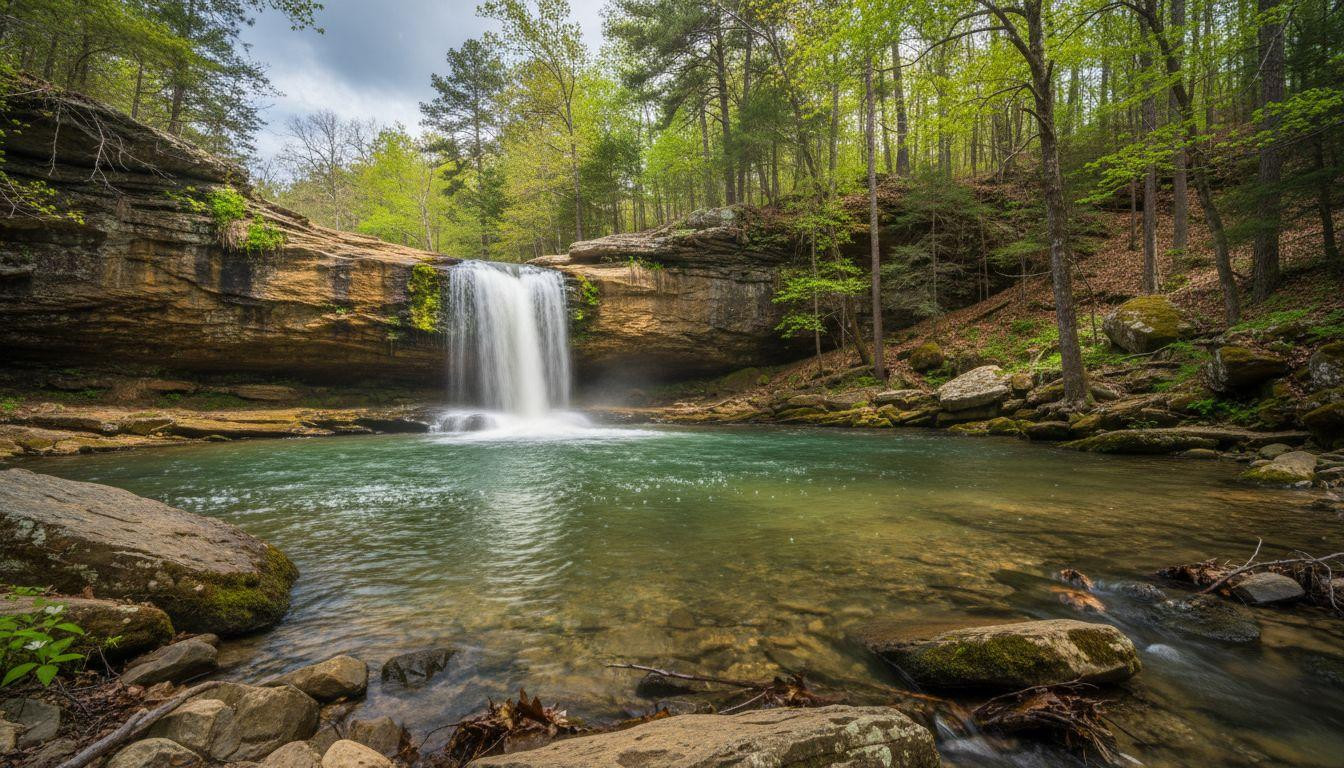
The waterfall’s voice grows stronger as you approach. Twelve feet of clear mountain water cascades over golden-hued sedimentary rock formations typical of the Ozark Plateau.
The visual discovery
Hamilton Falls empties into a crystal-clear pool measuring approximately 25 feet long by 15 feet wide. Large boulders surround the basin, creating natural seating areas covered in emerald moss.
Spring flow peaks at 150-250 gallons per minute after Arkansas rains. Summer reduces this to 30-80 gallons per minute. December maintains steady 80-120 gallons per minute, offering reliable beauty without crowds.
The wilderness advocate’s legacy
This waterfall honors a leader of the Arkansas Wilderness Coalition during the 1980s. His advocacy helped establish Richland Creek Wilderness as part of the National Wilderness Preservation System in 1984.
The naming reflects local values. Wilderness preservation requires constant vigilance. This remote location protects what development would destroy elsewhere in Arkansas.
The experience beyond the hike
Hamilton Falls delivers earned solitude. Annual visitor estimates reach only 1,200 people compared to 5,000 at nearby Twin Falls and 250,000 at commercially developed Blanchard Springs Caverns.
Water and stone communion
Pool depth ranges from 4-6 feet at the base. Water clarity shifts from crystal clear during moderate flow to tea-colored after heavy rains. Rock ledges provide rest spots for contemplation.
December temperatures range from 35-55°F during daylight hours. Waterproof hiking boots become non-negotiable. Slippery rocks near the falls require extra caution when ice forms.
Multi-waterfall system access
Twin Falls stands 0.25 miles upstream at 17 feet high. Secret waterfall experiences requiring navigation skills connect throughout this drainage system.
Richland Falls completes the trilogy 0.5 miles from Twin Falls. Ambitious hikers complete the 3.5-mile circuit in 3-4 hours when conditions allow safe creek crossings.
The solitude factor
Hamilton Falls sees 98% fewer visitors than commercially developed waterfalls in the region. Weekend traffic brings 15-25 people maximum. Weekdays often deliver complete solitude.
The 68% completion rate among hikers who attempt this bushwhack creates natural crowd control. Those who reach the falls understand why difficulty preserves wilderness character.
Social media presence remains modest with only 327 Instagram posts under #HamiltonFallsArkansas. Compare this to mainstream destinations receiving thousands of daily shares.
Your questions about Hamilton Falls answered
When should I visit for best conditions?
Spring offers peak water flow after Arkansas rains, typically March through May. December provides reliable flow with minimal crowds. Avoid summer months when flow reduces significantly unless recent storms have occurred.
What gear do I absolutely need?
Waterproof hiking boots rank as non-negotiable equipment. Trekking poles assist with creek crossings. Offline GPS apps like AllTrails or Gaia GPS become essential since cell service disappears immediately in the wilderness.
How does this compare to Twin Falls nearby?
Twin Falls reaches 17-19 feet high but attracts four times more visitors annually. Ozark mountain town experiences near Jasper provide lodging from $75-150 per night. Hamilton Falls offers more intimate scale with greater solitude rewards.
Morning mist lifts from the pool below Hamilton Falls. Golden light filters through hardwood canopy. Water splashes into clear basin while forest breathes around you. This Arkansas wilderness delivers what development cannot replicate.