Your gym routine feels stuck in neutral. Three months of squats, yet your glutes remain unchanged while Instagram transforms mock your effort. The problem isn’t dedication. Exercise selection determines results. Sports scientists analyzing muscle activation patterns discovered five compound movements that sculpt lower bodies 30% more effectively than squats alone. These gym-specific exercises target all three muscle groups simultaneously.
Why squats alone won’t sculpt your lower body: the activation gap
Barbell squats dominate gym floors across America. Yet recent research reveals a shocking truth. Hip thrusts activate gluteus maximus 69.5% versus squats at 29.4% when using comparable loads.
This activation gap explains your frustration. Squats primarily target quadriceps and core stabilization. Glute development requires specific hip extension patterns that squats provide minimally.
The three-plane movement principle
Your body moves through sagittal, frontal, and transverse planes daily. Single-plane training creates muscle imbalances. Multi-plane exercises prevent injury while maximizing development. Certified personal trainers with decades of experience confirm this principle transforms results.
Research from sports medicine institutions demonstrates that exercises targeting multiple movement planes enhance functional strength. Your daily activities demand this comprehensive approach.
The 5 compound exercises that activate all lower body zones
Strategic exercise selection transforms mediocre results into dramatic changes. These five movements target glutes, quadriceps, and hamstrings simultaneously. Compound exercises save time while maximizing muscle activation.
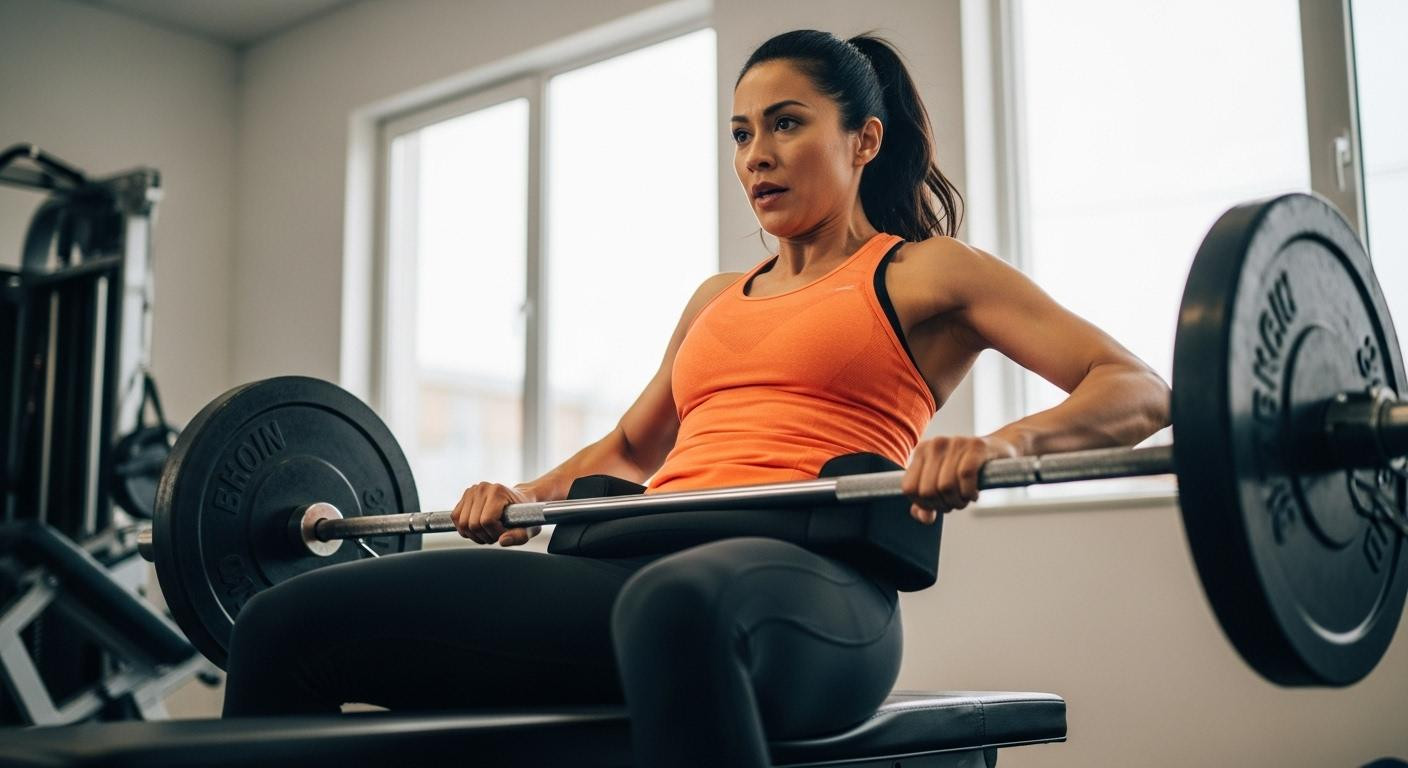
Exercise 1: Hip thrusts (gluteus maximus priority)
Position your upper back against a bench. Place a barbell across your hips. Drive through your heels, extending hips to create a straight line from knees to shoulders. Lower with control.
Perform 4 sets of 10-12 repetitions twice weekly. This movement activates glutes 86.8% compared to squats at 45.4% for lower gluteus maximus activation.
Exercise 2: Back squats (quad and glute synergy)
Position the barbell on your upper trapezius. Descend until thighs parallel the floor. Drive through heels while maintaining rigid torso. This prevents lower back compensation patterns.
Execute 3 sets of 8-10 repetitions for maximal overload. Research confirms squats build greater thigh hypertrophy than isolation movements.
Exercise 3: Glute-hamstring raises
Secure your feet in the GHR machine. Lower your torso slowly, controlling the descent. Eccentric strength development enhances both glute and hamstring activation simultaneously.
Begin with 3 sets of 6-8 repetitions. Add weight plates as strength improves. This exercise develops posterior chain strength impossible with other movements.
Exercise 4: Slant board squats
Stand on an inclined platform with heels elevated. This positioning increases quad activation by 15% compared to flat-ground squats. The angle enhances gluteus maximus engagement through deeper hip flexion.
Complete 3 sets of 10-12 repetitions. The enhanced range of motion targets adductor magnus as a bonus benefit.
Exercise 5: Landmine reverse lunges
Hold the landmine barbell at chest height. Step backward into a lunge position. This unilateral movement improves coordination, balance, and strength through functional patterns.
Perform 3 sets of 8-10 repetitions per leg. The offset loading challenges core stabilization while sculpting legs asymmetrically.
The 8-week progressive protocol trainers use
Transformation requires systematic progression. Professional strength coaches follow specific periodization strategies. Movement mastery precedes weight increases in successful programs.
Weeks 1-3: Movement pattern mastery
Focus on perfect form execution. Use moderate weights allowing 12-15 repetitions comfortably. Train these five exercises three times weekly with 48-hour recovery periods.
Common mistakes include excessive weight loading prematurely. Form-first approaches prevent injury while establishing proper neuromuscular patterns. Muscle activation measured by EMG doesn’t predict growth accurately.
Weeks 4-8: Progressive overload implementation
Increase resistance 5-10% every two weeks as technique remains solid. Volume progression involves adding sets rather than excessive repetitions. Expected strength improvements range from 20-30% following this protocol.
Research confirms both hip thrust and squat training produce similar gluteal hypertrophy despite different activation patterns. Consistency trumps perceived muscle sensation.
The equipment reality: gym membership value
Home resistance band setups cost $25-150 total for basic lower body training. However, progressive overload requires heavier resistance than bands provide. Gym memberships averaging $40-70 monthly offer superior equipment access.
Barbell hip thrust benches, squat racks, and GHR machines cost $1500-3000 individually. Commercial gym access provides complete equipment variety supporting comprehensive training programs. Annual gym costs equal one piece of quality equipment.
Your questions about lower body sculpting answered
How quickly will I see visible muscle changes?
Research demonstrates measurable strength improvements within 8 weeks following progressive protocols. Visual changes appear around week 6-8 with consistent training. Transformation studies show participants losing 7 pounds of fat while gaining 3 pounds of muscle during this timeframe. Measurement strategies beyond scale weight provide accurate progress tracking.
Can I perform these exercises with knee pain?
Hip thrusts offer knee-friendly alternatives to traditional squats because they emphasize hip extension without knee stress. Proper form prevents injury regardless of exercise selection. Movement quality matters more than weight loading. Sports medicine professionals recommend form-first approaches for pain-free training.
Do I need different exercises if I’m over 40?
Age doesn’t require different exercises, only modified intensity approaches. Recovery considerations become more important after age 40. The same five movements work effectively across age groups. Mature trainees often experience reduced knee pain following proper strength training protocols. Progressive overload principles remain constant regardless of age.
Monday morning arrives with fresh purpose. Your gym bag holds more than workout clothes now. It carries scientific strategy targeting every lower body muscle. Five exercises. Eight weeks. Results 30% superior to squats alone await your dedication.