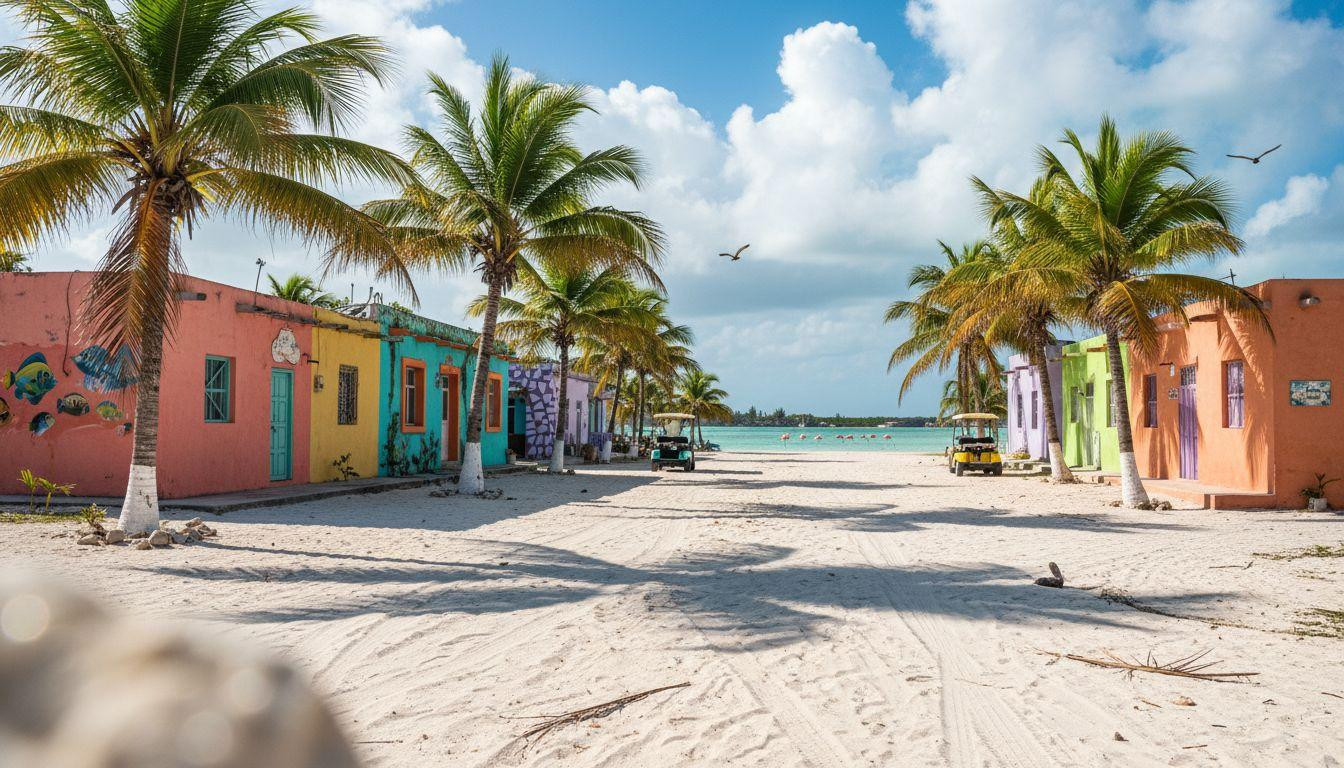
Tulum promised barefoot beach life but delivered paved roads and golf cart traffic. While 2.3 million tourists annually crowd its commercialized streets, Isla Holbox preserves what Tulum abandoned: an entire island where sand replaces pavement. Here, bicycle wheels leave tracks through compacted beach sand that extends from shore to town center, creating the authentic Caribbean experience Tulum paved over for profit.
Why Tulum paved over its soul
Between 2015 and 2024, Tulum transformed from fishing village to Instagram destination. Concrete roads now carry rental cars and tour buses through former jungle paths. Golf cart rentals cost $50-60 daily while traffic jams form at beach club entrances.
Infrastructure couldn’t keep pace with visitor volume. As one recent traveler noted: “Tulum is getting crowded, expensive, and they don’t have the infrastructure to deal with sewage and trash.” The town that once symbolized eco-tourism now struggles with waste management and water contamination from overdevelopment.
Accommodation prices reflect this transformation. Mid-range hotels demand $150-400 nightly during peak season. This Caribbean island offers what Tulum lost: authentic local culture without commercial pressure.
Meet Holbox’s living beach streets
The sand beneath your feet
Holbox’s streets consist of compacted beach sand mixed with crushed shells. No asphalt exists on this 16-square-mile island. Walking from ferry dock to North Beach means your feet sink slightly with each step, creating the tactile experience of permanent beach living.
Golf carts navigate these sandy pathways at maximum speeds of 15 mph. Their wide tires distribute weight across soft surfaces, leaving gentle impressions rather than ruts. Bicycles create the most elegant tracks: thin lines weaving between palm shadows and colorful murals painted on low-rise buildings.
What car-free actually means
Vehicles must remain at Chiquilá port on the mainland. A secure parking lot charges $8 daily while ferry tickets cost $15 each way. This natural barrier limits visitor volume: only those willing to abandon cars reach Holbox.
Golf cart rentals cost $25-30 daily compared to Tulum’s $50-60 rates. Most destinations lie within walking distance. The island measures just 26 miles long and 1.5 miles at its widest point. This Indonesian island similarly preserves traditional transportation methods against modern development pressure.
The Holbox experience Tulum lost
Dawn without engine noise
At 4:30 AM, fishing boats depart Holbox harbor in silence broken only by gentle motors and seabird calls. Flamingos wade through shallow lagoons while pelicans dive for breakfast catches. December through March brings ideal conditions: 73-82°F temperatures with minimal rainfall.
Tulum’s mornings now feature traffic noise and construction sounds. Tour buses arrive before sunrise, disgorging photographers seeking empty beach shots. Holbox maintains natural rhythms where wildlife schedules determine daily activities rather than commercial tours.
Natural rhythms still rule
Whale shark season runs June through September when these gentle giants migrate through Gulf of Mexico waters. Tours cost $90-130 but operate with smaller groups and higher success rates than Tulum’s overcrowded alternatives.
Bioluminescence kayaking occurs May through November when microscopic plankton create underwater light shows. These Garifuna experiences demonstrate how communities can protect natural phenomena through sustainable tourism practices.
Practical details for your escape
Cancun International Airport sits 93 miles from Chiquilá ferry port. Shuttle services cost $25-35 per person for the 2.5-hour journey. Rental cars work well if you’re comfortable leaving vehicles on the mainland.
Ferry schedules run every 30 minutes from 5 AM to 9:30 PM. No advance reservations required during off-season months. December through March represents peak season when advance booking helps secure preferred accommodations.
Budget travelers find hostels and basic inns for $30-60 nightly. Mid-range eco-lodges cost $70-150 compared to Tulum’s inflated rates. This Yucatan cenote system provides additional natural attractions within reasonable distance of Holbox.
Your Questions About Isla Holbox North Beach Answered
How do supplies reach a car-free island?
Supply boats dock at Holbox’s commercial pier three times weekly. Golf carts transport goods from harbor to businesses throughout town. Fresh produce arrives Tuesday, Thursday, and Saturday from mainland markets. Local fishing boats provide daily seafood including the famous lobster pizza ingredients that make Holbox cuisine distinctive.
What makes Holbox different from other Mexican islands?
Holbox remains part of Yum Balam Flora and Fauna Protection Area, limiting development scale and preserving wildlife habitats. The island’s 2,000 permanent residents maintain traditional fishing culture alongside eco-tourism. Unlike resort islands, Holbox prohibits large hotels and cruise ship docks, ensuring community-scale tourism that benefits local families.
Is Holbox really better than Tulum for authentic experiences?
Visitor surveys from 2025 consistently rate Holbox higher for authentic local interactions and natural experiences. Tulum receives 2.3 million annual visitors while Holbox welcomes approximately 80,000-100,000, creating dramatically different crowd densities. Holbox’s car-free environment and sandy streets preserve the barefoot beach lifestyle that originally attracted travelers to the Yucatan coast.
Morning light touches North Beach sand where bicycle tracks weave between scattered seashells. Holbox delivers the promise Tulum broke: a Caribbean island where beach sand extends beyond shoreline into daily life. Here, authenticity survives in compacted sand beneath your feet.