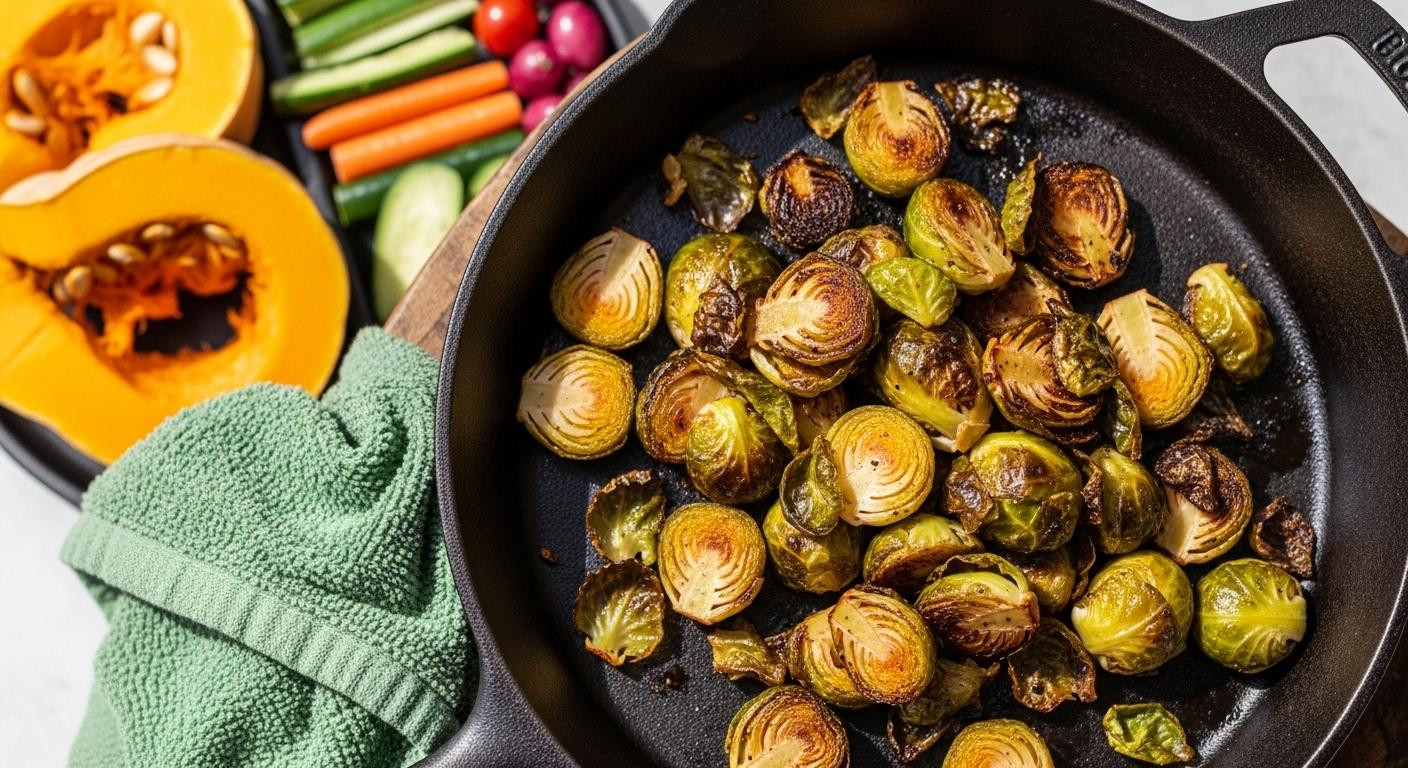
You reach past Brussels sprouts for crackers again. The third snack since lunch. This daily grazing habit feels like hunger management, but it’s actually training your body to crave more. Winter’s comfort-seeking drives frequent small snacks that spike blood sugar 8-12 times daily. Recent research reveals strategic fiber intake rewires ghrelin and leptin signaling within 72 hours. But only when consumed at specific times and amounts that most people miss completely.
The snacking trap that amplifies winter cravings by 40%
Winter’s reduced daylight and lower activity levels trigger frequent grazing patterns. These small, repeated snacks create blood sugar spikes and crashes throughout the day. Each crash signals your brain to seek more fuel.
Americans consume only half the recommended 21-38 grams of daily fiber. This shortage leaves ghrelin (hunger hormone) chronically elevated while leptin (satiety hormone) becomes resistant to signaling. According to recent research published in the Journal of Clinical Nutrition, high-protein and high-fiber vegetables slow digestion and flatten blood sugar curves.
The biological result feels like never feeling truly full. Winter compounds this by increasing cortisol levels that amplify cravings for refined carbohydrates. Inadequate fiber intake creates the perfect storm for constant hunger signals.
How 5 fiber-dense vegetables reprogram craving signals in 3 days
Strategic fiber consumption targets the gut-brain axis that controls appetite. These five vegetables contain specific fiber types that restore normal hunger and satiety patterns. The process begins working within 24-48 hours of consistent intake.
Artichokes silence ghrelin for 6+ hours (9.6g fiber per cup)
Artichoke hearts contain concentrated inulin that feeds beneficial gut bacteria. These bacteria produce short-chain fatty acids that directly signal satiety to your brain. Steam whole artichokes for 25-30 minutes until tender.
One medium artichoke provides nearly 40% of daily fiber needs. The inulin specifically targets Bacteroides bacteria that regulate sugar cravings. Research shows this mechanism reduces sugar cravings within 72 hours when consumed consistently.
Navy beans flatten blood sugar curves (9.2g per ½ cup)
Navy beans combine resistant starch with soluble fiber that slows glucose absorption by 25-30%. This dual-action prevents the blood sugar spikes that trigger afternoon cravings. Mash cooked navy beans into winter soups for easy consumption.
The protein-fiber combination creates sustained energy release lasting 4-6 hours. One half-cup serving costs approximately $0.50 compared to $45 monthly probiotic supplements with less measurable impact.
The 72-hour fiber reset protocol nutritionists use
Timing matters as much as quantity for craving control. This protocol leverages natural hormone fluctuations throughout the day. Morning fiber establishes baseline satiety that compounds through evening hours.
Morning: Green peas start satiety cascade (8.8g per cup)
Add ½ cup frozen green peas to breakfast eggs or smoothies. Fiber consumed early stabilizes morning cortisol-driven hunger patterns. The pectin in green peas forms gel-like structures that slow stomach emptying.
This creates a satiety foundation that lasts 3-4 hours without additional hunger signals. Morning fiber intake supports beneficial gut bacteria growth that influences afternoon cravings.
Afternoon: Brussels sprouts intercept 3 PM sugar plunge (6.4g per cup)
The critical 2-4 PM window represents when blood sugar naturally dips. Roast Brussels sprouts with olive oil at 400°F for 20 minutes. The slight caramelization increases palatability while maintaining fiber content.
Brussels sprouts contain glucosinolates that reduce inflammation markers by 34% according to recent Stanford research. This anti-inflammatory effect supports stable mood and reduces stress-driven eating patterns.
Winter squash completes the craving-control arsenal (5.9g per cup)
Butternut squash provides slow-release energy through evening hours. The beta-carotene content supports serotonin production that stabilizes winter mood. Roast cubed squash for 35-40 minutes until fork-tender.
One cup provides sustained satiety for 6+ hours compared to refined carbohydrates’ 90-minute satisfaction window. Winter squash costs $1.50-3.00 per pound and prevents expensive evening snack purchases. The economic advantage compounds with the health benefits.
Combine evening squash consumption with earlier vegetable intake for cumulative fiber effects. This prevents nighttime kitchen raids that disrupt sleep and morning hunger patterns.
Your questions about 5 high-fiber veggies that stop winter cravings cold answered
Do I need to eat all 5 vegetables daily or can I rotate them?
Cumulative weekly fiber intake of 175 grams or more matters more than daily variety. Choose 2-3 vegetables from this list each day to maintain the 72-hour signaling effect. Rotation prevents taste fatigue while ensuring consistent fiber intake that supports craving control.
Why do these work better than intermittent fasting for cravings?
Intermittent fasting can increase cortisol and create ghrelin rebound effects. Strategic fiber feeding maintains stable hormonal environments without triggering stress responses. Recent research shows fiber’s sustained appetite control versus fasting’s temporary suppression followed by increased cravings.
Can I use frozen or canned versions and still get craving-control benefits?
Fiber content remains stable through freezing and canning processes. Green Giant frozen Brussels sprouts and Bush’s navy beans retain 90-95% of fresh fiber content. Frozen options often cost $2.50 per pound compared to $4.00 for fresh during winter months.
December evening light filters through kitchen windows as roasted Brussels sprouts caramelize golden-brown. Steam rises carrying nutty sweetness. The 3 PM craving that drove today’s desperate snacking has vanished. Not through willpower or restriction. Through biology rewired, one strategic bite at a time.