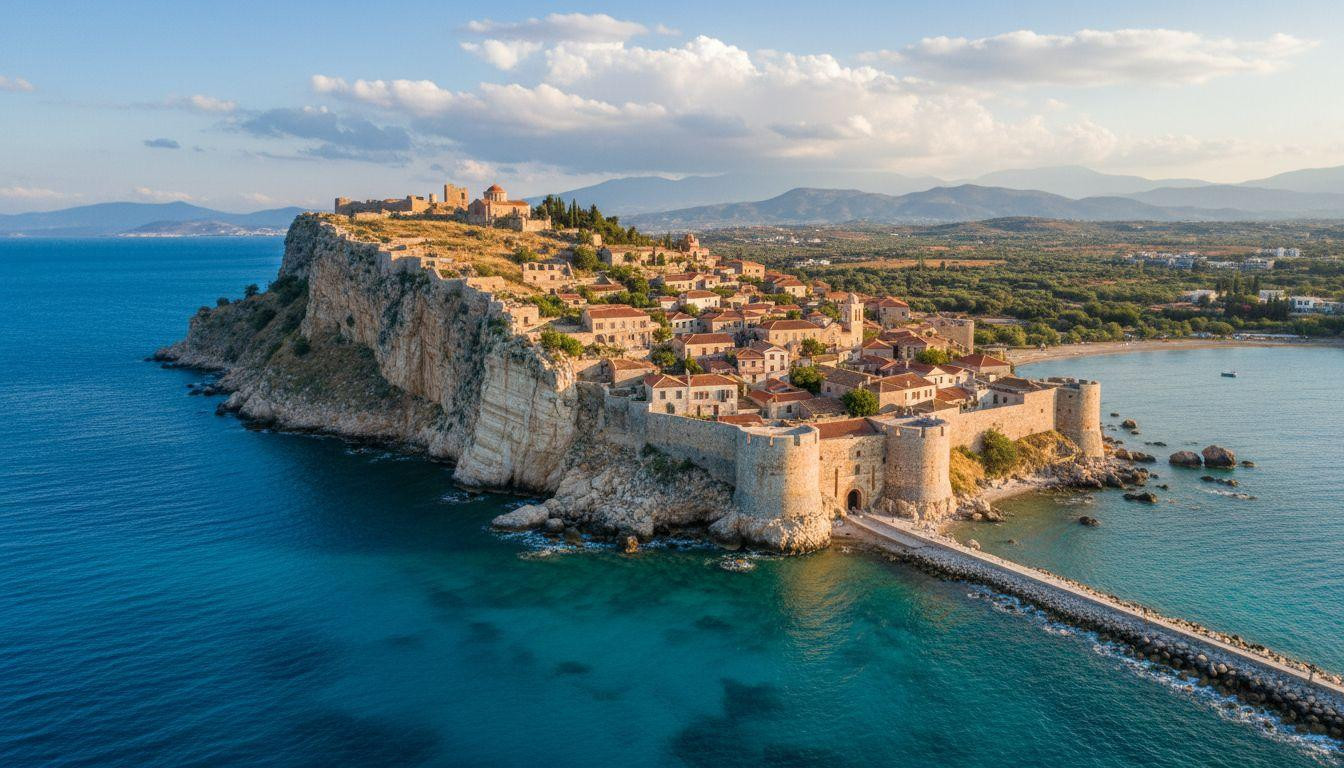
This medieval castle-state rises from Aegean waters on a single rock. Thirty permanent residents live inside Byzantine fortress walls unchanged since 583 AD. Stone houses built directly into fortifications create Europe’s most authentic fortress-town experience. A narrow causeway serves as the only entrance to this living piece of Byzantine history.
A fortress born from invasion
Monemvasia emerged when Byzantine refugees fled Slavic invasions in 583 AD. They chose this isolated rock for its single entrance defense strategy. The name means “one entrance” in Greek, referring to the narrow causeway connecting fortress to mainland.
This strategic position made Monemvasia a major Byzantine trading port. Ships traveling between Constantinople and Western Europe stopped here for supplies and protection. The fortress-town reached 40,000 residents at its medieval peak, controlling Mediterranean commerce routes.
Greek independence fighters liberated Monemvasia in 1821 after a four-month siege. The victory became a symbol of resistance against Ottoman rule. Today’s Byzantine churches preserve this heritage 25 miles from ancient Sparta.
Stone houses inside fortress walls
Living medieval architecture
Residents occupy stone houses built directly into 10th-century fortress walls. Golden limestone blends seamlessly with original Byzantine construction. Red-tiled roofs remain unchanged since medieval times, creating visual continuity across centuries.
These aren’t restored museum pieces but functional homes. Families cook dinner in kitchens carved from fortress stone. Children play in courtyards where Byzantine soldiers once patrolled. The architecture serves daily life, not tourist photography.
Two-level settlement design
The Lower Town spreads around the harbor with shops, tavernas, and churches. Narrow cobblestone streets accommodate only pedestrian traffic. The 12th-century Elkomenos Christos church anchors the main square with Byzantine frescoes.
Upper Town (Kastro) crowns the plateau 328 feet above sea level. Stone ruins and cisterns reveal fortress life during sieges. The zigzag path to Fortress of Goulas offers panoramic views across the Myrtoan Sea.
Life on the rock
Daily rhythms of fortress living
Morning light warms golden stone streets at 7am. Church bells mark Orthodox prayer times throughout the day. Residents gather in small kafeneia (coffee houses) for evening conversations about weather and fishing conditions.
Local craftsmen repair fortress walls using traditional techniques passed down through generations. They quarry limestone from the same sources Byzantines used 1,000 years ago. These repairs maintain structural integrity while preserving historical authenticity.
Seasonal isolation and access
The 660-foot causeway becomes Monemvasia’s lifeline during winter storms. High tides occasionally submerge the connection, creating temporary island conditions. This isolation preserves the community’s unhurried pace and traditional customs.
Winter brings near-empty streets perfect for authentic experiences. December temperatures hover around 57°F with occasional rain showers. Spring wildflowers bloom between fortress stones, creating natural gardens within defensive walls.
Visiting this Byzantine refuge
Athens lies 155 miles northwest via a 4-hour drive through Peloponnese mountains. The journey passes olive groves and ancient villages unchanged for centuries. Sparta sits 25 miles inland, offering the nearest major city connection.
Accommodation ranges from $88-$275 per night in restored stone houses. These boutique hotels occupy former merchant mansions with thick walls and arched doorways. Breakfast terraces overlook the same harbor views Byzantine traders enjoyed.
Tavernas serve fresh octopus grilled over charcoal fires. Local fishermen arrive at dawn with daily catches. Malmsey wine, historically shipped from this port, remains available in small family cellars.
Your questions about Monemvasia answered
Can you stay overnight inside the fortress?
Yes, boutique hotels operate in converted medieval houses within the fortress walls. Guests sleep in rooms carved from 1,000-year-old stone. Most accommodations include breakfast served on terraces overlooking the Aegean Sea.
How crowded does the fortress become?
Summer months bring 3,000 daily visitors during peak periods. Winter reduces crowds to dozens of tourists per day. Early morning and late evening hours offer the most solitude for authentic fortress exploration.
What makes this different from Santorini?
Monemvasia features Byzantine military architecture versus Santorini’s Cycladic village style. The permanent population of 30 creates authentic community life. Hotel prices average $180 per night compared to $400 in Santorini during summer season.
Evening light bathes golden fortress walls as fishing boats return to harbor. The same stone pathways echo with footsteps of residents heading home for dinner. This timeless rhythm continues as it has for 1,400 years, unchanged by tourism or modernity.