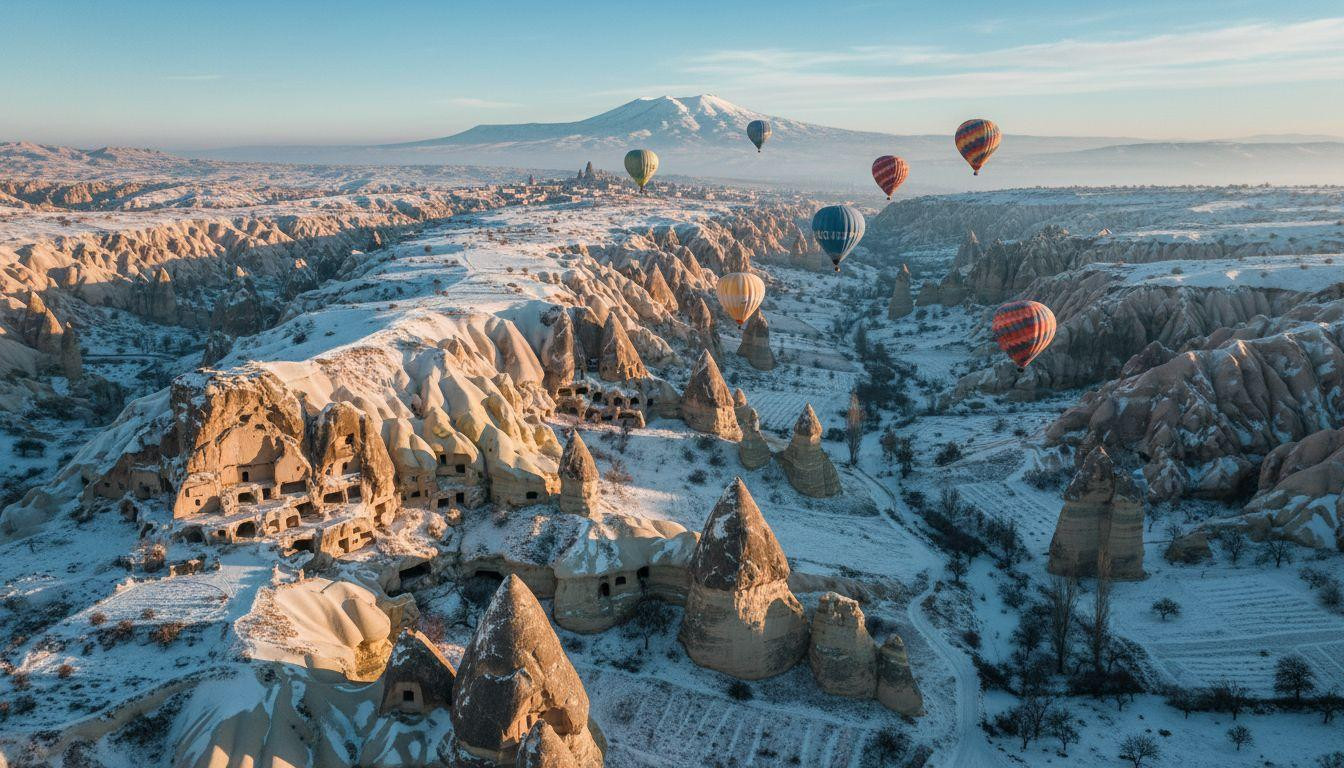
When Meteora’s monastery stairs force tourists into single-file bottlenecks and Petra’s $70 entry fees drain wallets before the first glimpse of rose-red stone, Cappadocia quietly offers something better. Turkey’s fairy chimney landscape spreads across 100+ valleys, each hiding Byzantine cave churches that predate both Greek monasteries and Jordanian archaeological zones. December 2025 transforms this volcanic wonderland into a snow-dusted sanctuary where hot air balloons float over formations that cost a fraction of their famous competitors.
Why the famous alternatives demand so much
Meteora’s six monasteries perch on sandstone pillars like exclusive clubs. Visitors climb 400+ steps to reach Great Meteoron, pay $3 per monastery, and follow strict dress codes that ban shorts and sleeveless shirts. Photography restrictions inside Orthodox chapels limit memories to postcards bought at overpriced gift shops.
Petra funnels 4,000 daily visitors through the narrow Siq passage. The Treasury appears after a mile-long walk, but reaching the Monastery requires another brutal 2.5-mile desert hike. Jordan’s single-day pass costs $70, while two-day access jumps to $75.
Both destinations trap tourists in infrastructure bottlenecks. Meteora’s Kalambaka hotels charge $200+ for basic rooms within walking distance of monastery access. This Italian cave town carved 9,000 years of history into golden limestone walls offers similar rock-cut heritage without the crowds.
The access problem
Meteora’s monasteries operate limited hours (9am-5pm in winter). Tour buses arrive in waves, creating photo queues at scenic viewpoints. Petra’s single entrance creates morning congestion when cruise ship passengers arrive from Aqaba.
The cost reality
A three-day Meteora experience costs $600-800 (accommodation, monastery entries, meals). Petra demands similar budgets when factoring in Wadi Musa hotels and restaurant markups. Both destinations leave little room for spontaneous exploration.
Cappadocia’s distributed advantage
Cappadocia spreads Byzantine heritage across an area larger than Rhode Island. Göreme Open-Air Museum showcases 30+ cave churches for $5 total entry. Dark Church preserves 11th-century frescoes depicting biblical scenes in vivid blues and ochres. Apple Church features geometric patterns that survived Islamic iconoclasm.
Rose Valley’s pink volcanic tuff glows at sunrise, accessible via self-guided hiking trails. Red Valley offers sunset views over fairy chimneys without entry fees or time restrictions. Love Valley’s phallic formations create Instagram-worthy backdrops that cost nothing beyond camera batteries.
Underground cities add vertical exploration impossible at surface-level competitors. Derinkuyu descends 18 levels below ground, housing 20,000 residents during Byzantine era sieges. Cyprus coves where Aphrodite’s limestone cliffs meet turquoise Mediterranean foam provide similar geological wonder along Turkey’s Mediterranean neighbors.
The landscape advantage
Soft volcanic tuff allowed Byzantine monks to carve elaborate chapels with hand tools. Harder sandstone at Petra required advanced engineering techniques, limiting decoration to tomb facades. Cappadocia’s malleable geology enabled entire underground cities with ventilation shafts and storage chambers.
The price comparison
Cave hotels in Göreme cost $70-150 per night during December 2025. Traditional restaurants serve testi kebabı (clay pot stew) for $8-12. Hot air balloon flights range $220-350, offering aerial perspectives unavailable at ground-level alternatives.
The winter experience advantage
December transforms Cappadocia into a snow-dusted fairy tale. Morning temperatures hover around 32°F, perfect for crisp balloon photography. Winter crowds drop 85% below summer peaks, creating opportunities for private valley exploration. Cave hotels provide cozy refuges with traditional fireplaces and heated stone floors.
Skiing at Mount Erciyes (45 minutes from Göreme) combines ancient heritage with winter sports. Turkish hammams offer post-exploration relaxation in Ottoman-era bathhouses. This limestone arch hides in Nevada snow where ancient caves collapsed into silence demonstrates how winter enhances rather than diminishes rock formation beauty.
Activities beyond churches
Hot air balloon companies operate 300+ days annually, with winter flights offering clearer visibility than hazy summer conditions. Self-guided valley hikes connect multiple cave churches without permits or guides. Evening wine tastings feature local varieties grown in volcanic soil.
Cultural authenticity
Ürgüp residents still inhabit cave homes carved by their ancestors. Pottery workshops use clay from the same volcanic deposits that created fairy chimneys. Active Orthodox chapels hold services in Byzantine Greek, maintaining 1,500-year traditions.
The emotional difference
Meteora inspires awe through vertical drama and monastic isolation. Petra overwhelms with engineering ambition and rose-colored grandeur. Cappadocia whispers rather than shouts, revealing secrets gradually across multiple days of valley wandering.
December silence amplifies this intimacy. Snow muffles footsteps in underground passages. Morning mist rises from valleys while balloon burners create the only sounds disturbing dawn stillness. Angkor Wat’s sunrise crowds contrast with Beng Mealea’s strangler fig solitude, similar to how famous destinations often sacrifice authenticity for accessibility.
Your questions about Cappadocia’s rock sites answered
How does winter weather affect balloon flights?
Balloon companies operate December flights with 85% success rates. Morning winds typically calm by sunrise (7:45am in December). Flight cancellations trigger full refunds or next-day rebooking. Winter pricing averages 20% below peak season costs.
Which valleys offer the best cave church preservation?
Göreme Open-Air Museum protects the finest frescoes under UNESCO oversight. Dark Church charges extra $8 entry but preserves near-perfect 11th-century paintings. Ihlara Valley contains 100+ churches scattered along a 9-mile hiking route through a river canyon.
How does Cappadocia compare to other rock-cut heritage sites?
Cappadocia offers broader geographic distribution than Meteora’s six monasteries or Petra’s concentrated Treasury area. Entry costs total under $20 for major sites versus Petra’s $70 single-day pass. Cave hotels provide authentic accommodation impossible at archaeological sites designated as museums only.
Morning light illuminates fairy chimneys dusted with fresh snow while balloon baskets drift silently overhead. This is Cappadocia in December: ancient, accessible, and authentically alive in ways that famous alternatives struggle to match.