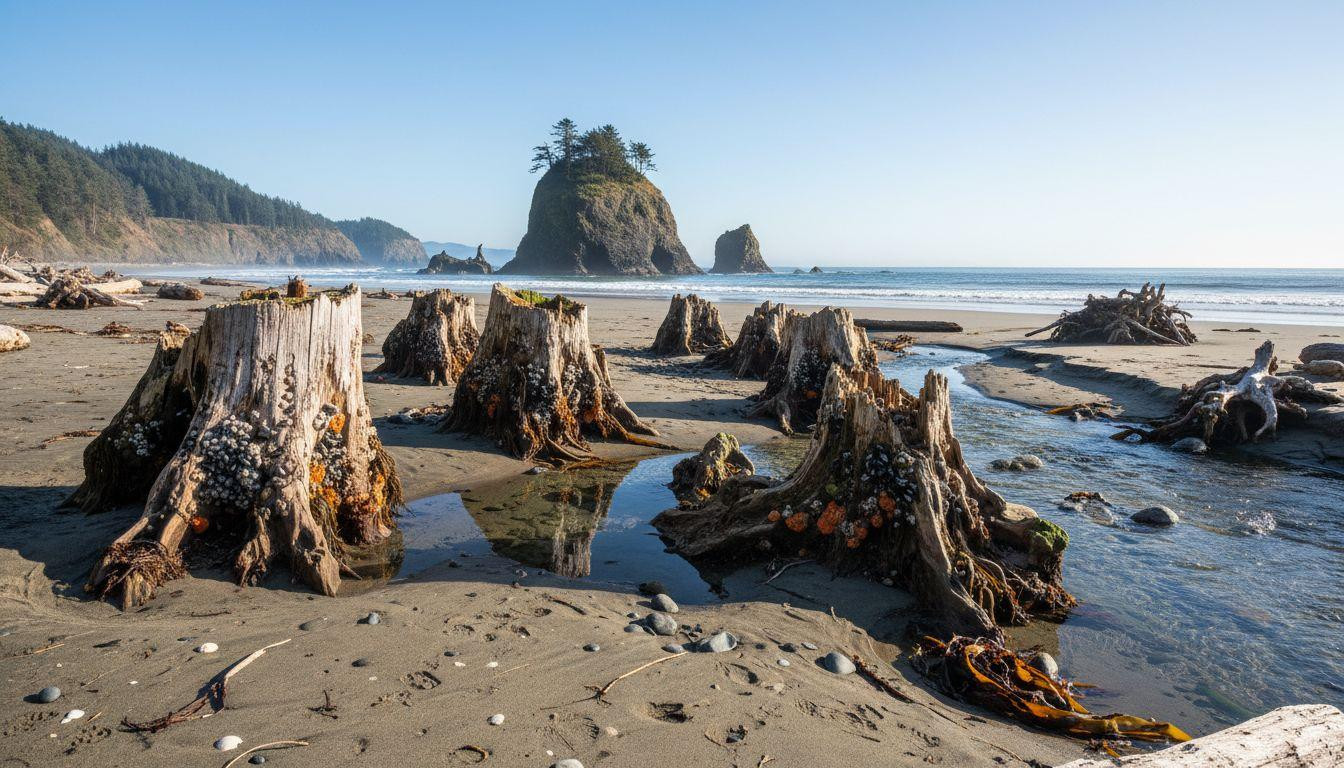
Lincoln City’s boardwalk buzzes with chain hotels and $15 parking meters. Fifteen miles north, Neskowin keeps ancient secrets buried in sand for 2,000 years. This December morning, I wade through cold creek water toward weathered stumps that emerged only when winter storms stripped away protective sand in 1997.
The contrast hits immediately. Where Lincoln City spreads concrete and commerce, Neskowin preserves just 179 year-round residents and one remarkable ghost forest.
Forget Lincoln City’s commercial sprawl where crowds eclipse nature
Lincoln City transformed from quiet fishing village to regional resort hub. Chain hotels line Highway 101. Summer weekends bring traffic jams and $25 daily parking fees at popular beaches.
The boardwalk stretches with identical gift shops and franchise restaurants. Peak season crowds of 8,000 daily visitors overwhelm the 8,500 permanent residents. Commercial development mirrors other Oregon coast destinations that prioritized tourism revenue over authentic coastal character.
Metered parking extends two blocks inland. Hotel rates surge to $200-300 nightly during summer months. The authentic fishing village disappeared beneath layers of commercial development designed for weekend tourists, not locals.
Neskowin’s 2,000-year-old forest emerges from Pacific sand
The Neskowin Ghost Forest tells a different story. Carbon dating reveals these Sitka spruce stumps lived 200 years before a massive earthquake dropped the forest below sea level around 2,000 years ago.
A subsequent tsunami buried the mature trees in sand and salt water. The anaerobic conditions preserved the wood perfectly while the forest above disappeared.
Ancient stumps covered in marine ecosystems
Today, roughly 100 weathered stumps emerge during winter’s lowest tides. Barnacles, mussels, and sea anemones colonize the preserved wood. Small tide pools form in eroded centers, trapping crabs and small fish.
The stumps rise 3-6 feet above sand at optimal low tide. Marine life transforms each stump into a miniature ecosystem that existed nowhere else 30 years ago.
Winter storms reveal hidden history
The ghost forest remained buried until 1997-98 winter storms eroded protective sand layers. Local residents had heard legends of ancient stumps, but few believed them until the Pacific Ocean exposed this archaeological treasure.
December through March offers the best viewing conditions. Tides below -1.0 feet expose the most stumps during daylight hours.
Walking among preserved giants requires commitment
Reaching the ghost forest demands more effort than Lincoln City’s accessible boardwalk. Free parking sits at Neskowin Beach State Recreation Site, but visitors must walk 0.75 miles south along the beach.
The real challenge comes at Neskowin Creek. Cold Pacific water requires wading knee-deep through the creek mouth at low tide.
Proposal Rock anchors the coastal landscape
The basalt sea stack rises dramatically offshore, accessible only during the lowest tides. Early settlers named it after Charles Gage’s marriage proposal to Della Page at the turn of the 20th century.
Climbing Proposal Rock offers views of the entire ghost forest spread across the beach below. The 360-degree Pacific panorama includes coastal formations stretching north toward Cascade Head.
Local businesses stay authentic and small-scale
Neskowin supports only essential services. Café on Hawk Creek serves breakfast to early ghost forest explorers. Neskowin Provisions stocks basic groceries and local crafts.
The summer farmers market operates Memorial Day through Labor Day. Local artists connected to the nearby Sitka Center for Art and Ecology sell coastal-themed woodwork and basket weaving.
December solitude replaces summer’s modest crowds
This time of year, the ghost forest belongs to dedicated visitors. Morning fog lifts slowly to reveal ancient stumps emerging from retreating tide pools. The only sounds come from Pacific waves and occasional seabird calls.
Winter temperatures hover around 50°F with frequent rain and marine fog. The raw weather keeps casual tourists in Lincoln City’s heated hotels and restaurants.
For those willing to cross cold creek water and walk empty beaches, Neskowin offers solitude that disappeared from most Oregon coast destinations decades ago.
Your questions about Neskowin’s ghost forest answered
When can I see the most stumps exposed?
Plan visits during December through March when winter storms expose additional stumps. Check tide charts for -1.0 feet or lower tides. Arrive one hour before low tide to allow time for creek crossing and beach walking.
How does Neskowin compare to other Oregon coast towns?
Neskowin receives an estimated 50,000-70,000 annual visitors compared to Lincoln City’s much higher numbers. Parking remains free versus $15-25 daily fees at developed beaches. The 179 permanent residents maintain small-town character that larger tourist destinations lost.
What makes the ghost forest scientifically significant?
The preserved wood provides evidence of major seismic events along the Cascadia Subduction Zone. Scientific studies by coastal geologists use the buried forest to understand tsunami patterns and earthquake timing along the Pacific Northwest coast.
December morning light touches weathered stumps as cold waves retreat. Ancient wood holds secrets that modern boardwalks never will.