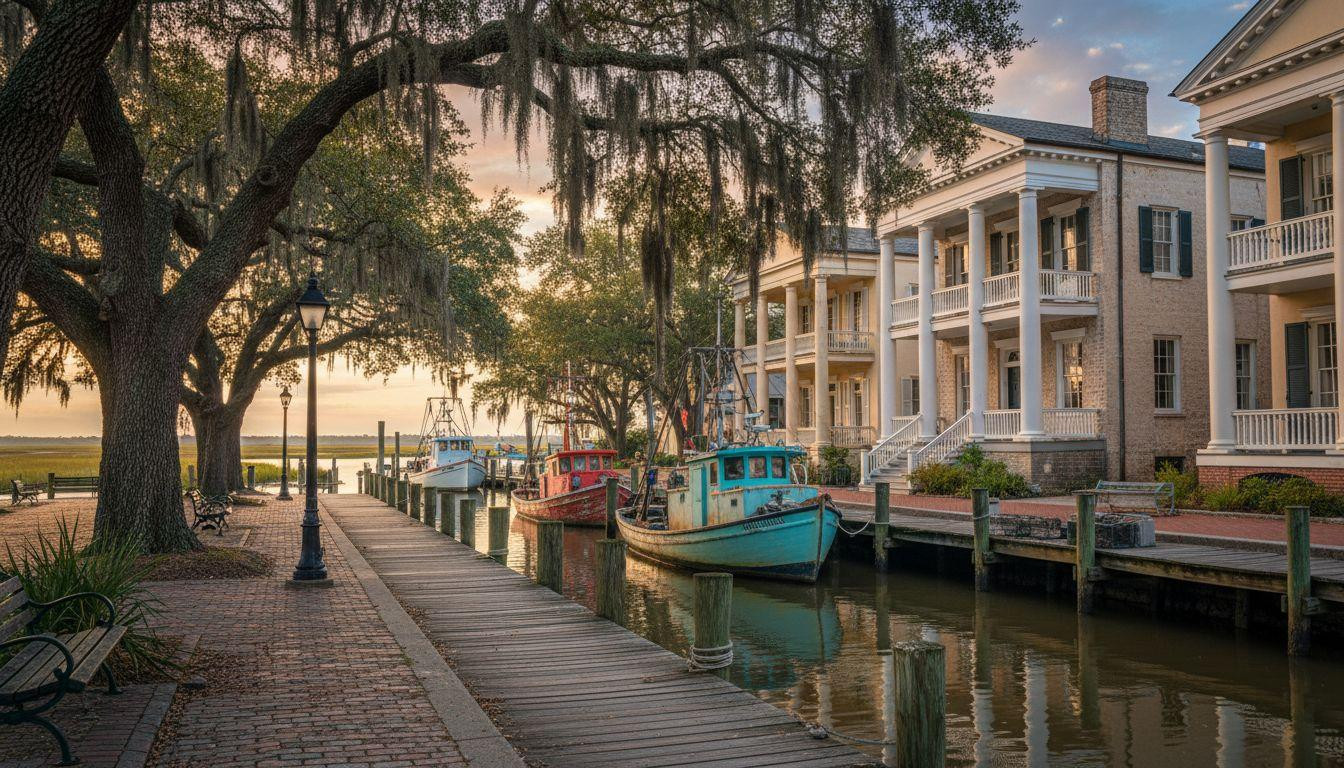
Charleston’s King Street crawls with tour buses while $300 hotels book months ahead. Savannah’s River Street overflows with cruise ship crowds pushing through 90-degree humidity. But 70 miles south of Charleston and 40 miles north of Savannah, Beaufort preserves what these famous cities sold: authentic Lowcountry maritime culture where shrimp boats dock at dawn and antebellum homes shelter families, not museums.
Why Charleston lost what made it special
Charleston drew 7.8 million visitors in 2024, transforming King Street into a slow-moving parade of tour groups. Mid-range hotels now demand $250-400 per night during peak season. Restaurant waits stretch beyond 2 hours at popular spots.
Rainbow Row generates Instagram queues while tour buses idle on narrow cobblestone streets. The working waterfront disappeared as maritime businesses relocated beyond the tourist zone. Southern mansion districts became outdoor museums where locals can barely afford to live.
Parking costs $35 daily in the historic district. House museum tours charge $25-30 each while carriage rides demand $35 per person for 45-minute loops through crowded streets.
Meet Beaufort where shrimpers still dock at dawn
Beaufort receives 700,000 annual visitors compared to Charleston’s overwhelming 7.8 million. The Beaufort River still functions as a working waterfront where Gay Fish Company, operating since 1950, unloads fresh catches at sunrise.
The Lowcountry aesthetic without the price
Bay Street displays the same antebellum architecture Charleston commercialized. Live oaks draped in Spanish moss arch over pastel tabby homes dating from the 1700s. The Point neighborhood showcases Federal and Greek Revival mansions overlooking tidal marshes.
Beaufort’s Historic District earned National Historic Landmark status for its concentration of preserved antebellum structures. Unlike Charleston’s mansion-turned-museums, these homes remain private residences where families preserve traditions rather than perform them.
Working waterfront vs museum town
The Beaufort River maintains its maritime identity. Shrimp boats arrive at 5am while charter fishing vessels prepare for day trips. Local oyster roasts happen on neighborhood docks, not in commercial venues charging tourist prices.
St. Helena Island’s Penn Center preserves authentic Gullah heritage as a UNESCO Network site. Working coastal communities demonstrate living culture rather than staged performances.
What you actually experience
Henry C. Chambers Waterfront Park offers unobstructed river views without crowds. Spanish moss filters morning light through live oak canopies as egrets wade through tidal creeks. The Pat Conroy Literary Center celebrates the author’s connection to Beaufort’s landscapes.
The historic district
The Point’s antebellum mansions face the Beaufort River where dolphins surface during morning walks. Bay Street’s tabby facades glow golden at sunset while horse-drawn carriages clip past at a leisurely pace rather than fighting traffic.
Hunting Island State Park provides 5 miles of Atlantic coastline just 16 miles from downtown. The historic lighthouse rises 132 feet above maritime forests where coastal paths wind through palmetto groves.
Food without the wait
Shrimp and grits costs $18 at local restaurants versus Charleston’s $32 for comparable dishes. She-crab soup arrives within 15 minutes rather than after 90-minute waits in crowded tourist districts.
Lowcountry boil traditions continue at community gatherings where locals share fresh catches. The Friday farmers market on St. Helena Island features Gullah sweetgrass baskets and locally caught seafood at prices 40% below Charleston’s tourist-inflated rates.
Practical reality
Beaufort sits 70 miles south of Charleston via US Highway 21, approximately 90 minutes by car. Savannah lies 40 miles north, about 45 minutes through Lowcountry back roads. Both airports serve Beaufort within reasonable driving distance.
Lodging ranges from $90-230 per night compared to Charleston’s $250-400 rates. Budget alternatives provide the same historic charm without premium pricing.
Peak seasons (March-May, September-November) offer mild temperatures and manageable crowds. Winter months (December-February) provide solitude and 50% lower accommodation rates while maintaining comfortable 46-61°F temperatures.
Your questions about Beaufort South Carolina answered
How does Beaufort compare to Charleston for first-time visitors?
Beaufort offers identical antebellum architecture and Lowcountry culture with 91% fewer visitors. The same Spanish moss-draped oaks and tidal river settings cost 40% less while providing authentic maritime experiences rather than commercialized tourism.
What makes Beaufort’s Gullah heritage more authentic than Savannah’s?
St. Helena Island’s Penn Center functions as a living community rather than a tourist attraction. Gullah families continue traditional crafts like sweetgrass basket weaving while maintaining oyster roasts and fishing traditions as community practices, not performances.
Can you experience the same Lowcountry atmosphere without Charleston’s crowds?
Beaufort preserves working waterfront culture where Charleston transformed maritime districts into shopping areas. The Beaufort River hosts active shrimping fleets while Bay Street maintains residential character. Morning walks reveal egrets and dolphins rather than tour groups.
Spanish moss sways in salt breezes over empty park benches at sunset. The Beaufort River reflects golden tabby walls while shrimp boats return with the evening tide, carrying traditions Charleston sold but Beaufort still lives.