Every morning at Angkor Wat, 2.6 million visitors jostle for the perfect sunrise photo. Timed entry tickets cost $37. Barriers keep crowds from touching ancient stones.
Forty miles east, Beng Mealea sleeps in jungle silence. No crowds. No barriers. No restoration scaffolding blocking your view.
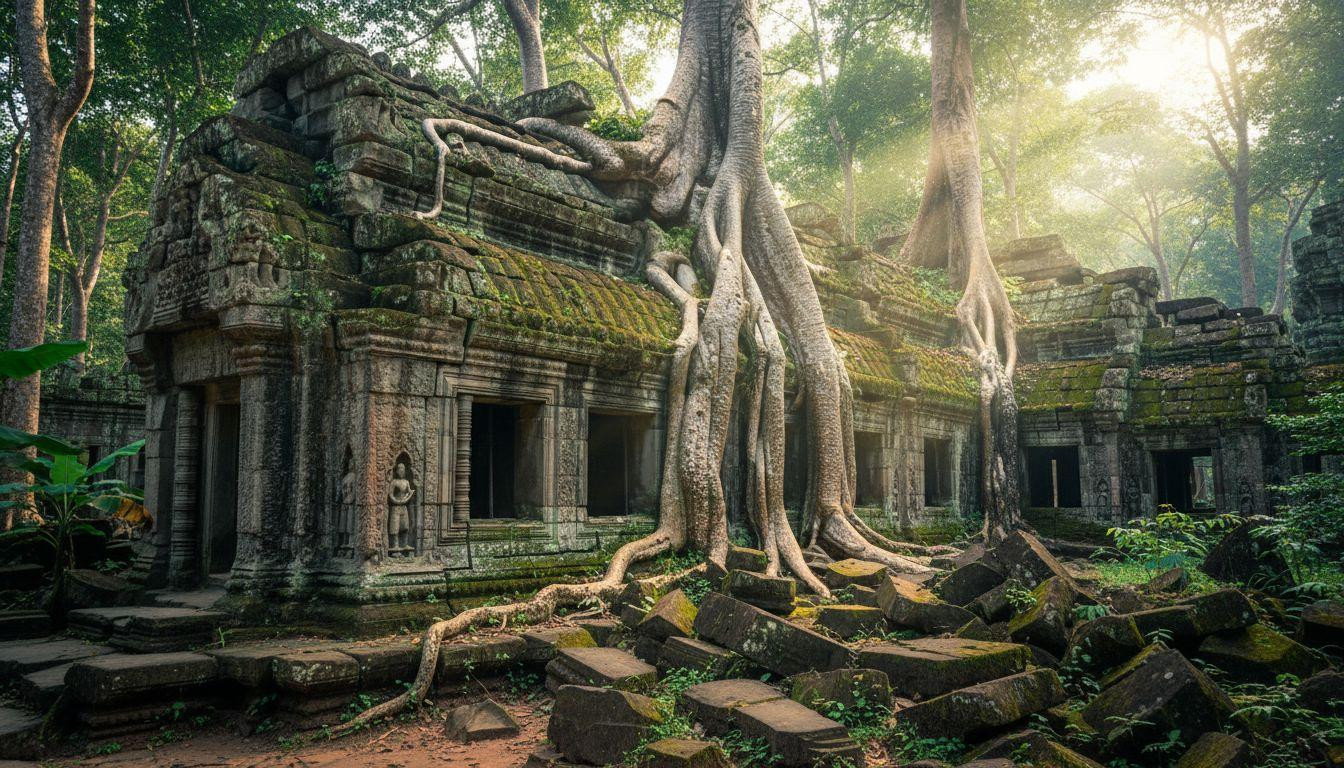
Blue sandstone blocks crumble beneath strangler figs. Galleries collapse into natural pathways. Morning light filters through dense canopy, illuminating moss-covered carvings that tourists at Angkor Wat will never see.
Why Angkor Wat lost its mystery
Angkor Wat draws 7,100 visitors daily. Peak season demands advance booking. Tour groups arrive in waves between 9am and 11am.
Restoration work never stops. International funding exceeds $7 million annually. Scaffolding covers temple walls. Ropes block access to galleries.
The famous sunrise viewing platform holds 500 people. Photographers fight for angles. Guards whistle when tourists touch stones.
The numbers behind the crowds
January 2025 alone saw 400,000 foreign tourists. That’s 12,900 people daily competing for the same Instagram shot. Parking costs $10. Official guides charge $35 for half-day tours.
Visitor caps limit access to certain areas. The central tower allows only 100 people at a time. Wait times stretch 90 minutes during peak hours.
Meet Beng Mealea’s jungle silence
Built by King Suryavarman II in the early 12th century, Beng Mealea mirrors Angkor Wat’s architectural style. Same blue sandstone blocks. Same Hindu dedication to Vishnu. Same intricate carvings of the Churning of the Sea of Milk.
The difference? Nature reclaimed this temple decades ago. Strangler figs push through gallery roofs. Collapsed corridors form natural staircases. Moss covers apsara dancers carved 900 years ago.
Only 185,000 people visit annually. That’s 507 daily visitors compared to Angkor Wat’s 7,100. These Cambodian islands cost half what Thailand charges for similar experiences.
What makes it different
UNESCO placed Beng Mealea on its tentative list in 2020. The designation preserves its wild state deliberately. No major restoration planned. No crowd control systems installed.
The temple compound measures 594 by 499 feet. A massive moat surrounds collapsed galleries. The original name means “Lotus Pond” in ancient Khmer.
The real cost comparison
Beng Mealea charges $10 for standalone entry. Angkor Wat requires a $37 minimum pass. Private taxi from Siem Reap costs $45-55 including wait time. Tuk-tuk costs $30-35 but takes 90 minutes each way.
No advance booking required. No timed entry restrictions. Arrive at 7am and have the temple to yourself until tour groups appear at 9am.
The authentic experience
Walking through Beng Mealea feels like discovery. Climb over fallen gallery stones. Touch moss-covered carvings without barriers. Follow strangler fig roots as natural handholds.
Temperature drops 5-7°F inside collapsed galleries. Humidity creates perfect conditions for jungle growth. Cicadas provide the only soundtrack.
This Southeast Asian archipelago rivals the Philippines for limestone beauty with similar preservation philosophy.
What you’ll actually do
Self-guided exploration takes 2-3 hours. No marked paths exist through the ruins. Navigate by following root systems and collapsed stone corridors.
Photography freedom exceeds anything at Angkor Wat. No crowds in your frame. No guards blocking shots. Natural lighting creates dramatic contrasts.
When to visit
November through February offers dry season access. Morning temperatures hover around 75°F with low humidity. These Italian cave dwellings preserve 9,000 years of history using similar minimal intervention approaches.
Arrive before 8:30am for optimal lighting. Golden hour light filters through canopy between 7am and 8am. Afternoon visits between 3:30pm and 5pm avoid peak heat.
Getting there and practical details
The 40-mile drive from Siem Reap takes 60-75 minutes on fully paved roads. Route passes rural villages and rice paddies. No facilities exist on-site beyond basic restrooms.
Landmines were cleared in 2003. Current safety status allows normal exploration. Wear closed-toe shoes for climbing over ruins. Bring water and snacks.
Better than Bali where crowds overwhelm temple complexes, Beng Mealea preserves authentic temple exploration without commercialization.
What to know before you go
No guides required but available through Siem Reap hotels. Watch footing on loose stones. Mobile coverage works near ticket office but fades inside temple complex.
Recent restoration completed only the eastern causeway in July 2025. Everything else remains deliberately unrestored. Operating hours run 7am to 5:30pm daily.
Your questions about Beng Mealea answered
How does cost compare to Angkor Wat?
Total day trip costs $75-95 including transport, entry, and meals. Angkor Wat private tours cost $95-125 for similar duration. Beng Mealea offers 14 times fewer crowds for roughly equal price.
Why isn’t Beng Mealea as famous?
Distance keeps casual tourists away. The 40-mile journey from Siem Reap requires dedicated transport. Angkor Wat sits only 3 miles from city center with regular shuttle service.
Is December a good time to visit?
December represents peak season with 40% more bookings than other months. Dry weather ensures safe access to all areas. Morning temperatures range 75-82°F with minimal rainfall expected.
Filtered sunlight pierces jungle canopy, illuminating ancient stones where strangler figs write their own stories in blue sandstone. This is what discovery feels like when nature holds the pen.