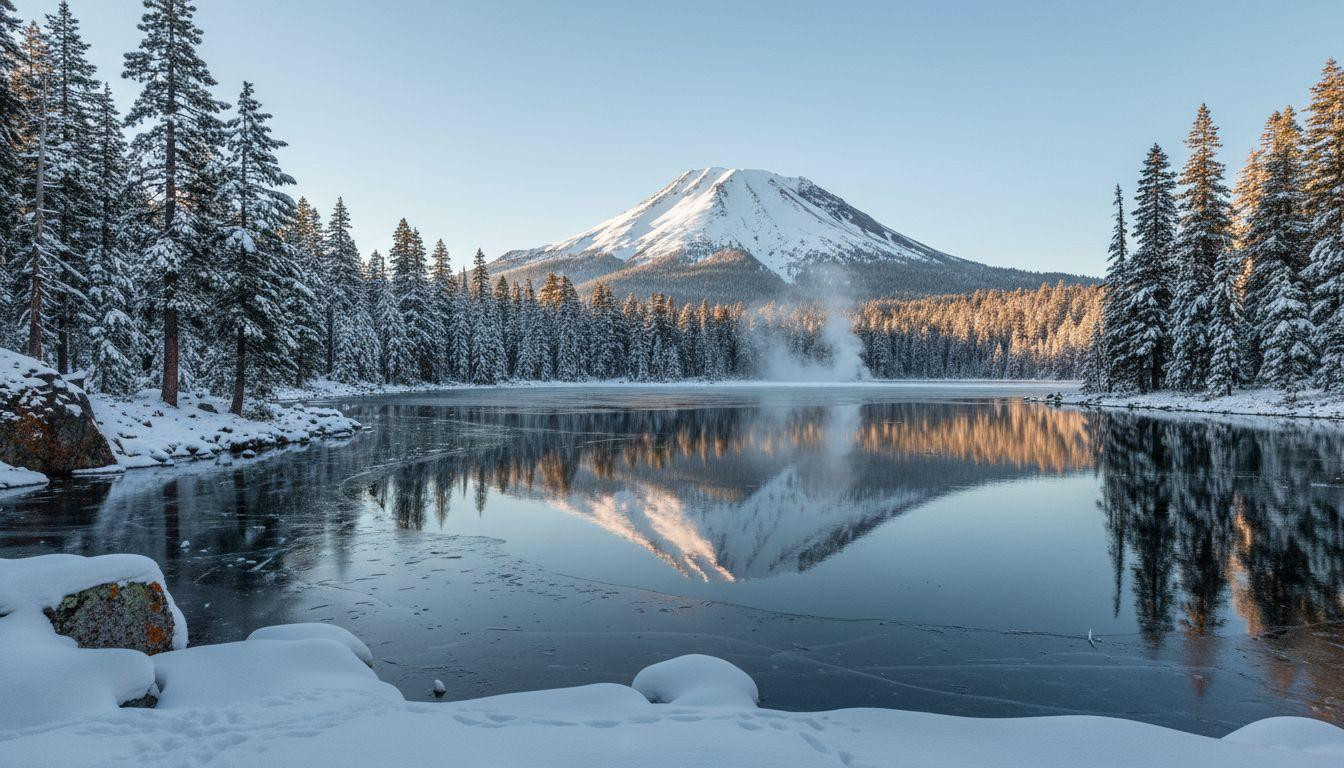
Winter transforms Manzanita Lake into something impossible. The surface freezes mirror-still, reflecting Lassen Peak so perfectly you can’t tell where snow ends and sky begins. This volcanic lake sits at 5,800 feet in Northern California, accessible only to those who know the secret. Highway 89 closes each December, turning away cars but welcoming snowshoers into 30 feet of pristine silence.
Most visitors experience Lassen’s 450,000 annual guests in summer heat. Winter changes everything. The road closure creates a natural filter, leaving this mirror phenomenon to fewer than 5% of yearly visitors.
Where highway 89 closes and silence opens
Lassen Volcanic National Park receives up to 45 feet of snow annually. Highway 89 typically closes by late November, sealing off through traffic until April. The northwest entrance near Mineral stays accessible, with parking at Loomis Plaza just one mile from the main road.
Vehicle access ends at the plaza’s 24-hour restrooms. From here, Lassen’s winter landscape opens only to snowshoes and cross-country skis. The 1.5-mile loop around Manzanita Lake begins steps from your car.
Temperatures at this elevation run 5 degrees warmer than the park’s Southwest Area. Winter highs reach 45-55°F while lows drop to 15-25°F. Pack tire chains, blankets, and extra food. Gas stations close until May, so fuel up in Mineral before entering.
The frozen mirror phenomenon
When lake ice becomes glass
Manzanita Lake freezes completely by mid-December most years. The ice forms smooth and dark, creating perfect reflections of 10,457-foot Lassen Peak. Morning light turns the surface golden-pink while evening brings starry mirror images.
National Park Service warns visitors to stay off the ice. Shores disappear under snow, making safe edges impossible to identify. The reflection remains stunning from the shoreline trail, where morning water mirrors volcanic peaks in pristine clarity.
Volcanic landscape in white
Steam vents remain visible throughout winter, creating ethereal columns against snow-covered volcanic rock. The contrast between hot springs and frozen lake surface feels otherworldly. Pine forests load with snow, their dark green silhouettes framing the white-and-blue reflection below.
Lassen Peak towers directly above the lake’s eastern shore. This plug dome volcano last erupted in 1915, leaving behind the dramatic landscape visible today. Winter snow softens the volcanic terrain while highlighting the peak’s imposing presence.
Snowshoeing into winter stillness
The 1.5 mile lake loop
The Manzanita Lake Snowshoe Loop requires no permits, just basic snowshoes ($15-30 daily rental). The trail stays marked with orange flags throughout winter. Gentle slopes make this perfect for beginners, with only 52 feet of elevation gain.
Wildlife tracks crisscross the snow: deer, snowshoe hare, and occasional mountain lion prints. Winter silence amplifies every sound. Ice cracking carries across the lake like distant thunder, creating an audio experience impossible in crowded seasons.
What winter reveals
The air smells crisp and mineral-rich, carrying hints of volcanic steam and pine resin. Snow muffles footsteps while amplifying the subtle sounds of ice settling. Morning frost creates intricate patterns on shoreline rocks, melting by afternoon into temporary waterfalls.
Park entrance costs just $10 during winter months (December 1-April 15), compared to $30 in summer. Ranger-led snowshoe tours operate weekends at 1:30 PM from January through April, providing equipment and winter safety instruction for groups.
The sound of frozen quiet
Winter at Manzanita Lake strips away summer’s 450,000 visitors, leaving profound quiet. Snow absorbs most sounds except ice movement and distant steam hissing from geothermal features. This volcanic solitude feels sacred, untouched by crowds.
The reflection phenomenon peaks during calm mornings before wind ripples disturb the ice surface. Photographers arrive before sunrise, capturing Lassen Peak’s mirror image in perfect stillness. By 9 AM, most winter visitors have the lake entirely to themselves.
Mineral, population under 200, provides the closest services. No visitor facilities operate in the Manzanita Lake area from November through early May, ensuring the winter experience remains authentically wild.
Your questions about Manzanita Lake frozen answered
When does Manzanita Lake freeze?
The lake typically achieves full freeze by mid-December, lasting through March. Ice thickness varies, but visitors must stay off all frozen surfaces due to unpredictable conditions and hidden shore boundaries under snow. Optimal reflection viewing occurs during calm morning hours before wind picks up.
How do you access it in winter?
Drive to Loomis Plaza parking area via the northwest entrance near Mineral, California. Bring snowshoes and winter gear. The plaza offers 24-hour restrooms and water. Snowshoe rentals aren’t available on-site, so secure equipment in advance from towns like Redding or Chester.
How does this compare to summer visits?
Summer brings 95% of Lassen’s annual visitors, with crowded trails and busy campgrounds. Winter transforms the park into solitary wilderness with road closures creating natural crowd control. The frozen reflection phenomenon exists only December through March, offering visual experiences impossible during warmer months.
Dawn breaks over Manzanita Lake with Lassen Peak suspended perfectly in dark ice. Steam rises from distant hot springs while snow-laden pines stand sentinel. The mirror holds steady until wind wakes, shattering reflections into a thousand dancing lights.