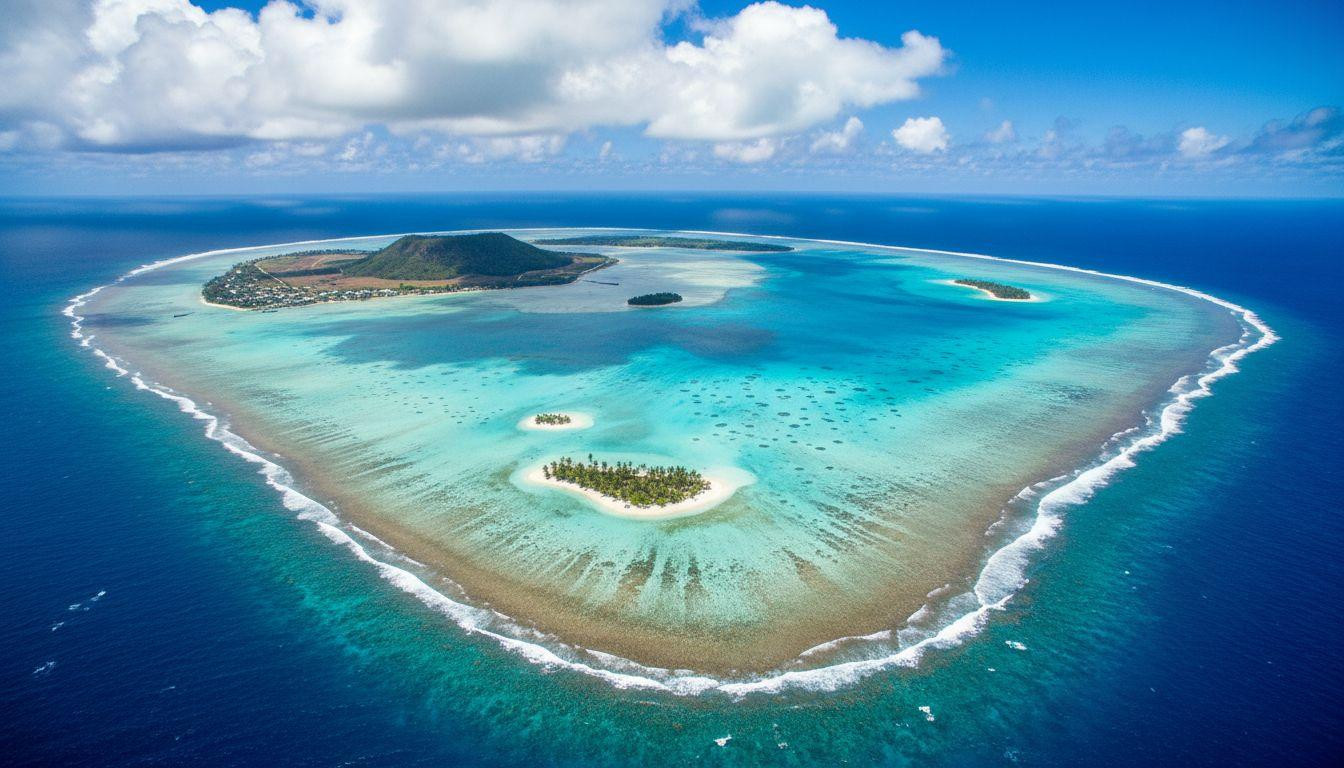
The first glimpse of Aitutaki from an aircraft window stops conversations mid-sentence. Passengers press against glass, staring at water so vividly turquoise it appears digitally enhanced. This 17-square-kilometer coral atoll in the Cook Islands hosts only 1,800 residents yet delivers lagoon colors that rival Bora Bora’s fame without the crowds or $1,000-per-night price tags. The water transitions from pale aqua near barrier reefs to deep azure in channels, creating gradients that cameras struggle to capture accurately.
The lagoon that defies photography
Aitutaki sits on an isolated mid-ocean carbonate platform where water depths rarely exceed 20 feet across most areas. The shallow sandy bottom acts like nature’s reflector, bouncing tropical sunlight through crystal-clear water to create impossible shades of blue. Recent visitors consistently report the same phenomenon: “Snorkeled in water aqua blue clear and worthy of the Bora Bora Lagoon,” with visibility extending 100-200 feet to the sea floor.
The science behind these colors involves skeletal carbonate fragments from surrounding reefs, processed by marine life into powder-fine white sand. Trade winds and micro-tides create remarkably stable conditions inside the protective barrier reef. While Bora Bora attracts 150,000 annual visitors and charges premium resort rates, Aitutaki maintains its authentic island character with fewer than 20,000 tourists yearly.
One Foot Island’s passport ritual
The tiny uninhabited islet of Tapuaetai hosts the world’s most remote post office. Visitors arrive via lagoon cruise to receive official Cook Islands passport stamps, creating tangible proof of reaching this South Pacific paradise. The ritual has become legendary among travelers: “Getting my passport stamped on One Foot Island felt like discovering a secret the world hasn’t fully found yet.”
Lagoon cruise reality check
Vaka cruises cost $104-$116 and include snorkeling stops at giant clam farms and multiple uninhabited motus. Group tours visit 3-4 locations over 6 hours, with fresh fish lunches prepared on white sand beaches. Private charters command higher rates but offer flexibility for couples seeking solitude among the 15 coral islets that comprise the atoll system.
December weather advantages
December marks the start of wet season, bringing brief afternoon downpours and 75-85% humidity. However, rainfall averages just 9.4 inches monthly, falling in short bursts rather than all-day deluges. Post-rain conditions create exceptional air clarity for photography, while ocean temperatures hover at perfect 79-82°F. The dramatic lighting after tropical showers reveals lagoon colors at their most vivid.
Island time as cultural practice
Aitutaki’s 1,800 residents maintain authentic Polynesian rhythms despite growing tourism. Sunday church services welcome visitors to experience ukulele-accompanied hymns in traditional dress. Local cafes serve ika mata (raw fish in coconut milk) for $18 while resort restaurants charge $60 for similar dishes. Scooter rentals at $28 daily provide access to every corner of the island within 30 minutes.
Barefoot magic philosophy
Island culture actively resists commercialization and rush. WiFi fails regularly, schedules remain approximate, and the pace emphasizes presence over productivity. Roosters crow unpredictably throughout day and night. Morning beaches stay empty until 8 AM, offering profound solitude rarely found in developed tropical destinations. The acoustic simplicity creates meditative atmospheres where mental chatter naturally quiets.
Authentic local encounters
Village markets operate Tuesday and Friday mornings, where families sell breadfruit and fresh coconuts for $5. The island baker whose family has run their shop since 1953 prepares traditional pareu (coconut bread) before dawn. Sunset hiking to Maunga Pu Peak costs nothing but reveals panoramic views across the entire lagoon system transforming from turquoise to gold.
Why this stays impossible to forget
Aitutaki delivers psychological shifts that surprise visitors. The combination of scientifically improbable water colors, genuine cultural warmth, and complete absence of commercial corruption creates lasting emotional impact. Total travel costs including flights and accommodation average $2,400 per couple for one week, compared to $6,000-$8,000 for equivalent Maldives experiences. The island operates on authentic human scale where every interaction feels personal rather than transactional.
Your questions about this tiny island answered
Is December weather actually manageable?
Yes, despite wet season classification. Rainfall comes in brief afternoon showers averaging 20-30 minutes, followed by dramatic clearing. Bring quick-dry clothing and embrace post-rain freshness. Trade winds prevent oppressive humidity, and ocean swimming remains comfortable at 80°F water temperature throughout the month.
How does cost compare to famous destinations?
Accommodation ranges from $150-$480 nightly vs. Bora Bora’s $800-$2,000. Flights from Los Angeles cost $893 vs. $1,400+ to French Polynesia. Lagoon tours cost $104 vs. $200+ in Tahiti. Total weekly budgets average 50-60% less than comparable Pacific island experiences.
Can you explore independently without tours?
Absolutely. Scooter rentals cover the entire island loop in 45 minutes. Maunga Pu hiking, Ootu Beach snorkeling, and Piraki Lookout visits cost nothing. Only lagoon cruises require organized tours, as the outer motus remain inaccessible except by boat. Independent exploration reveals hidden beaches and local fishing spots tourists never discover.
Dawn breaks over Aitutaki’s lagoon with glassy water reflecting pastel sky colors. The silence feels profound after urban noise. This is paradise that photographs can’t capture and crowds haven’t discovered. The turquoise remains impossible to forget.