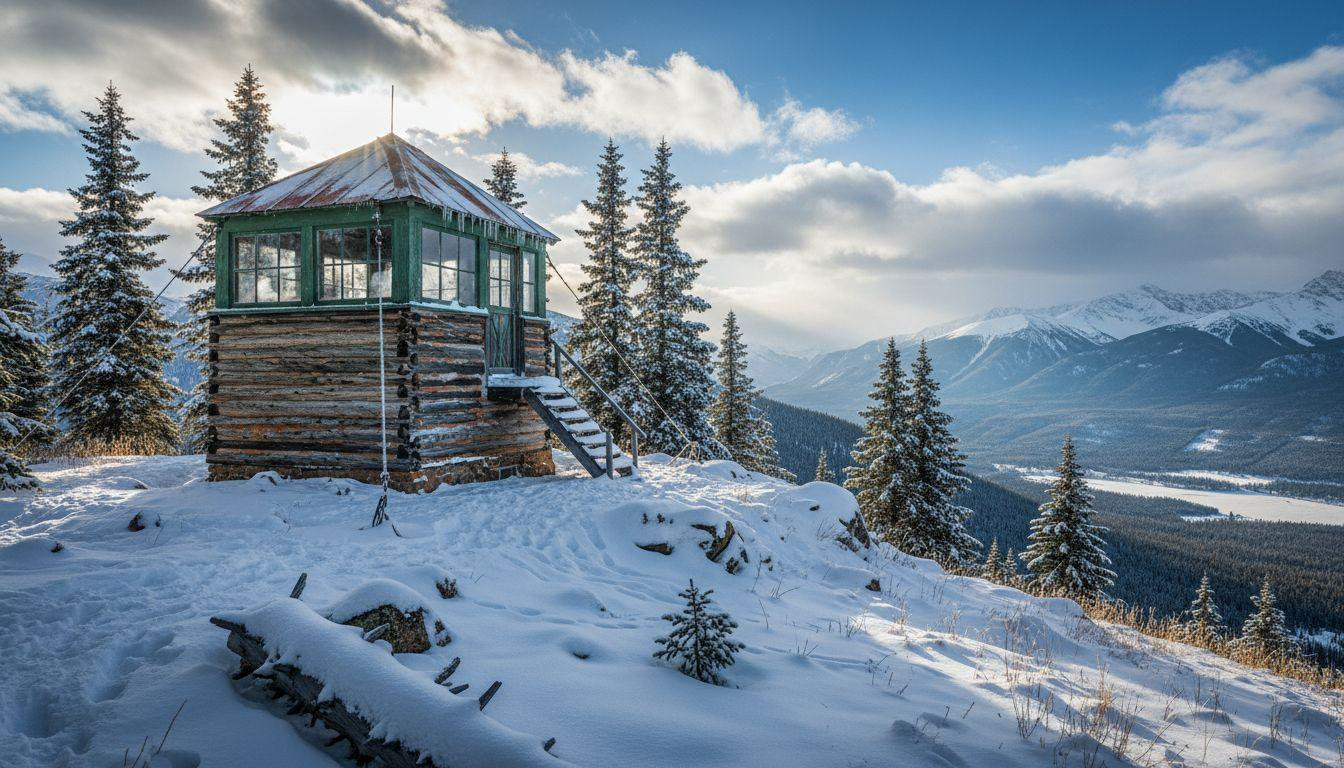
Snow crunches underfoot as you approach the wooden tower perched against Montana’s winter sky. Scalplock Lookout rises from the white silence of Glacier National Park, where snowshoe tracks lead to one of America’s most remote fire lookout experiences. Built in the 1930s as part of the Forest Service’s fire detection network, this southernmost active lookout in the park offers 360-degree views of the Flathead Valley that few winter travelers ever witness.
At 5,200 feet elevation, Scalplock Lookout stands as a testament to early 20th-century forest management. The 4.8-mile snowshoe approach from Essex begins at 4,200 feet, gaining 1,000 feet through snow-laden alpine meadows. Winter transforms the summer hiking trail into a pristine corridor where silence breaks only for wind through evergreen branches.
A swinging bridge marks the adventure
The approach to Scalplock Lookout features one of Montana’s most thrilling winter crossings. A suspension bridge spans a frozen creek at mile 2.3, swaying gently under snowshoe weight. Ice formations cling to the bridge cables while the creek below flows beneath winter’s grip.
Morning light illuminates the wooden fire tower in golden hues. The classic design features a small cabin at the base topped by an observation cupola. Original construction materials from the 1920s remain intact, including hand-hewn timber supports and period hardware that withstood decades of mountain weather.
Views stretch across three mountain ranges
From Scalplock’s observation deck, the Flathead Valley unfolds in winter majesty. Snow-covered peaks of the Cabinet Mountains rise to the west while the Continental Divide frames the eastern horizon. On clear days, visibility extends 50 miles across Montana’s rugged landscape.
Historic fire detection equipment remains functional
The lookout houses original Osborne Fire Finder equipment from the 1940s. This brass and steel instrument allowed fire lookouts to triangulate smoke locations across vast wilderness areas. Winter visitors can examine the device that once protected millions of acres of forest from wildfire.
South-facing slope offers extended access
Scalplock’s unique positioning on a south-facing ridge means snow melts earlier than other park locations. This geographical advantage extends the winter access season from October through May, when most Glacier National Park trails remain buried under deep snow.
Winter wildlife encounters reward patient observers
The snowshoe route to Scalplock passes through prime winter wildlife habitat. Mountain goats navigate rocky outcrops while elk herds winter in protected valleys below. Fresh tracks in snow reveal nocturnal visits from pine martens, snowshoe hares, and occasional mountain lions.
Dawn brings Flathead Valley’s awakening
Sunrise from the lookout tower occurs at 7:52 AM in December, painting surrounding peaks in alpenglow. The Flathead River winds silver through the valley floor 3,000 feet below. Steam rises from unfrozen sections while ice formations create abstract patterns along the shoreline.
Essex provides frontier hospitality
The gateway town of Essex houses just 60 year-round residents who maintain authentic frontier character. Local establishments serve hearty meals perfect for post-snowshoe recovery. The town’s railroad heritage connects to Amtrak’s Empire Builder service, offering car-free access to the region.
Planning requires mountain weather respect
Winter temperatures at Scalplock range from 23°F to 41°F, with sudden weather changes common at elevation. The trail receives no cell phone service beyond Essex, requiring self-reliance and proper emergency preparation. Avalanche awareness becomes essential on steeper sections near the lookout.
Snowshoe rentals in nearby Whitefish cost $25 per day while guided tours run $75-120 per person. The National Park Service requires winter backcountry permits available free at ranger stations. Most visitors complete the journey in 6-8 hours including summit time.
Mountain towns throughout the region offer similar winter adventures, but Scalplock’s combination of accessibility and remoteness remains unique. The lookout operates under first-come, first-served camping policies during winter months.
Your questions about Scalplock Lookout winter answered
What gear is essential for winter access?
Snowshoes rated for 25-pound loads handle the packed snow conditions effectively. Microspikes provide traction on icy bridge sections while avalanche beacons are recommended but not required. Winter sleeping bags rated to 10°F accommodate overnight stays in the unheated cabin.
How does Scalplock compare to other Glacier lookouts?
Among Glacier’s four remaining fire lookouts, Scalplock offers the most reliable winter access due to its southern exposure and moderate elevation. Unlike permit-required destinations, the lookout welcomes visitors year-round without reservation systems or access fees beyond standard park entrance costs.
What makes the winter experience special?
Winter visitation drops to fewer than 500 people annually compared to 8,000 summer visitors. This solitude creates an authentic fire lookout experience where wind through guy-wires and distant avalanche rumbles provide the only sounds. The harsh season filters casual visitors while rewarding dedicated winter travelers with unmatched wilderness immersion.
Steam rises from your breath as sunset approaches the Flathead Valley. Wind chimes made from old fire detection cables sing softly in evening air. The wooden tower stands sentinel against winter’s embrace, offering shelter and perspective to those who make the snowy pilgrimage to Montana’s sky.