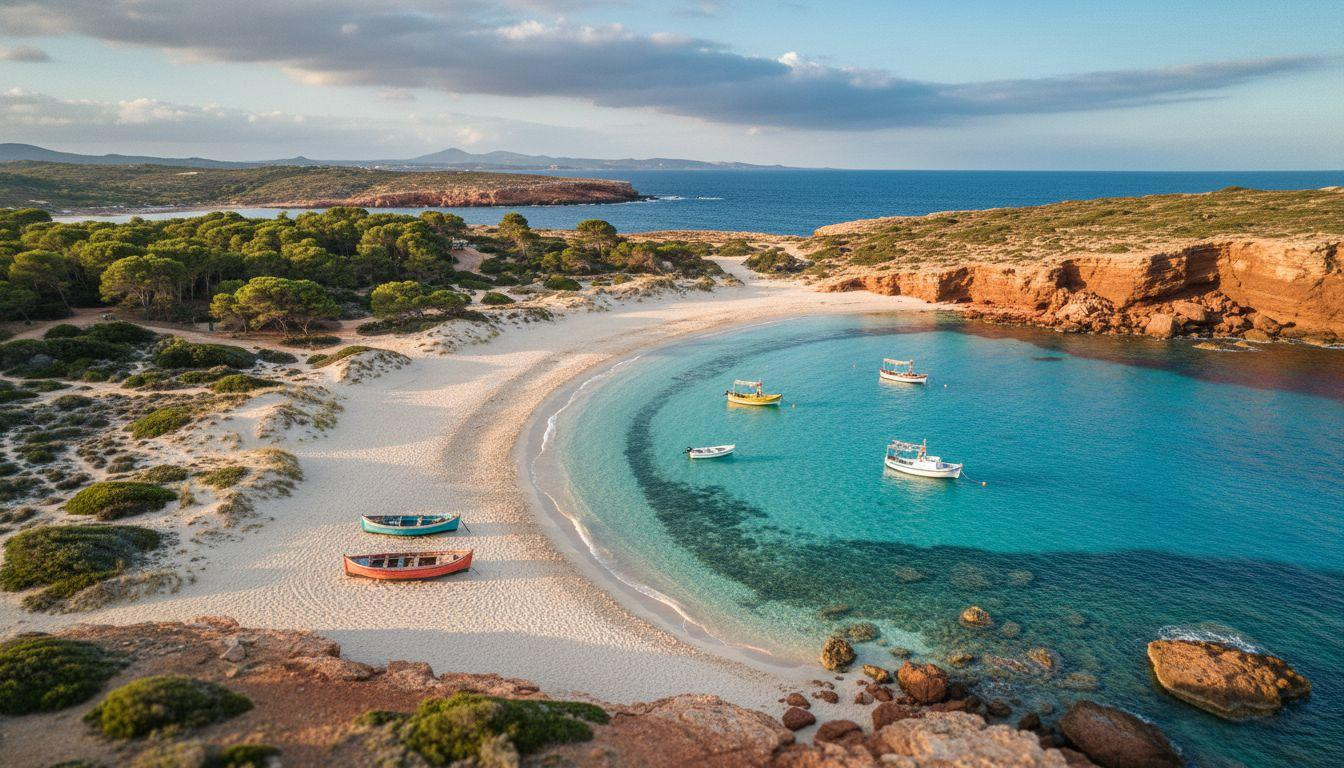
While Ibiza’s beach clubs thump with electronic beats just 30 minutes away, Formentera’s western coastline whispers a different story. Here, eight quiet coves protect turquoise waters and powder-white sand from the party crowds that flood Spain’s most famous party island. These hidden gems remain authentic sanctuaries where Mediterranean time moves slower, where fishing boats still define morning schedules, and where the loudest sound is often just waves meeting shore.
Cala Saona: the crescent-shaped jewel
Cala Saona anchors Formentera’s western coast with its perfect crescent of white sand framed by red limestone cliffs. The shallow, turquoise bay stays calm even when northern winds whip other beaches into froth.
What sets it apart
Hotel Cala Saona & Spa overlooks the bay from elevated pine groves, offering beachfront dining at $35-45 per meal. Two traditional beach shacks serve grilled octopus and local paella to families who arrive by scooter from La Savina port, just 5 miles east.
Beyond the obvious beauty
The bay’s calm waters result from its orientation: the crescent opens southwest, protected from prevailing northerly winds. Water depth progresses gradually from ankle-deep shallows to swimming depth over 50 feet. This gentle slope makes it perfect for families, while rocky edges offer snorkeling over Posidonia seagrass meadows.
Es Caló: where fishermen work at dawn
This working fishing village operates on rhythms unchanged for generations. Three boats depart at 5:15 AM, returning with fresh catches around 2 PM to wooden berths that photographers love.
The village restaurant Ca’n Toni has served seafood since 1972. Their seafood stew costs $28, while daily catch prices depend on morning luck. The limestone pier glows turquoise due to mineral deposits that create an almost unreal water color.
Local fishermen use the harbor from dawn until mid-afternoon. Tourists discover the swimming coves from 10 AM onwards. Evening belongs to locals again, swimming after the heat breaks around 6 PM.
Ses Platgetes: three coves in harmony
Three connected half-moon bays create this 2,000-foot stretch of protected coastline. Wooden boardwalks installed in 2024 protect fragile dunes while providing beach access.
The natural architecture
Each cove measures 250-400 feet wide, separated by low rocky points that create distinct swimming areas. Rock pools at water’s edge entertain children while parents enjoy the pine shade that covers 30% of the beach area.
Culinary connections
Platgetes Beach Kitchen specializes in wood-fired fish caught that morning by Es Caló fishermen. Their tasting menu costs $42 per person. This direct connection between boat and plate creates an authentic experience unavailable at resort destinations.
The hidden quartet: Es Pas, Caló des Mort, Cala en Baster, and Es Arenals
Four more secluded coves reward visitors willing to walk coastal paths or navigate unmarked turnoffs. Es Pas requires a 45-minute cliff walk from Cala Saona, descending stone steps to a sheltered bay.
Caló des Mort hides behind Aleppo pines on the southern coast. A small wooden sign at kilometer marker 12.7 on PM-820 marks the only access road. The sand here measures finer than anywhere else on Formentera’s western coast.
Cala en Baster offers sunset viewing from ancient limestone formations. No commercial facilities exist here by design, preserving its role as part of Ses Salines Natural Park. Access requires descending 150 stone steps from San Ferran de Ses Roques.
Es Arenals represents true wilderness: no structures, no services, just native vegetation meeting protected dune systems. Like other Mediterranean gems that resist development, it requires effort but rewards with solitude.
Planning your western coast exploration
Scooter rentals cost $35 daily while bicycles rent for $20. Morning visits before 10 AM guarantee parking and smaller crowds. Water shoes help navigate rocky entries at several coves.
Ferry service from Ibiza runs every 30 minutes during summer, costing $25 round trip. The 5:30 PM departure ensures time for sunset viewing at western coves. Bus L5 connects La Savina port to Cala Saona hourly for $2.
Your questions about Formentera’s western coves answered
Which coves stay quietest during peak season?
Es Arenals and Caló des Mort maintain 70% empty space even in August. Their difficult access keeps crowds away while rewarding persistent visitors with near-private Mediterranean experiences.
How do costs compare with Ibiza beach clubs?
Average beach meal costs $38 in Formentera versus $58 at Ibiza beach clubs. Accommodation runs $200-300 nightly for equivalent quality that costs $400-500 on Ibiza during peak season.
What makes the water so turquoise at Es Caló?
Limestone bedrock contains glauconite minerals that reflect light, creating the signature turquoise effect. The same geological formation exists at several western coves, enhanced by white sand that amplifies the color.
Evening light turns the western coves golden around 7 PM in summer, when fishing boats return and locals claim their favorite swimming spots. The eight quiet sanctuaries continue their ancient rhythm, protecting Mediterranean tranquility just minutes from Europe’s most famous party destination.