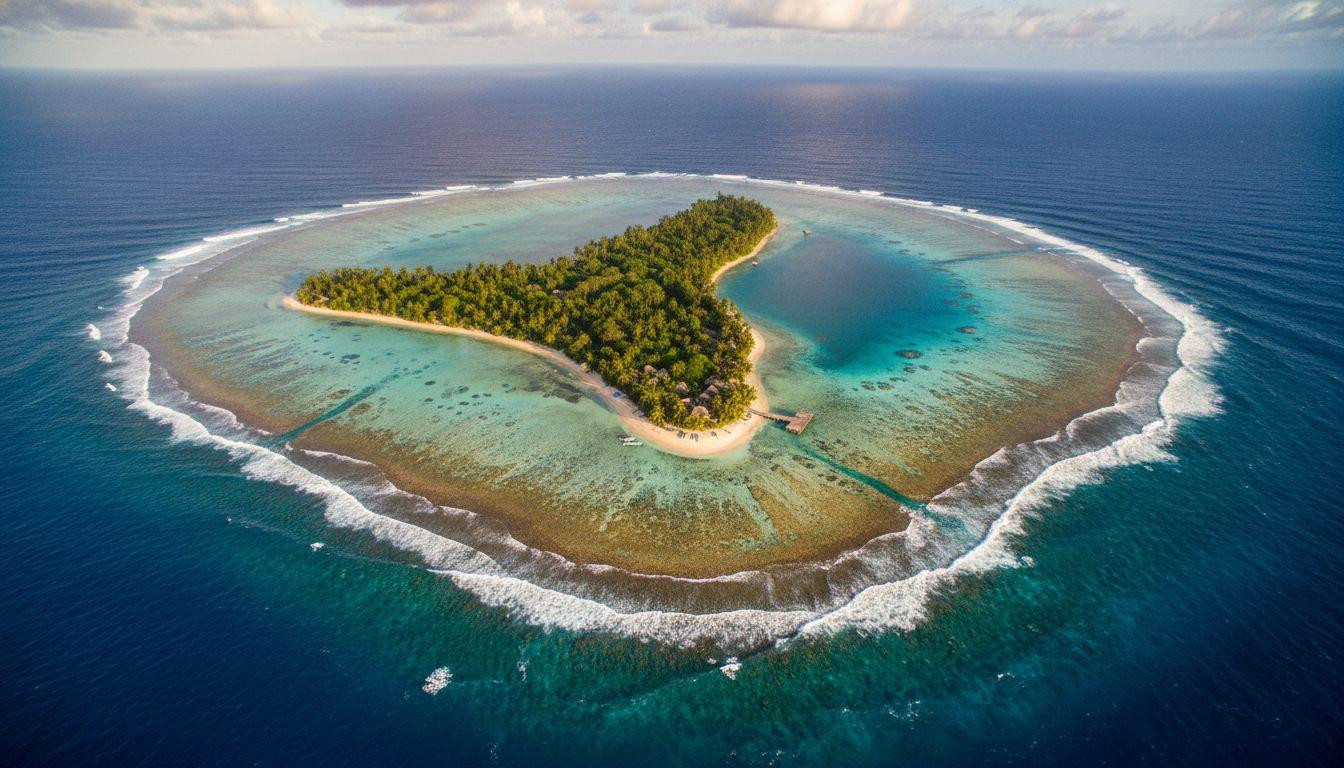
This Pacific atoll sits 708 miles from anywhere, where coral barriers that once crushed ships now guard 456 souls living exactly as their ancestors did centuries ago. The same treacherous reefs that earned Pukapuka the nickname “Danger Island” in 1765 have become its greatest protection against the modern world.
British navigator John Byron couldn’t land here when he spotted the circular atoll on June 21, 1765. High surf and jagged coral defeated his crew, forcing him to christen it “Island of Danger” and sail away. Today, those same barriers filter out all but the most determined visitors, creating nature’s perfect cultural sanctuary.
Where ships came to die
Pukapuka floats in the Cook Islands’ northern waters like a turquoise jewel locked in a coral vault. The atoll’s three islets (Motu Kō, Motu Kotawa, and Wale) form a triangular reef broken by just two narrow channels. These passages shift position after every major storm, making navigation treacherous even for locals who’ve fished these waters for decades.
The lagoon glows aquamarine in depths of 1-3 feet, then plunges dramatically to navy blue where the ocean floor drops over 3,000 feet. This underwater cliff creates dangerous currents that have claimed dozens of vessels over the centuries. Local boat operators navigate by memory rather than GPS, as magnetic coral formations disrupt electronic instruments.
Distance defines everything here. At 708 miles northwest of Rarotonga, Pukapuka ranks among the most isolated inhabited places on Earth. The nearest neighbor, Manihiki atoll, lies 280 miles southeast. Communities that choose isolation over convenience create something precious: authenticity through necessity.
What isolation preserved
While other Pacific islands adopted Western ways, Pukapuka’s 456 residents maintained traditions unchanged for centuries. Daily life revolves around fishing with hand-carved outrigger canoes, weaving pandanus mats using ancestral patterns, and cooking in communal earth ovens called umu. No cars disturb the coral paths, only three utility vehicles exist for medical emergencies.
Traditional life unchanged
The island operates under three traditional family groups (Yalongo, Tātau, and Tāne) alongside an elected council. Ninety-two percent of residents speak Pukapukan as their primary language, closer to Samoan than Cook Islands Māori. Evening church services and storytelling sessions still gather the entire community nightly.
What tourism never found
Visitor quotas cap arrivals at 12 people weekly to preserve cultural integrity. No hotels exist, only family-run guesthouses with composting toilets and limited solar power from 5pm-10pm daily. Guests must participate in village customs, attend church services, and bring traditional gifts of tobacco or kava for elders. Remote Pacific destinations that maintain these protocols protect something invaluable.
Living on danger island
Air Rarotonga operates two weekly flights on 12-seat aircraft, costing $425 one-way with strict 33-pound baggage limits. Alternative cargo ship passage takes 36-48 hours and departs every 3-4 weeks. All visitors require prior approval from Pukapuka Island Council, typically arranged through booked accommodation with 60-day advance notice.
How visitors arrive
The journey demands commitment: minimum 5.5 hours door-to-door from Rarotonga, often delayed by seasonal weather. December flights frequently face postponements due to trade wind patterns. Smart travelers build buffer days in Rarotonga before international connections.
What days feel like
Roosters crow at 5:30am, followed by rhythmic sounds of women husking coconuts and children walking to school on coral paths. The reef creates a distinctive “thoom” as waves break on the outer barrier, audible even at night. Locals use this sound to predict weather changes hours in advance. Morning brings fresh coconut milk aromas, afternoon carries scents of breadfruit cooking in earth ovens. Island escapes with authentic daily rhythms become rarer each year.
The turquoise reward
Dawn transforms the lagoon into pale aquamarine with silver reflections. Midday reveals vibrant cerulean waters with emerald patches where seagrass grows. Sunset creates liquid gold with streaks of deep sapphire at the reef edge. Fine coral sand mixed with pink foraminifera shells stays cool underfoot even at midday.
Water clarity extends 45+ meters in the lagoon, surpassing even Aitutaki’s famous spots. Traditional stone fish traps become visible at low tide, while the atoll’s perfect circular reef creates a distinctive “jewel in a ring” appearance from above. Remote destinations requiring commitment often reward visitors with sights impossible to find elsewhere.
Your questions about pocket-size islands with incredible colors answered
How much does a week in Pukapuka cost?
Expect $2,000 total including $850 round-trip flights, $75-93 nightly accommodation with meals, and mandatory $93 cultural preservation fee implemented in 2025. Bring sufficient New Zealand dollars as no ATMs or credit card acceptance exists.
What cultural protocols must visitors follow?
Guests must attend evening church services, remove hats in village areas, ask permission before photographing people, and participate in community work days called angaanga. Photography of sacred sites (marae) or traditional ceremonies requires explicit elder permission.
How does Pukapuka compare to other Cook Islands?
Pukapuka receives 624 visitors annually versus Rarotonga’s 142,000. Eighty-seven percent of residents engage in traditional activities daily compared to 22% on Rarotonga. Cultural authenticity through enforced isolation makes Pukapuka unique among Pacific destinations.
Trade winds carry the sound of waves breaking on ancient coral. Children learn to weave by moonlight while elders share stories unchanged for generations. In a world racing toward homogenization, this turquoise lagoon holds something irreplaceable: time itself, protected by the very dangers that once kept the world away.