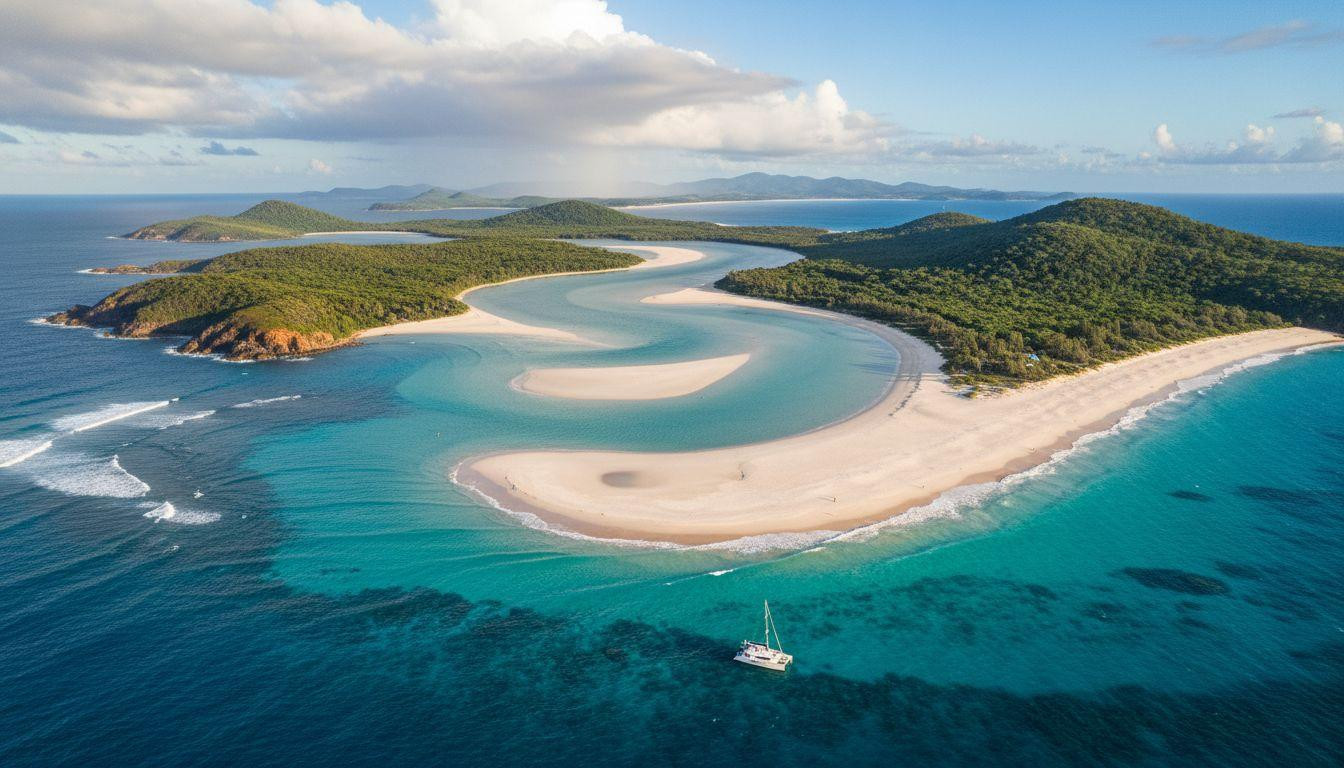
The sand squeaks beneath your feet like fresh snow, but the temperature reads 86°F. Whitehaven Beach defies every expectation about tropical coastlines. This seven-mile crescent of 98.9% pure silica sand stays cool even at midday, creating an otherworldly walking experience that no other beach can replicate.
The sound happens because each grain is perfectly round and uniform. When dry sand shifts under pressure, layers slide against each other at exactly 450 Hz. The result: a musical squeak that announces every footstep across this protected sanctuary.
The silica science behind the squeak
Whitehaven’s sand composition sets it apart from every other beach on earth. Most coastal sand contains around 95% silica mixed with shell fragments and minerals. Here, the purity reaches 98.9%, creating that distinctive white brilliance and temperature-defying properties.
The grains measure between 0.1 and 0.5 millimeters in diameter. Each one formed through millions of years of weathering, achieving perfect spherical shapes. When humidity levels drop below 1% and the sand dries completely, walking creates the ideal conditions for the squeaking phenomenon.
Why silica stays cool in tropical heat
The crystalline structure of pure silica reflects rather than absorbs solar radiation. While volcanic sand beaches in Fiji reach temperatures exceeding 149°F, Whitehaven’s surface rarely exceeds 85°F even during peak afternoon sun. Visitors walk barefoot comfortably throughout the day.
How crushed quartz creates the musical effect
Scientists at Cambridge University confirm that the squeaking requires three precise conditions: round grains, high silica content, and specific humidity. As each layer of sand slides over the layer beneath, the uniform grain size creates synchronized vibrations. The sound carries clearly across the beach, audible up to 50 feet away.
Hill Inlet’s swirling canvas
From the lookout point 300 feet above sea level, Hill Inlet reveals its famous swirling patterns. White silica sand spirals through turquoise water like abstract art painted by tidal forces. The scene changes every six hours as currents reshape the underwater landscape.
The Great Barrier Reef’s outer edges create the perfect conditions for this phenomenon. Ultra-fine silica particles remain suspended in the water column, creating that signature turquoise glow visible from aircraft 10,000 feet overhead.
Tidal shifts reshape patterns twice daily
High tide arrives at 6:30 AM and 7:15 PM during November 2025. As water recedes, exposed sandbars create new channels through Hill Inlet. The patterns never repeat exactly, ensuring each visit offers a unique vista.
Local boat operators confirm the swirling effect intensifies during spring tides when tidal range exceeds 8 feet. The stronger currents move more sediment, creating more dramatic color contrasts between deep water and shallow channels.
Best viewing times from the lookout
Morning light between 9:30 and 11:00 AM provides optimal photography conditions. The sun angle illuminates the swirling patterns without creating harsh shadows or glare. Afternoon visits work best between 2:00 and 4:00 PM when western light enhances the turquoise water color.
The boat-access filter
No roads reach Whitehaven Beach. Every visitor arrives by boat, helicopter, or seaplane, creating a natural barrier that limits daily crowds to manageable numbers. The closest mainland departure point, Airlie Beach, sits 23 miles southeast across open water.
Day tours from Airlie Beach cost between $133 and $189 for 2025 bookings. Catamaran services take 90 minutes each way, while speedboat transfers complete the journey in 45 minutes. Weather conditions occasionally cancel departures, adding an element of exclusivity to successful visits.
Day tour logistics from departure points
Airlie Beach marina offers the most departure options with 12 operators running daily services. Cruise Whitsundays provides the largest vessels accommodating 150 passengers, while Ocean Rafting limits groups to 36 people for a more intimate experience.
Hamilton Island helicopter transfers cost $472 per person for the 15-minute flight. The aerial approach reveals the full seven-mile crescent and Hill Inlet’s swirling patterns before landing on the beach. Queensland’s coastal islands offer similar helicopter access to remote destinations.
Why helicopter transfers skip the crowds
Only two helicopter operators hold permits for Whitehaven landings, limiting aerial arrivals to 12 passengers per hour during peak periods. These visitors typically arrive before 10 AM or after 3 PM when most boat tours have departed.
The flight path follows the Whitsunday Passage, providing aerial views of 74 islands before reaching Whitehaven. Pilots often circle Hill Inlet twice for photography before touching down on the northern section where crowds rarely venture.
Walking the seven-kilometer crescent
The full beach stretch requires 90 minutes to walk at a leisurely pace. Most tour groups cluster near the southern landing zone, leaving the northern three miles virtually empty during midday hours. The sand’s cooling properties make the entire walk comfortable even at noon.
Early morning presents the most magical experience. Sunrise occurs at 5:47 AM in late November 2025, painting the silica sand pale pink before brightening to brilliant white. Bird calls echo across empty shoreline: kookaburras, honeyeaters, and white-bellied sea eagles beginning their daily routines.
Your questions about Whitehaven Beach answered
When does the sand squeak loudest?
The squeaking effect peaks during dry conditions when humidity drops below 1%. This typically occurs between 10 AM and 3 PM on clear days. Recent rain or high humidity eliminates the sound completely until conditions dry. The phenomenon works best when walking with deliberate shuffling motions rather than normal steps.
Can you swim safely at Whitehaven?
Swimming is permitted year-round, but stinger suits are mandatory from November through May during jellyfish season. The beach has no permanent stinger nets due to shifting sands and protected marine park status. Water temperatures range from 79°F in winter to 84°F during summer months. Beaches with boat access often maintain similar safety protocols.
How does it compare to other famous white sand beaches?
Whitehaven’s 98.9% silica content exceeds Hyams Beach (95% silica) and all Maldives destinations which feature coral-derived calcium carbonate sand. Caribbean beaches average 85% silica with shell fragments comprising the remainder. Only Whitehaven combines extreme purity with the distinctive squeaking property and temperature resistance. Pacific islands where isolation preserved unique features offer similar exclusive experiences.
The afternoon sun casts long shadows across Hill Inlet as the final tour boats depart at 4 PM. Silence returns to the seven-mile crescent. Only the gentle squeak of cooling sand underfoot remains, a musical reminder of this beach’s singular perfection.